
If your Bunny Ear Cactus is struggling to grow, then try these essential care guides to keep your succulents healthy and vibrant throughout the year.
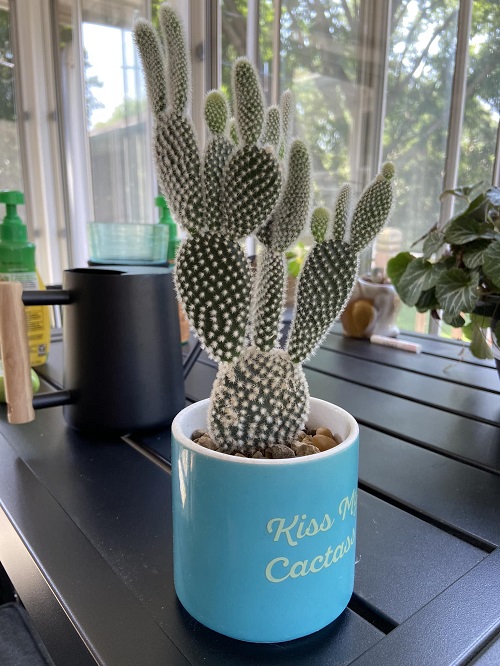
Bunny Ear Cactus, or the infamous Polka Dot Cactus, is a well-known indoor plant that is easy to grow and makes a striking addition to your succulent collection. But if you’re treating them as a common cactus. stop! That is a fatal mistake.
Bunny Ear Cactus-Key Facts
| Common Name | Bunny ear cactus, angel’s wings cactus, polka dot cactus |
| Botanical Name | Opuntia microdasys |
| Native Place | North America |
| USDA Zones | 9-11 |
| Plant Size | 2-3 ft. tall, 4-5 ft. spread |
| Flowering Period | April and May |
| Temperature | 21°C – 32°C |
| Soil pH | Acidic, neutral |
| Fertilizing Time | once in every 6 weeks |
| Pests & Diseases | Mealybugs, Spider mites| Root Rot and Bacterial infections |
| Propagation | Stem Cutting & Division |
| Flower Color | Yellow |
Bunny Ear Cactus Information
Opuntia microdasys is native to Mexico and widely admired for its flat, pad-like stems covered in tiny glochids and its vibrant yellow summer flowers. As a mature plant, it can grow up to 2–3 feet tall with a spread of 4–5 feet.
The fruits, seeds, cladodes, and flowers of this cactus are also valued for their pharmacological uses, including anti-inflammatory and antibacterial properties, making it both ornamental and functional.
Bunny Ear Cactus Propagation
Once you start planting a succulent, there is no way to look back. We’re here to share some tips on how to propagate your bunny ear cactus.
- Propagate your cactus in either spring or early summer when the plant is still in its growing phase.
- Before cutting the parent plant, first check it around 360° and choose the most mature pad. Gardeners sensitive to glochids must wear gloves before touching.
- Keep the pad aside for one or two days. This step is crucial for the base to callous.
- After 2 days, plant the dried pad in a pot filled with a balanced soil mix. Keep at least an inch of the dried pad base buried inside the soil.
- Now, place the pot in direct sunlight and give it some water to keep it hydrated.
- Avoid overwatering during propagation, as excess moisture can cause the pad to rot before roots develop.
Bunny Ear Cactus Growing Requirements
Soil
You can use a cactus or succulent soil mix amended with coarse sand or perlite for faster drainage. Always choose a pot with drainage holes to prevent water from pooling at the roots. Terracotta pots work especially well, as they allow excess moisture to evaporate quickly.
Watering
Our Bunny Ear Cactus is drought-friendly. Hence, they won’t mind if we forget watering them during our hectic weekdays. However, during the growing season (spring and summer), they would need us to water them at least once every 1-2 weeks, depending on the humidity and temperature of our home.
During the fall and winter seasons, we should reduce the frequency of watering to once every 3-4 weeks. This will allow the soil to dry out between the watering periods otherwise, it may lead to root rot.
Sunlight
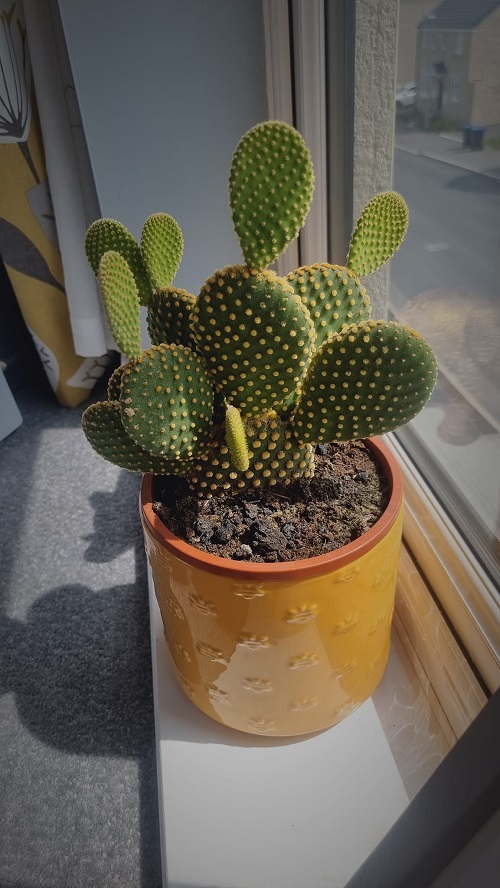
As a desert plant, Bunny Ear Cactus thrives in bright light. Indoors, place it near a south- or west-facing window where it can receive 6–8 hours of sunlight daily.
If the plant starts stretching or leaning, rotate it occasionally or use a supplemental grow light for 14–16 hours per day.
Temperature
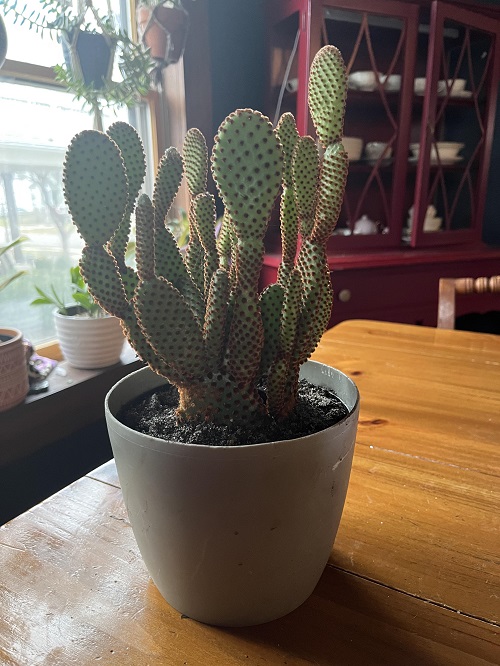
Are you growing this succulent completely indoors? If yes, then don’t forget how important it is for certain plants to get proper precautions and considerations to grow well.
Precautions, such as placing them in a warm, dry environment. Moreover, the temperature of the home should be around 65°F to 85°F, as they are sensitive to extreme changes.
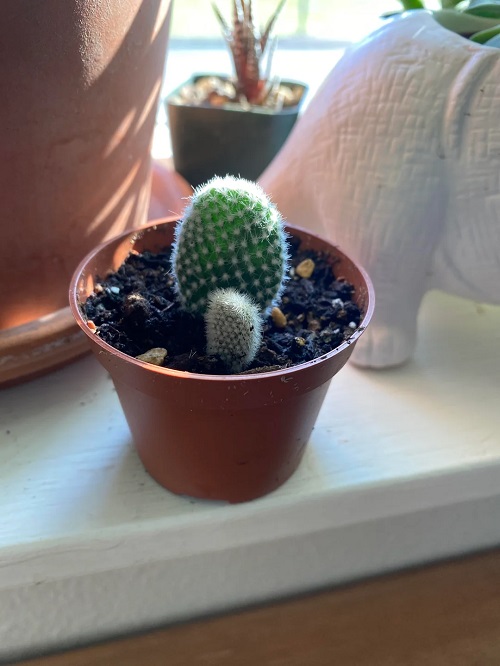
Bunny Ear Cactus Care
Fertilizers
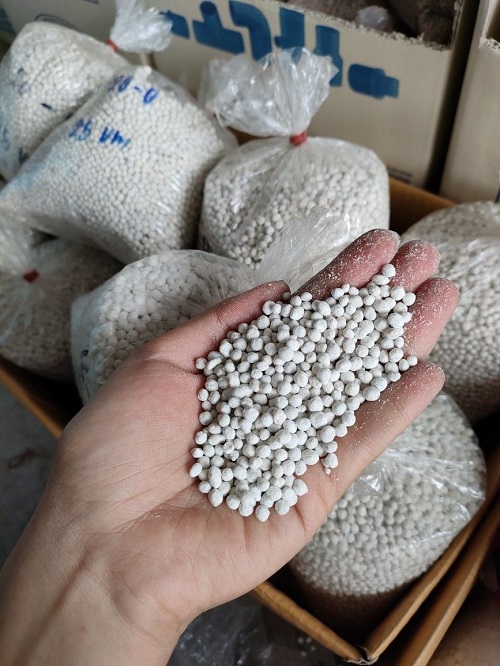
Knowing the right composition of fertilizers is crucial for the growth and flowering of your plant. Therefore, before buying soil mix, we should always check the amount of ingredients required for our plant and what we are going to feed them.
Talking about bunny ear cactus, they require a nutrient-rich soil of pH 6.1-7.8. The soil must be airy, porous, and have a sandy texture to dry up fast, preventing sogginess that can damage the roots.
We’d suggest buying a balanced NPK fertilizer with a ratio of 5-10-5. This ratio of dilute fertilizer will help the bunny ear cactus grow well and prevent the roots from burning, which is mostly caused by toxic fertilizers.
Pests and Diseases
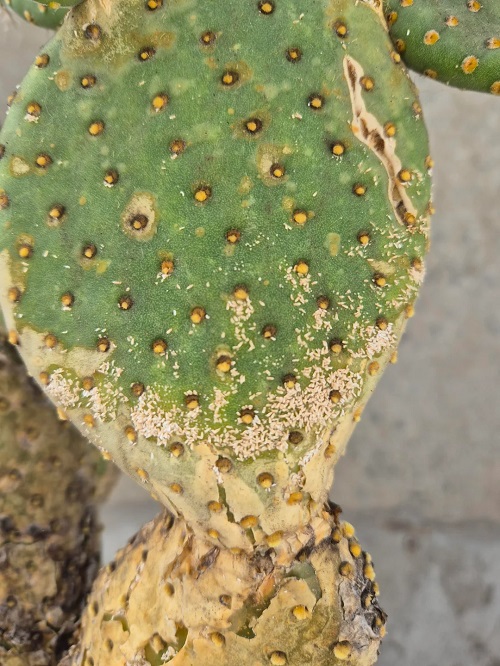
We care, you care, and all plant lovers care for their plants the most when it comes to pests. But since we care a little more, here are some insider tips for you!
- Bunny ear cactus is prone to mealybugs. Therefore, we need to keep them safe through pest control. Take a cotton pad dipped in 70% of isopropyl alcohol and clean the pads with it.
- Sometimes, Aphids may also attack our polka dot cactus and cluster on the new growth. To fight these insects, blast off with a strong stream of water or use insecticidal soap.
- Spider Mites are another problem for our cactus that can cause brown spots on healthy pads. To avoid these pests, spray thoroughly with a neem oil, dish soap, and water mixture.
Toxicity & Handling
Bunny Ear Cactus is mildly toxic to pets and humans if ingested. The tiny glochids can also cause skin irritation, so always handle the plant with gloves and keep it out of reach of children and pets.
Growing succulents like bunny ear cactus does not need any specific master course. You only need to maintain a basic plant routine and forget it for the rest of the day. In return, the polka dots of the cactus will give your home a retro-filmy look.
Give these tricks a try and let us know if it really works! If you are facing more issues with your succulents, then reach out to us; we are in this together.