
Want to display your Schlumbergera? Let it hang and show off your gardening skills. We are ready to share some tips with you.
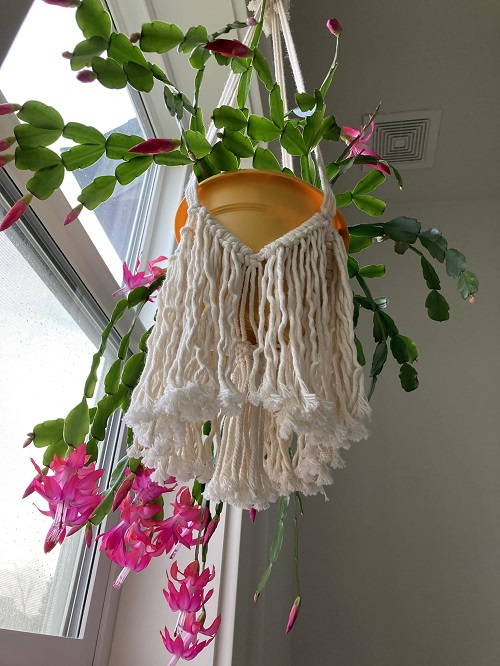
Thinking of a plant with low maintenance that hangs beautifully on your balcony and filters air, too? Christmas cactus breathes in carbon dioxide and releases oxygen at night. The flattened and scalloped stems, which trail up to 18 inches, will embrace your balcony.
Christmas Cactus Information
The long, segmented stems with the zygomorphic flowers will grace the surroundings. The Christmas cactus is an epiphyte and a lithophyte; its long, segmented stems with zygomorphic flowers will grace the surroundings. They usually bloom at Christmas, like in the Northern Hemisphere, but under preferred conditions, they bloom in any season, like in the Brazilian Habitat.
Requirements of Growing Christmas Cactus
1. Pick suitable Pot
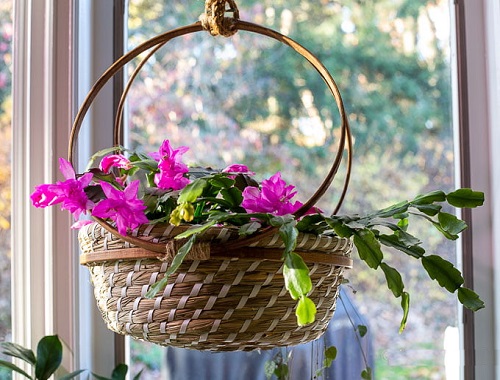
For a hanging Christmas cactus, choose a wide, shallow pot with 3–5 drainage holes. A sturdy hanging basket with strong hooks works best—after all, you don’t want your plant “dropping the ball” mid-air.
Match the pot size to the plant:
- Small plants → 4–6 inch pot
- Trailing, mature plants → 10–12 inch pot
Tip: Avoid oversized pots. They stay wet too long, and Christmas cactus hates soggy, waterlogged soil.
Hanging pots with a removable inner saucer help drain excess water easily. If there’s no saucer, let the water drain freely after watering. Plastic pots are ideal because they’re lightweight, while terracotta is heavier and better suited only for smaller plants. Resin pots look great and work wonderfully for hanging setups.
2. Light and Location
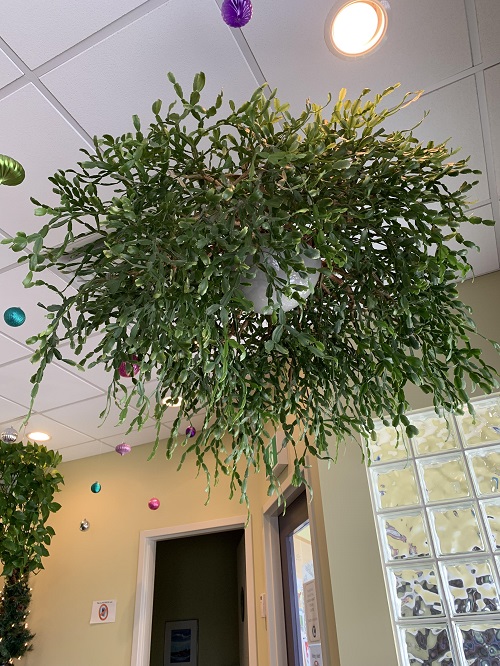
Schlumbergera needs bright, indirect sunlight, so hang the plants at an east or west-facing window or at the entrance. Avoid direct sunlight on them, as it can cause sunburn and hamper their beauty.
The ideal indoor placement would be near a bright window with sheer curtains or in a well-lit hallway or living room. You can even hang it under a tree, on a porch, or in the shade. Preferred lightning is key for healthy growth and flower production.
Trick to bloom – Keep in 14-16 hours of darkness for at least 4 weeks and a cool environment, especially at night.
3. Soil

A perfect pasta mix is necessary for tasty pasta, so the soil mix recipe needs to be the best for the Christmas Cactus to flourish. The recipe says: 50% regular potting soil, 25% perlite, and 25% orchid bark. The Christmas cactus needs a soil mix that is loose, airy, well-draining, and rich in organic matter with a soil pH of 5.8-6.5.
For hanging pots, mix coco peat if the weather is dry in your area, as they dry out faster. And if the weather is humid in your home, mix extra perlite.
4. Watering
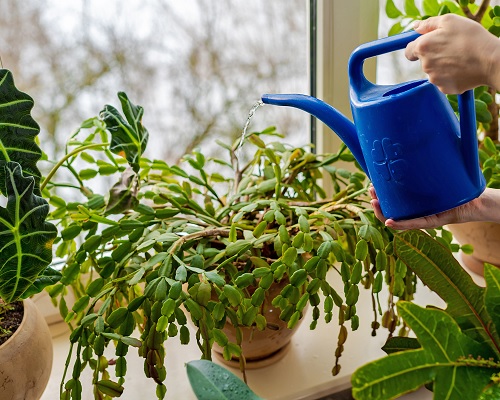
Christmas Cactus should be watered only when the top 1-2 inches of soil feel dry. Hanging pots dry out faster, so you need to keep them in check. Water them till the water drains out from the drainage holes, and never let them sit in water.
If you overwater them, you will see yellow, mushy segments, fungal gnats, and black roots. During the blooming period, increase watering slightly, but avoid overwatering to allow the plant to rest.
5. Temperature and Humidity
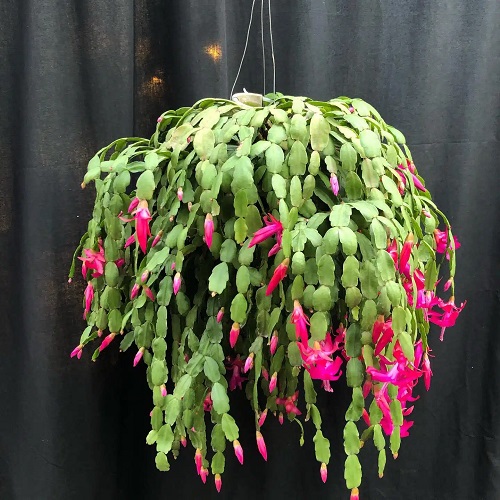
Christmas Cactus are happy at an ideal temperature of 18-24 degrees Celsius. You need to protect it from cold drafts and AC vents. They prefer high humidity, around 50-60%, so mist them occasionally on leaves to provide a boost of moisture. You can even hang them along with other plants.
Tip- A cool environment around 50 degrees F to 55 degrees F for about 6-8 weeks in the fall helps trigger bud formation and blooming.
Christmas Cactus Care Tips
1. Fertilizer
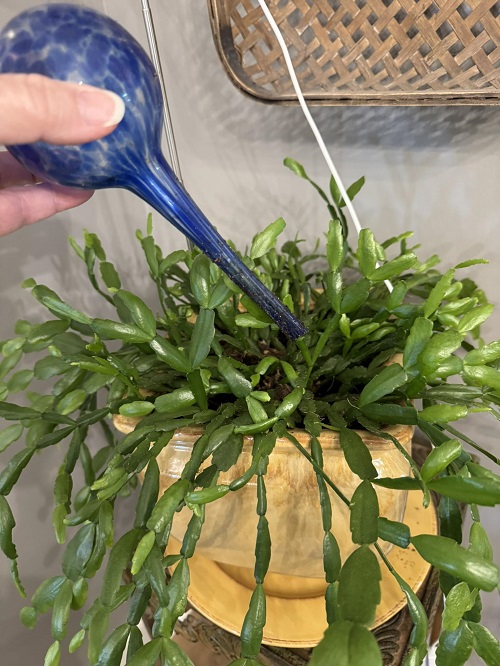
Feed the cactus a water-soluble fertilizer with a 5:10:5 N-P-K ratio, diluted to half-strength, once a year. Dilute the solution with compost tea or worm castings solution to provide natural nutrients for your plants. Avoid fertilizing during the blooming period, as it will hinder the flower production. More fertilizer leads to salt buildup, damaging the roots.
2. Pruning
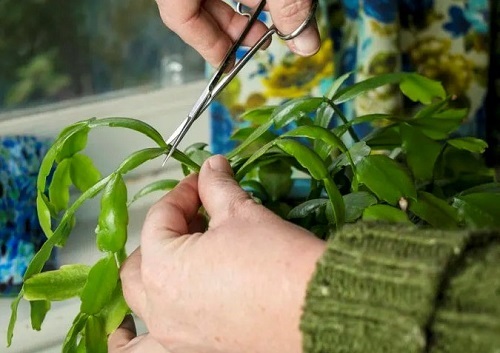
The best time to prune is during the blooming period, typically in early spring or late winter. Prune the stem using sterilised scissors; remove dead or damaged stems. The pruned ends help in multiplying the flowers of Schlumbergera.
3. Pests and Diseases
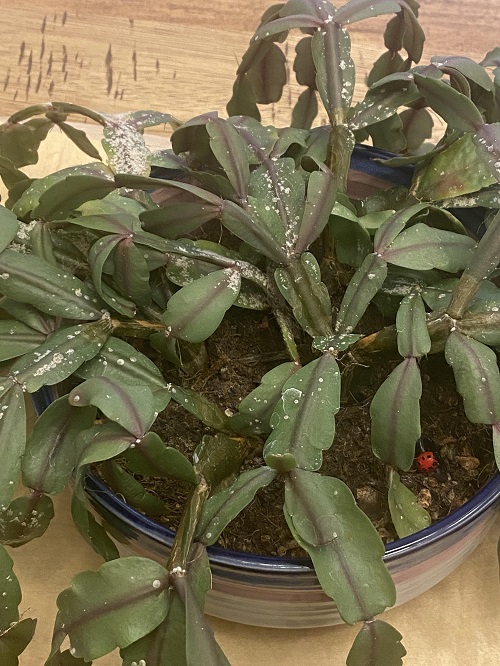
If you are attracted to Christmas cactus, how can pests be behind? Common pests that attack them include mealybugs, aphids, fungus gnats, and spider mites. Treat them by wiping the pests off with a cotton swab dipped in rubbing alcohol or using insecticidal soap.
You can even find root rot or stem rot. For this, you need to trim away any soggy roots or stems and repot them.
Hang your Christmas Cactus at the entrance, and do tell us in the comments how it is going.