
Did you record African Violet in your succulent list? Let’s discover some facts about Saintpaulia that will make your home look more beautiful.
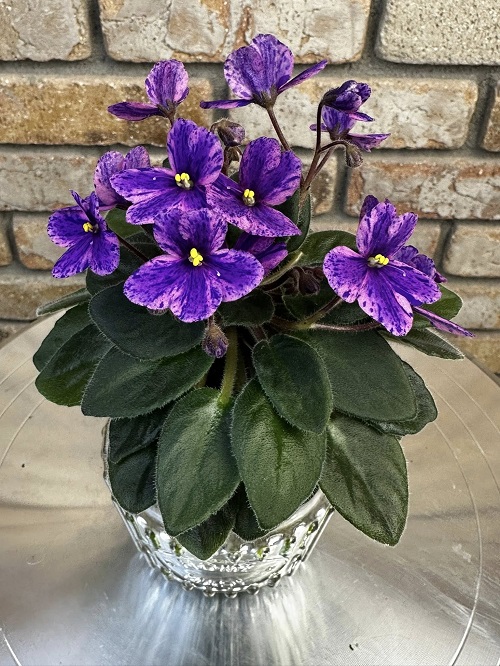
African Violets have dark green, thick, hairy foliage and purple-hued, rosy buds. But is it actually a succulent that is popping up in your mind? You are not alone; this question has even kept our gardener friends confused. So, let us uncover some botanical truths about this mysterious houseplant. Read this article to learn the difference between them!
Is African Violet Actually a Succulent or Not?
African Violets are not true succulents. They are classified as semi-succulent or succulent-like tropical houseplants. They hold more water in their leaves than do average tropical plants, but they don’t store water long-term like desert succulents.
You might have noticed the soft, thick leaves of an African violet and seen their resemblance to those of a succulent like jade or aloe. In the world of plants, succulents are those that have evolved to survive in areas with limited water, and they need the least care.
They transform their leaves into water-storing structures, stems and spines to reduce water loss in extremely hot climates and to store water for long periods.
African violets share many traits with succulents, including the ability to produce new plants by vegetative propagation and they have thick, fleshy leaves that can store water. This proves their slightest resemblance to succulents, but it has a tropical heart, with succulent blood flowing through it. Let’s prove it!
Why African Violets are Tropical at Heart
1. African violet Hates a Desert Environment
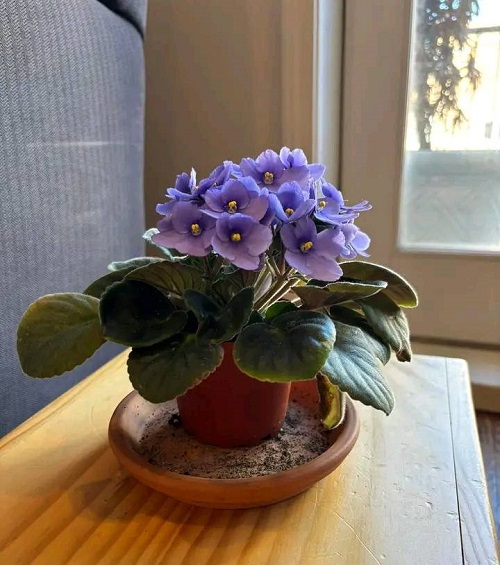
Keep your jade plant and African violet together in a desert environment with high temperatures and no water. After a few hours, you will find your African violet wilted or dead, whereas the jade plant is still thriving. This is because a true succulent keeps its pores closed during the day to conserve water and opens them only at night to collect carbon dioxide.
On the other hand, African violets follow the methods of tropical and temperate plants. They keep their pores open during the day, which leads to dehydration in extreme temperatures.
2. High Humidity Required
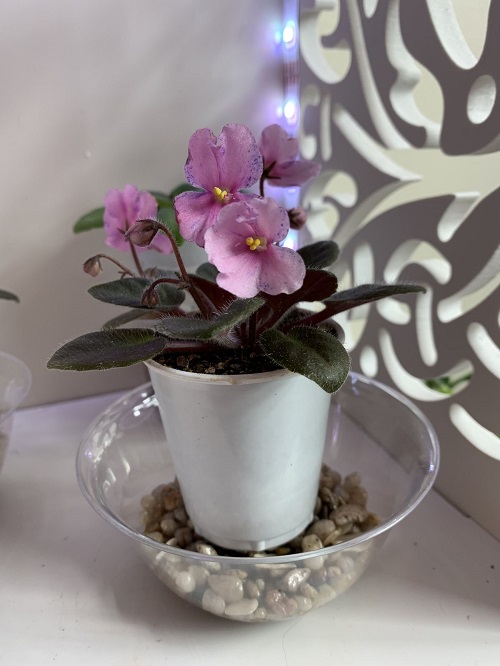
Succulents love dry air and warmth, whereas African Violets prefer humidity and stable indoor temperatures. African violets are native to tropical cloud forests; therefore, they require high humidity of around 40-50% to survive.
The leaves of this plant get curled, and buds will fail to open when kept in a low-humidity area that succulents prefer, so it proves them to be a tropical plant. Homes with humidifiers and basement growing areas are well-suited for violet culture.
3. Sensitive to light
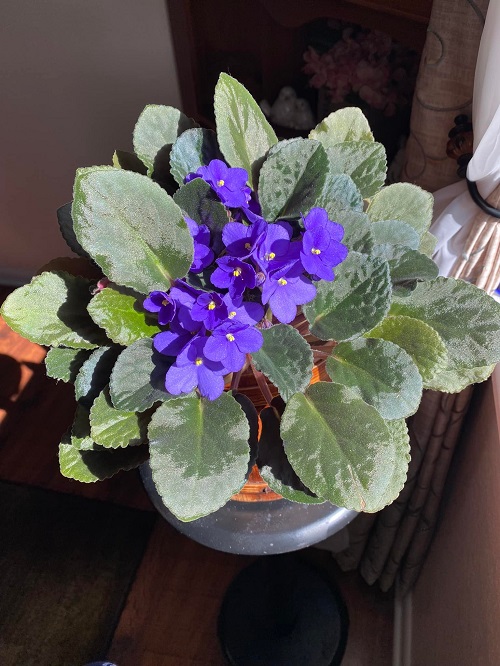
Succulents need strong light to survive, but African violet leaves will burn. They are the showstoppers, and they need little extra attention to get the beautiful blossoms and vibrant foliage. For even growth, turn the plants occasionally so different sides flourish evenly.
A window facing north or east is usually the best for African Violets. Therefore, it should be kept in bright yet indirect sunlight to keep them safe from sunburn and scorched patches.
4. Functional Difference
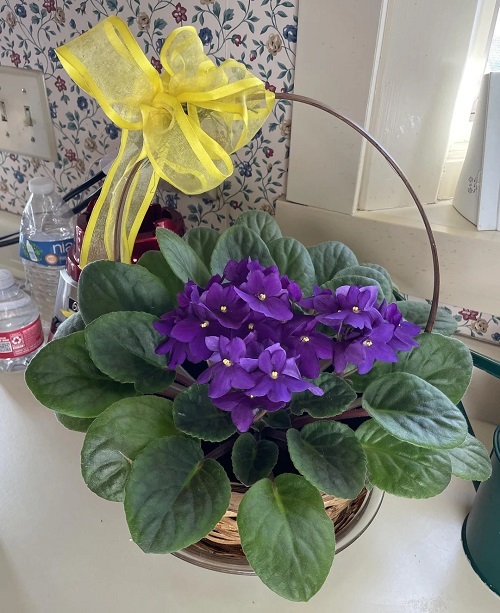
Saintpaulias have very fine, fibrous hair-like roots, which are delicate and may die if they dry out completely. At the same time, succulents have thick and far-reaching root systems that are designed to grab a year’s worth of water in a single flash flood.
Although African violet leaves look thick, they behave very differently from succulents. Their leaves are soft and fleshy, not firm and water-storing like succulent leaves, and hold some moisture, but cannot store water for long periods.
All this evidence proves that African violets are semi-succulent plants that share a physical resemblance with succulents and an ecological resemblance to tropical and temperate plants.
So, next time someone asks if your plant is a succulent, you can tell them: “It’s a succulent in body, but with a tropical soul at heart.” Looking for more details on African violets? Share your questions below so others can learn along with you.