
Will you be surprised if the Kalanchoe blooms even after spring? They can flower and have the potential to elevate your home.
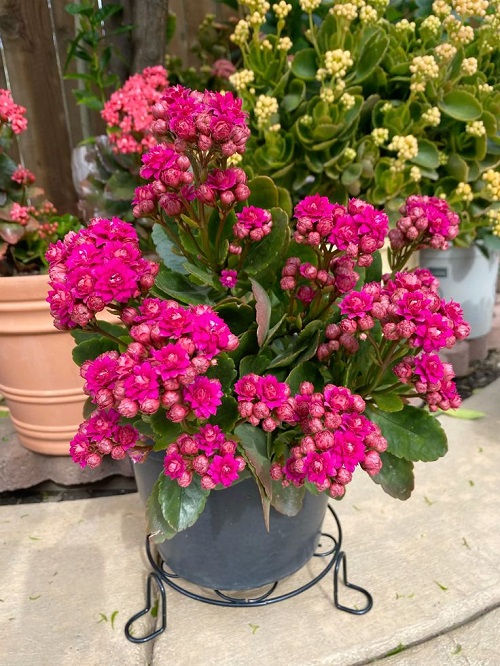
Kalanchoe is a succulent plant that produces bright flowers in red, pink, yellow, and orange. Mostly, they bloom in winter or early spring. But will you give us a clap for telling you a secret that they can bloom again later in the season with a bit of care and patience?
How to Trigger late-season blooms in Kalanchoe?
One important thing to know: the most popular Kalanchoe sold for flowers is Kalanchoe blossfeldiana, the variety that responds best to winter light tricks and reblooms.
Kalanchoe flowers need rest, proper light, and watering; only then will they make new flower buds. To trigger blooms in Kalanchoe, you need to simulate the shorter days into longer, uninterrupted nights of winter.
This process is called photoperiodism, which is a physiological response of plants to the relative lengths of light and dark periods, helping them track seasons for events like flowering, migration, or hibernation.
1. Keep in dark
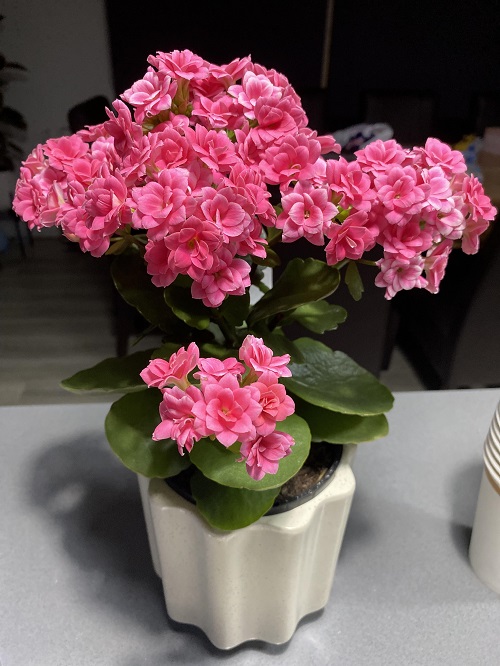
They are witches who love darkness. Kalanchoe is a short-day plant, meaning it requires long nights to form flower buds. So, keep them in complete darkness for 12-14 hours every day for 6-8 weeks. You can place it in a dark cupboard at night, or cover it with a box with holes for air to pass.
Make sure to shift it back to bright light during the day. Even a small exposure to artificial light from lamps or bulbs will disrupt the process and prevent budding.
Tiny but important Tip: While keeping it in the dark cycle, avoid moving the plant too often. Sudden spot changes can delay bud formation. Let it stay consistent like a winter routine.
2. Gentle Sunlight
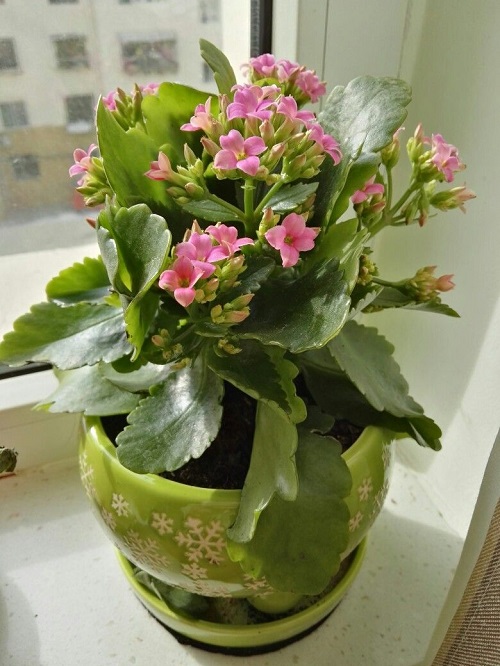
They love darkness but also need light to collect food. Place it in bright but gentle sunlight, and for late-season blooms, sunlight is essential. Keep it near a sunny window (a south- or west- facing window) after the dark period. Try avoiding keeping them in direct sunlight in the afternoon, as it will burn their leaves, thus reducing the number of flowers.
If natural sunlight drops too low, add a grow light 6–12 inches above the plant for 4–6 hours in the daytime. This keeps stems compact and supports bloom energy without confusing its night cycle.
3. Pruning
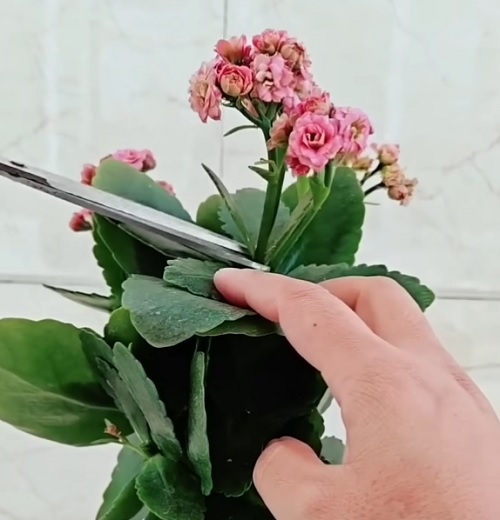
After the flowers have bloomed in early spring and the current flowers have faded. Trim the stalks back to the second or third leaf below the bloom. This will redirect your Kalanchoe’s energy from seed production to new growth and future blooms.
Always sterilize your scissors before pruning. A quick wipe with rubbing alcohol prevents infections, especially when the plant is resting and more vulnerable.
4. Water on time, not too much
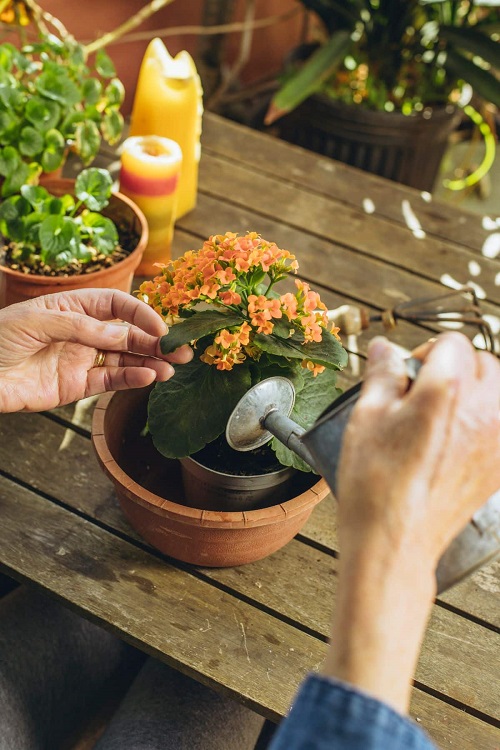
Water only when the soil is dry, as this plant stores water in its leaves. The watering rule is to touch the soil and check whether the top 1 inch feels dry; then water. If it feels wet, then have some patience and try again after a few days. Don’t overpour water, as too much can stop blooming and rot the roots.
5. Fertilizer Feeding
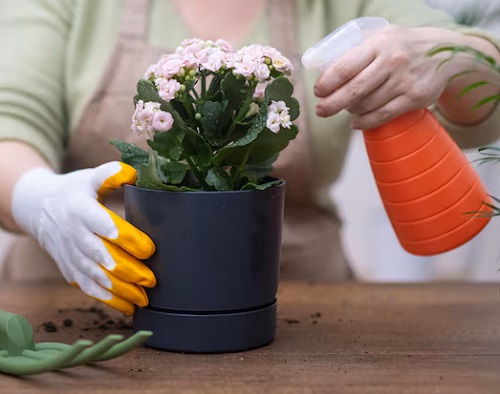
Feed the plant lightly; this will help Kalanchoe produce food and thus make flowers. Use a balanced liquid fertilizer once every 3–4 weeks. Do not over-feed, as too much fertilizer makes leaves grow and not flowers.
For late blooms, a bloom-supporting fertilizer with slightly higher phosphorus (middle number) works better than high-nitrogen feeds. Nitrogen grows leaves, phosphorus supports flowers.
6. Deadheading
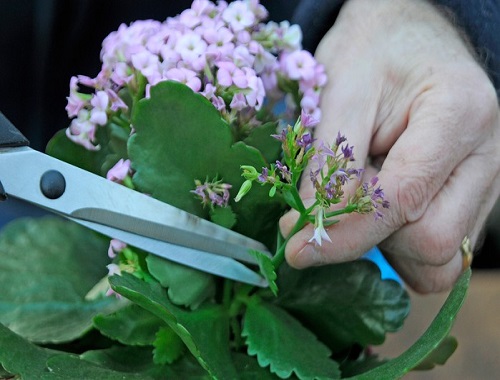
Cut off negativity from your lives and deadheads from your Kalanchoe. Remove old flowers and weak stems to encourage new buds. By cutting off dry flowers and long, weak stems, you are saving the energy of Kalanchoe.
7. Resume Normal Care
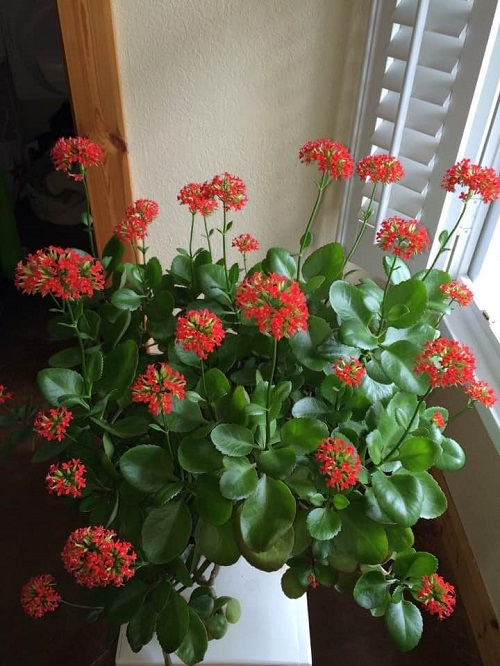
After six weeks, small flower buds will begin to form at the tips of the stems. Once buds are visible, return them to their permanent place, where they receive ample daylight and nights.
Maintain ideal temperatures of 60–75°F (15–24°C) in the day and 50–60°F (10–15°C) at night to prolong bloom life.
It feels like a teacher to make Kalanchoe learn when to wake up and flower again. The right balance of light to Kalanchoe will reward you with beautiful flowers. Try this trick and do tell us in the comments how your Kalanchoe is blooming.