
Learn how to propagate a dolphin plant easily at home using methods that work and give your plant the healthy glow it deserves.
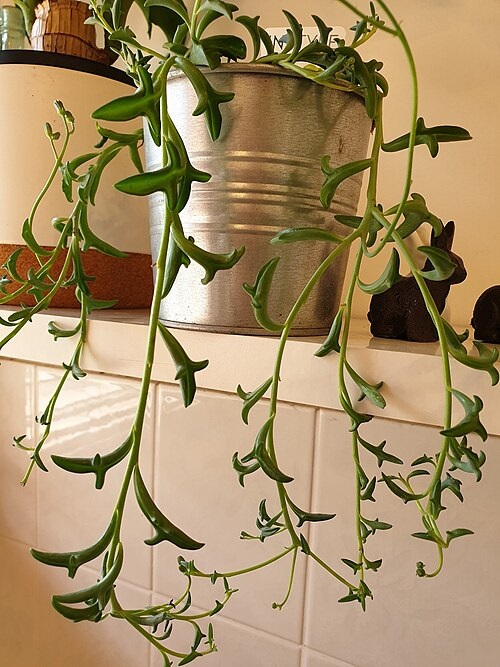
The dolphin plant or the infamous string of dolphins, is a favorite among succulent lovers because of its unique leaves. While it looks dainty, this plant is somehow easy to propagate —but only when you understand what it needs. Are you ready to understand that?
Propagate Your String Of Dolphins
It’s very easy actually, every plant has its own needs and care requirements. Many people fail here, because they treat it like a regular houseplant or rush the process in order to get quicker results. The established fact is that dolphin plant propagation is simple, but only when done correctly.
Succulents store water in their leaves and stems. This makes them prone to rot if exposed to excess moisture for long. So the thumb rule is that successful propagation depends on two things, firstly, allowing cuttings to callous properly and using a well-draining medium.
And secondly, bright indirect light, warmth, and some patience also play a major role. When these conditions are met, the plant roots quickly and begins new and thick growth within weeks, and we are sure you cannot judge the beauty of it just by reading.
Stem Cuttings in Soil
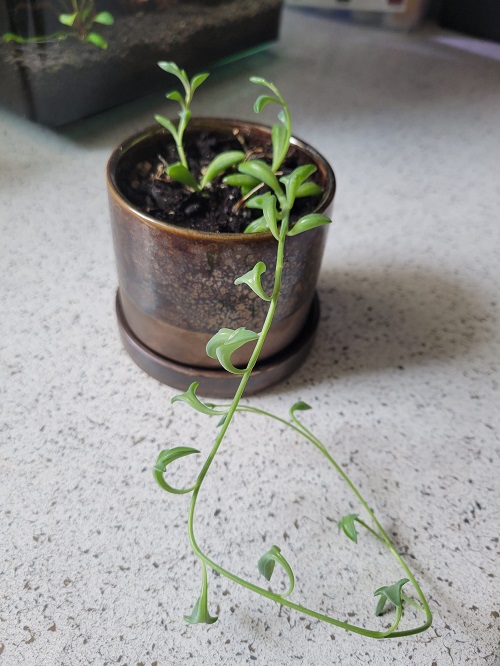
Stem cutting propagation in soil is the easiest and beginner-friendly method. Start by choosing a healthy stem with plump leaves. Using clean, sharp scissors, cut a section that is about four to six inches long. Make sure the cutting has at least two or three leaf nodes.
Remove the leaves from the bottom portion of the cutting to expose the nodes. These nodes are where new roots will form. Let the cutting dry and callous for at least 12 to 24 hours. This step is crucial because it prevents rotting once the cutting is planted.
Prepare a small pot with a well-draining succulent or cactus mix. You can add perlite or coarse sand for better drainage. Insert the cut end into the soil, making sure the nodes are buried while the leaves remain above the surface.
Water lightly and place the pot in bright, indirect light. Within two to three weeks, you’ll see the roots developing and new growth formation for your little friend.
Water Propagation
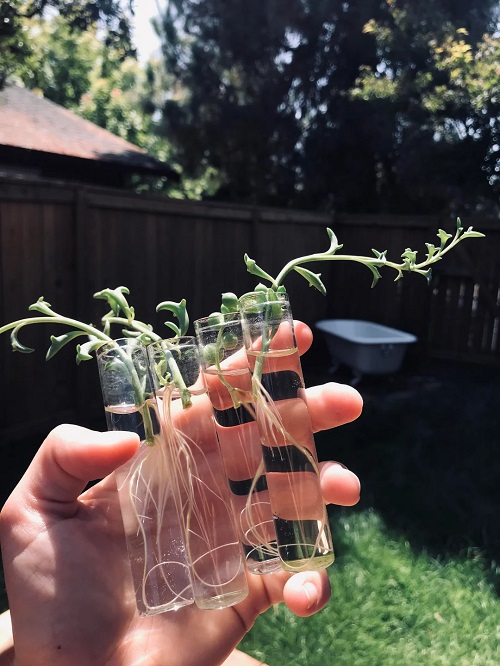
Water propagation is another easy method, but take a note, it requires more care after rooting. Take a healthy stem cutting and remove the bottom leaves. Place the cutting in a glass of clean water, ensuring that only the stem and nodes are submerged, not the leaves.
Change the water every two to three days to prevent bacterial growth. Keep the glass in bright, indirect light. You’ll see the roots appearing within one to two weeks. Once the roots are about an inch long, transfer the cutting into well-draining soil.
Take care and be gentle during transplanting, because water-grown roots are more delicate and need time to adapt to soil.
Laying Cuttings on Soil
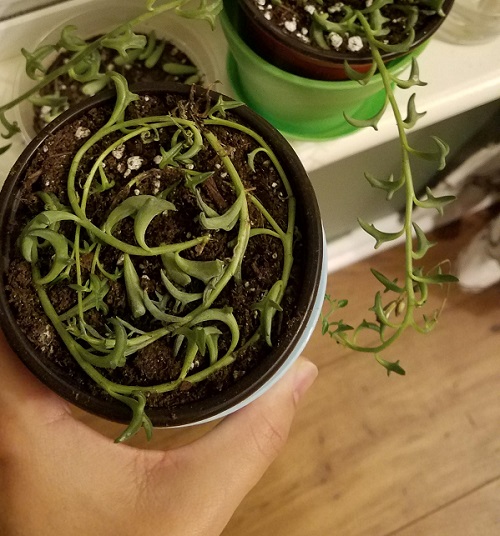
This method works well if your dolphin plant is long and trailing. Lay healthy cuttings flat on top of moist succulent soil, making sure the nodes touch the surface. Lightly press them down but do not bury them completely.
Over time, roots will form from the nodes touching the soil. This method mimics how the plant naturally spreads and is ideal for creating fuller pots. Keep the soil lightly moist but not wet and provide indirect sunlight. You’ll see the roots which grow usually within two to three weeks.
Caution!
Overwatering is the most common reason propagation fails and this is probably a reason for every succulent. Dolphin plants prefer dry conditions, especially during rooting. Even skipping the callousing step can also lead to rot.
And by all means avoid placing cuttings in harsh direct sunlight, as this can dehydrate them before roots form. Do not use heavy soil without proper drainage because that is another issue that we need to avoid.
Propagating this little beauty is not a complex task. All it asks for is genuine care and routine checks, if you are sure you can give them that, they are ready to bloom the prettiest for you. Let us know which technique are you using for your string of dolphins.