
Do you also wish your snake plant glowed and grew magnificently in winter? Then stop making these mistakes and see them thrive uncontrollably!
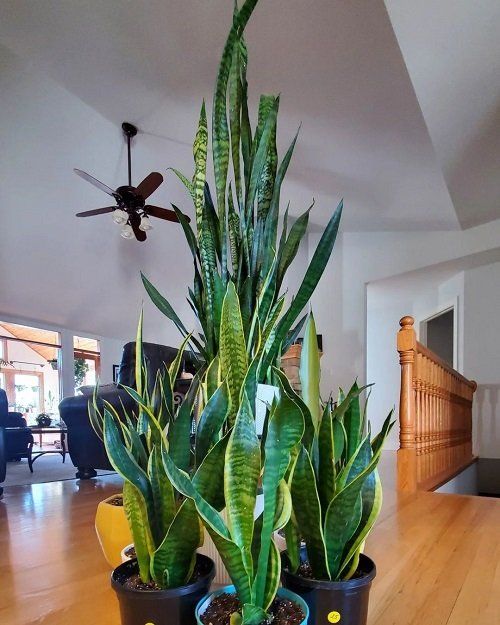
As winter rings your doorbell, make sure when you open the door, you don’t let your snake plants get cold-shocked. These low-maintenance plants are known for their survival skills in various conditions, but they need some special attention too.
Here are some mistakes we unintentionally make, thinking they’ll keep our snake plants hardy in winter.
Things You Must Never Do To A Snake Plant
1. Overwatering
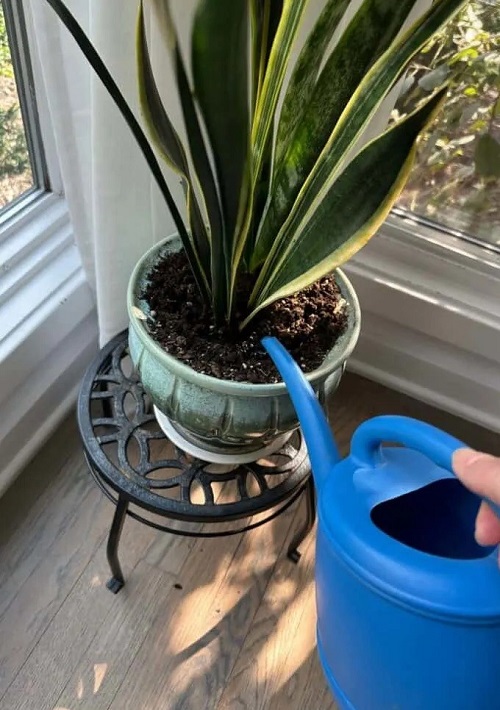
Water is the most essential thing a plant needs to survive, but eventually, in winter, excess water may make the leaves of the snake plant turn mushy, soft, and soggy with yellow leaves. Overwatering can cause the roots to suffocate due to a lack of airflow. All of this turns out to be fatal to your snake plant.
To solve the issue of an overwatered snake plant, remove it from its pot and let it dry naturally. Examine the roots and trim unwanted ones, then repot it carefully and plant it in a new pot. Snake plants should be watered only once a month in winter for them to grow healthily.
2. Avoid Exposure to Extreme Temperatures
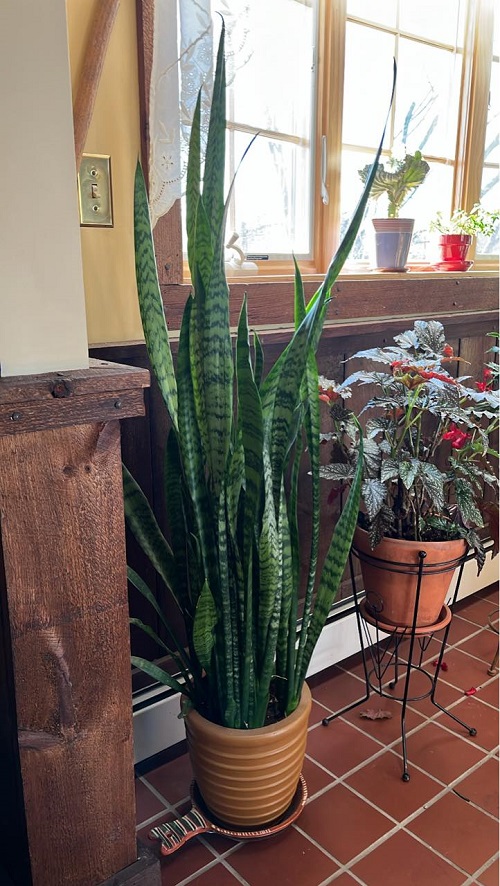
Snake plants can’t grow in temperatures under 50°F (10° C) healthily. This simply means to keep the snake plant in a warmer corner if it is near or outside, but one should not misunderstand this and place their snake plant near a vent or radiator. The hot and dry air may cause more damage to its leaves than good.
When a snake plant is exposed to extreme temperatures, remove any damaged or mushy parts and move the plant to a spot with bright and indirect light, and don’t water it for a few weeks to allow it to recover and heal.
3. Fertilizers
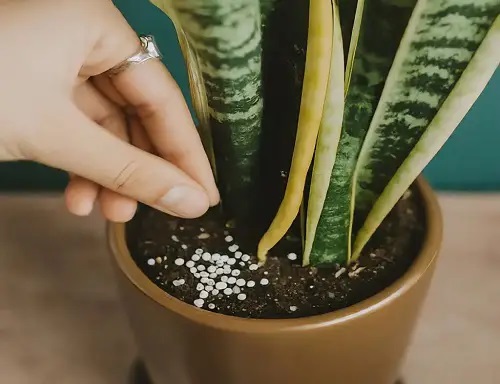
Fertilizing the snake plant in the winter can cause burn and damage the roots as the plant is less likely to absorb it in the winter. Pruning is more beneficial in the spring, since it allows new development. We know that fertilizing and pruning are two important activities, but one should perform them when the snake plant is actively growing.
If you think you have added too much fertilizer to the soil, then flush the soil with clean water, let the soil dry out completely, and wait to fertilize again till the next growing season arrives. Signs of overfertilization involve yellowing leaves and crispy edges, so watch out for them!
4. Direct Lighting
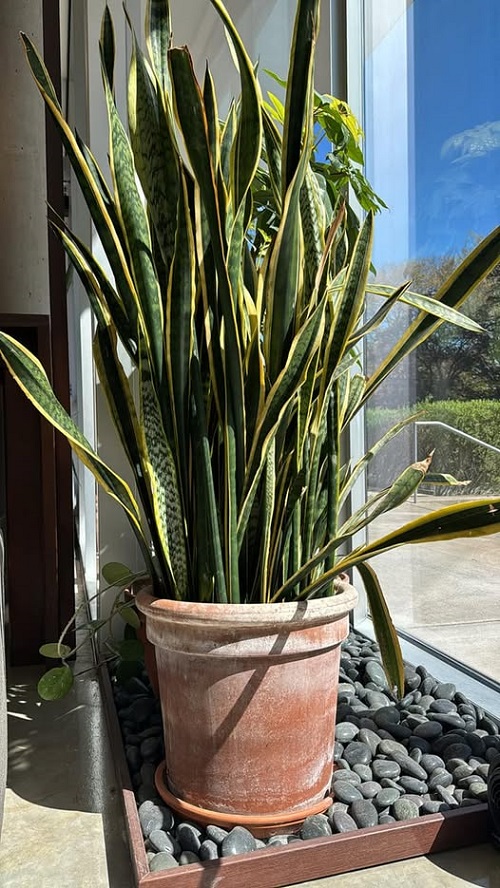
Sunlight is again one of the most essential things for a snake plant to grow. But in winter, make sure to avoid exposing the snake plant to direct lighting for more than one or two hours. You can easily relocate your snake plants to low light conditions, because too much direct light can either give it a heat burn or scorch its leaves.
Examine the soil moisture and water only when it’s completely dry. If you find that the leaves are burnt, switch to a more sensitive care routine and avoid shocking the plant otherwise.
5. Exposure to Cold
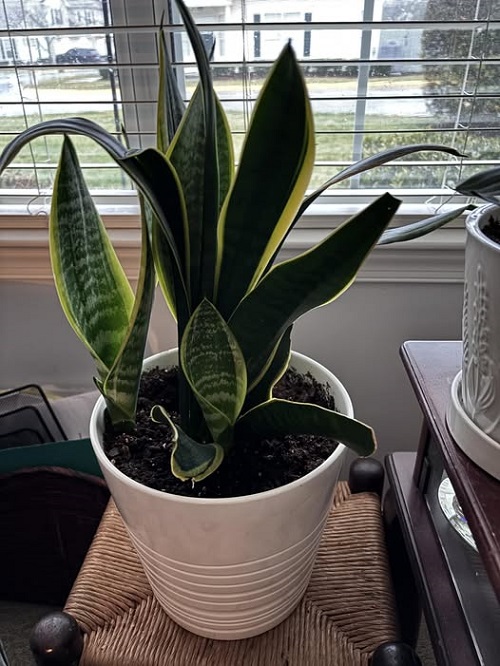
Too much water, too little light, and frequent exposure to cold temperatures or temperature shocks can result in the snake plants eventually having drooping leaves. This means there is stress that is building up in the plant, and you need to stop!
The snake plant has been left in a cold environment for a long time now. It is time to relocate it to a warm and stable position away from cold drafts. Reduce the watering frequency gradually, allow the soil to dry out wholly between waterings. Monitor for signs of damage like yellow or mushy leaves, which indicate overwatering.
These unintentional mistakes summarize how we think we are caring for our snake plants. But in reality, they do them more harm than good. Let us know which mistake you have been making for a long time. And how you corrected it in the comments below!
👉 Watch this related video for additional context