

Learn how to train your Pothos to cover a wall indoors with simple techniques that bring out the best in your home and safe space.
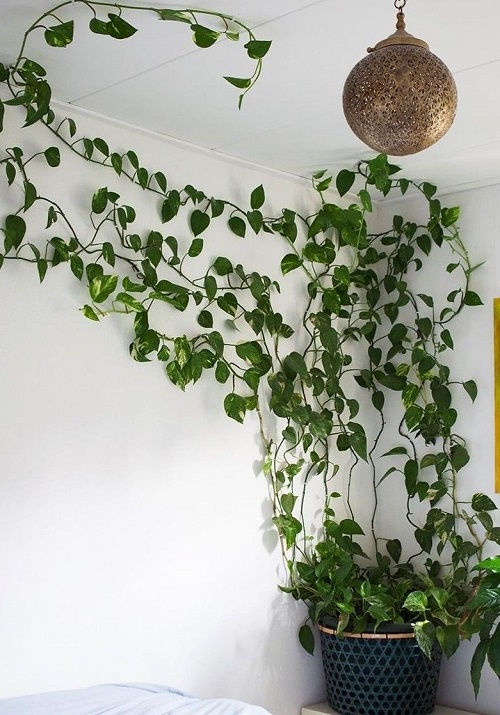
Pothos is one of the easiest houseplants to grow and train vertically, but only when done strategically. With its vines, heart-shaped leaves, and adaptability to indoor environments, pothos can transform a blank wall into a magnificent green display. Let’s get to decorating your wall now!
How to make Pothos Cover a Wall
Give some support, direct the vines, and take proper care of them, and you are halfway done to make them cover your wall.
1. Give Something to Move Up
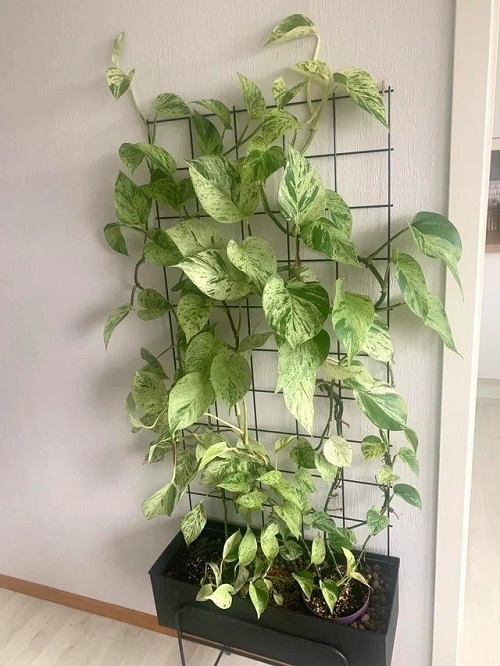
Pothos plants climb using aerial roots that emerge from their stems. These roots grip rough surfaces such as wood, moss, or textured walls. But indoor walls usually don’t provide enough grip, so you need to give the plant some support. Try using moss poles, wall-mounted trellises, and coconut coir poles, or wall grids or mesh frames for their support.
Moss poles are especially effective because they retain moisture, which encourages aerial roots to attach firmly and grow upward. Place the support directly in the pot or close to the wall where you want the plant to climb.
If you prefer a minimal look, you can also use clear plant clips or transparent hooks so the support system stays almost invisible on the wall.
2. Use Wall Hooks or Plant Clips
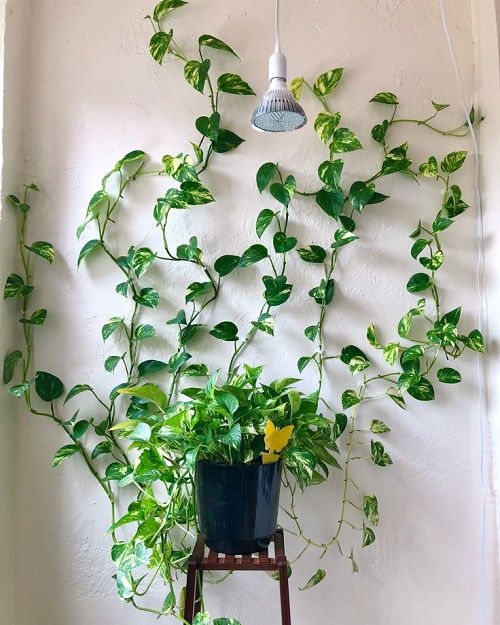
Adhesive hooks or plant clips are your saviors here. These act like small anchors that guide the direction of the vines. Decide the pattern you want; it could be a straight line, zigzag, or arch.
Place adhesive hooks every 6–12 inches along the wall and gently tuck the vines under the hooks. Leave a little room, so the stems can grow thicker without damage.
3. Start Training the Vines Early
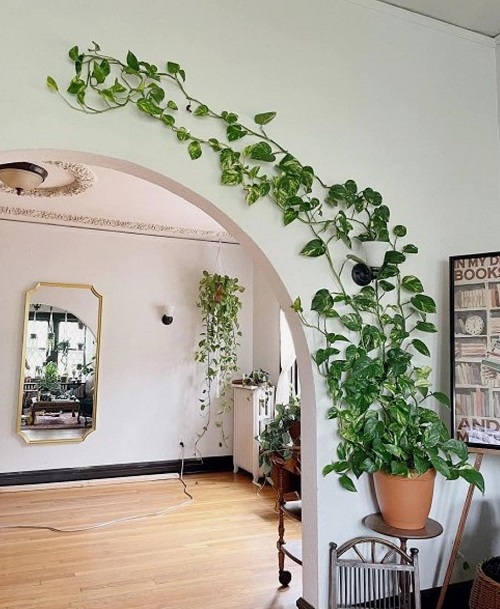
Young vines are flexible. As soon as your pothos begins trailing, start directing it upward toward the wall support. You can secure the stems with soft plant ties, Velcro garden tape, or small clips.
But do not tie the stems too tightly, because the vines need air and space to grow and expand. Soon, you will find the vines attaching to the base and growing in every direction you have guided them toward.
If you prefer a minimal look, you can also use clear plant clips or transparent hooks so the support system stays almost invisible on the wall.
4. Encourage Faster Wall Coverage
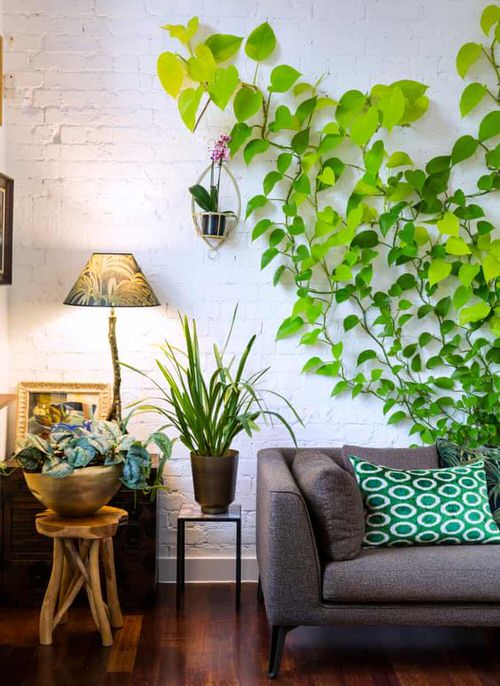
To fill a wall quickly, divide the vines and guide them in different directions. Instead of allowing one long trailing stem, spread multiple vines across the wall. One may go up, another down, and another to the side in any shape, curve, or wave.
Some plant lovers even create shapes like hearts, frames around mirrors, or leafy borders around shelves using pothos vines.
5. Prune and Prune
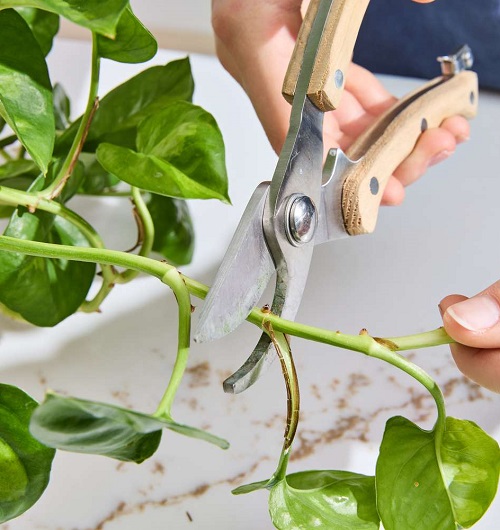
Pruning is crucial if you want a dense green wall instead of a long, sparse one. To encourage the plant to branch with new growth, you need to cut the stem just above a leaf node. In this way, you show the plant that it needs to produce new stems and more leaves to survive.
Also, you can propagate cuttings in water and afterwards plant them back into the same pot. With this, your vines will increase and cover most of your wall.
6. Right Growing Conditions
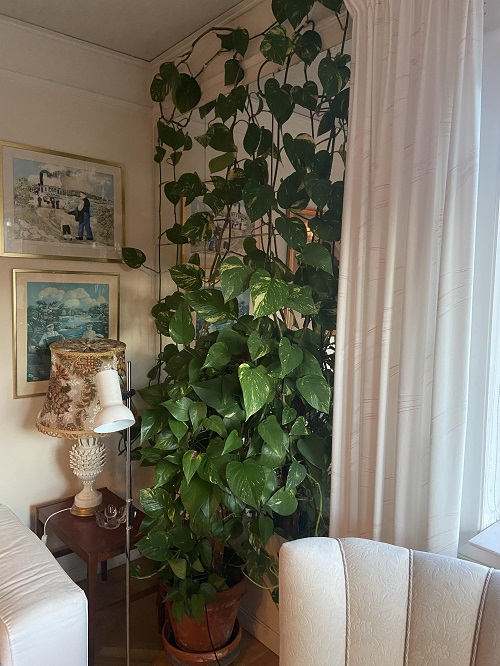
Healthy growth is a must. Keep the plant in a spot with bright, indirect light. Low light will result in slow growth, and too much direct sunlight can harm the leaves. Slightly moist soil is best, but be careful not to water the plant too much.
The aerial roots will most likely get a better grip in an environment with moderate humidity and light misting. Feed the plant with a balanced liquid fertilizer once per month during the spring and summer seasons and that will be sufficient.
7. Keep a Check
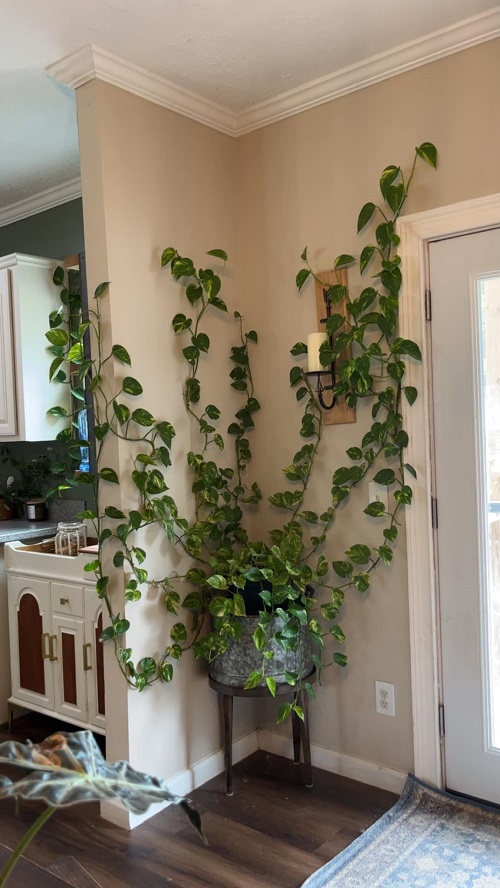
As pothos grows quickly, vines may move away from the desired pattern. Check the plant frequently and gently redirect any wandering stems back. You may also need to add additional clips or supports as the plant spreads across the wall.
Regularly checking the hooks and clips ensures they are not too tight around the stems as the plant grows thicker.
With patience, calmness, and kindness, you can grow your Pothos most adorably. Based on how you like the vibe to be, experiment with how you want your Pothos to be. But wait, don’t forget to share your ideas with us in the comments below!