
Want to purify your air with your favorite glossy Zamioculcas? If you’re confused about choosing one, here is a list of the best options!
The ZZ plant can thrive even when you ignore it, and it is a perfect choice for beginners and busy plant lovers alike. It’s adapted to survive with minimal water and light, thanks to its succulent-like rhizomes, making it an ideal indoor ornamental plant.
Best Types of ZZ Plant
1. Regular ZZ Plant
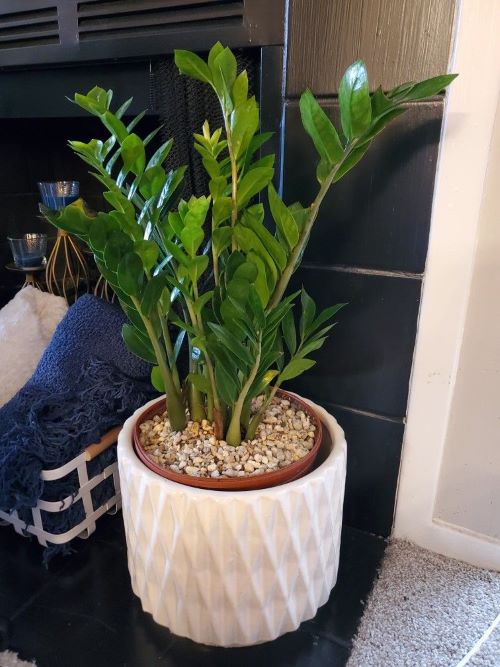
Want to decorate your office desk? This Zanzibar Gem plant is a perfect setup to be your friend. It is emerging as an important foliage plant due to its aesthetic appearance, ability to tolerate low light and drought, and resistance to diseases and pests. Its reputation is very strong for beginner plant parents.
2. Raven
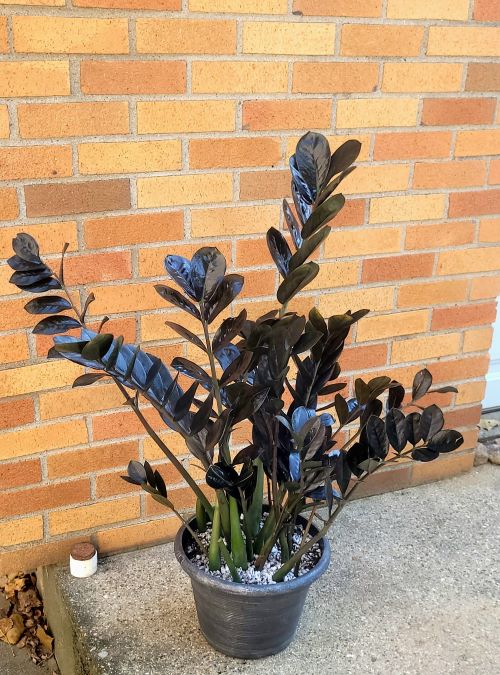
The ZZ plant is one of those “set it and forget it” houseplants that just keeps going strong. And with its shiny, evergreen leaves and tidy growth of about 1.5 to 3 feet, it fits beautifully into homes and offices alike.
It’s happiest in low to medium light, doesn’t fuss over watering, and asks for very little in return, hence it’s a true low-effort, high-reward plant.
3. Lucky Classic
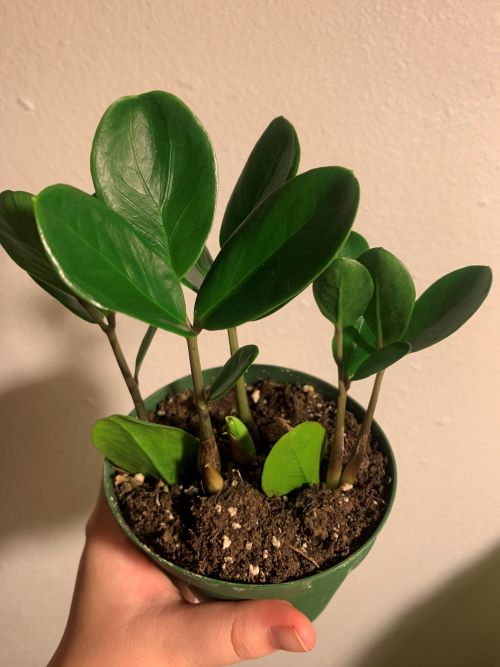
The spherical leaves of Lucky Classic are slightly tapered at the end. You can grow this plant in a low-lit location to showcase its beautiful leaves. They are often referred to as a “Fortune Tree” or “Eternity Plant,” which is believed to bring good luck, prosperity, and positive energy, particularly when placed in the southeastern, southern, or eastern corners of a home.
4. Lucky Giant
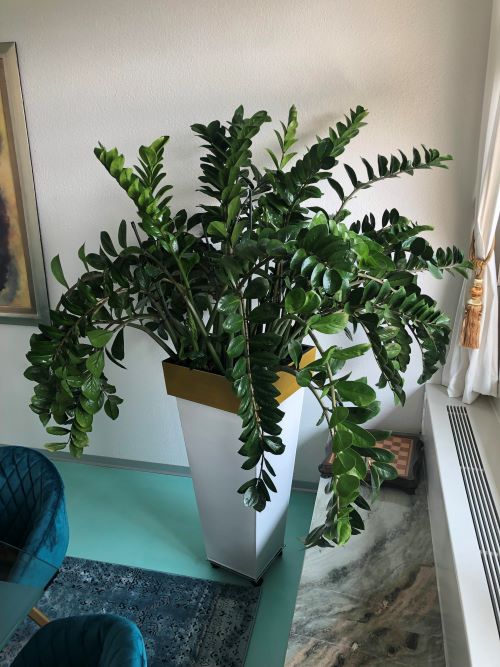
If you want to cover up your lonely space, this ZZ plant, with its large stems and elongated leaves, would be a great choice. The stems flow like an umbrella. They can be propagated through leaf or petiole cuttings, with root initiation occurring in about 14–21 days at 72°F.
5. Lucky White ZZ Plant
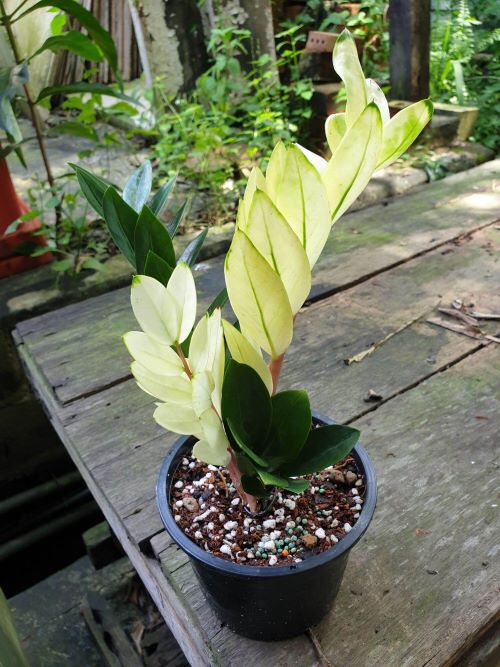
Make your bedroom aesthetic with this variety of ZZ plants! A rare variety with a white appearance on light-green leaves, this is a low-maintenance plant that can tolerate low-light conditions. It is prized in some traditions, such as for its Feng Shui properties.
6. Lucky Wide Leaf
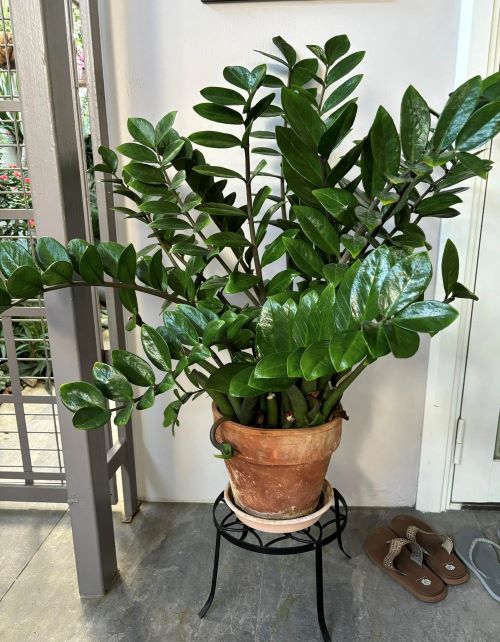
The softer and more rounded leaf tips and elegant growth pattern are a refined take on the classic ZZ plant. The deep green, oval-shaped leaves maintain the same glossy texture and thrive even in the darkest corners of a home or office, bringing a touch of graceful greenery to any setting.
7. Variegated ZZ Plant
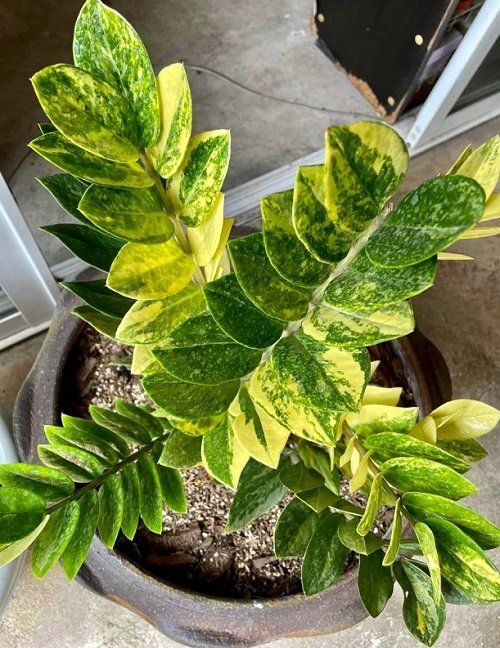
Freckles on the plant, which could be attributed to the Variegated ZZ plant! The research indicates it can be propagated through leaf cuttings in well-drained media, and new, stable variegated forms can be induced using colchicine treatment. The green, white, and yellow color combination on the plant makes it more captivating.
8. Gold Variegated
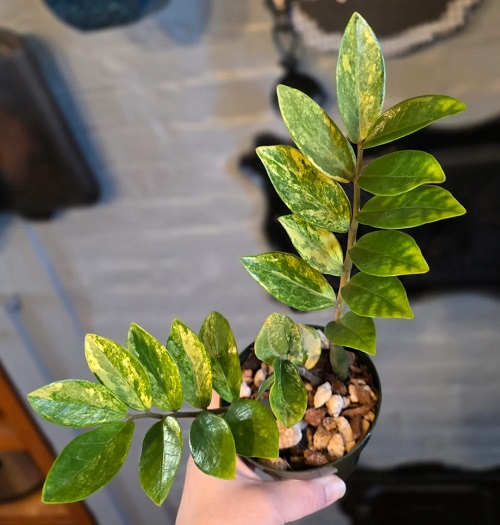
Add a golden sparkle to your room with this Gold Variegated ZZ! It is a beautiful houseplant with golden-yellow to creamy-white speckled leaves on fleshy green stems. They can be propagated through division or leaf cuttings, but they are often produced via tissue culture to maintain their unique variegation. They are among the most expensive types because of their myriad-hued leaves.
9. White Variegated
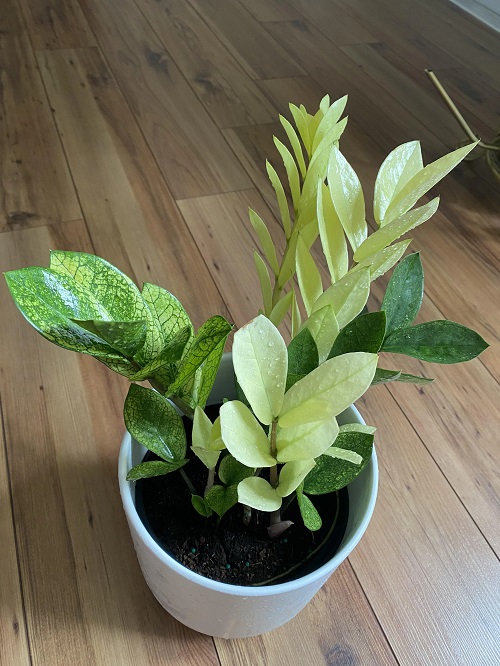
A white variegation on your waxy leaves looks astonishing. Some plants develop speckled streaks, while others feature half-moon variegation, making them among the most distinctive beauties. They are slow growers and benefit from brighter indirect light to maintain their coloration.
10. ZZ Zamicro
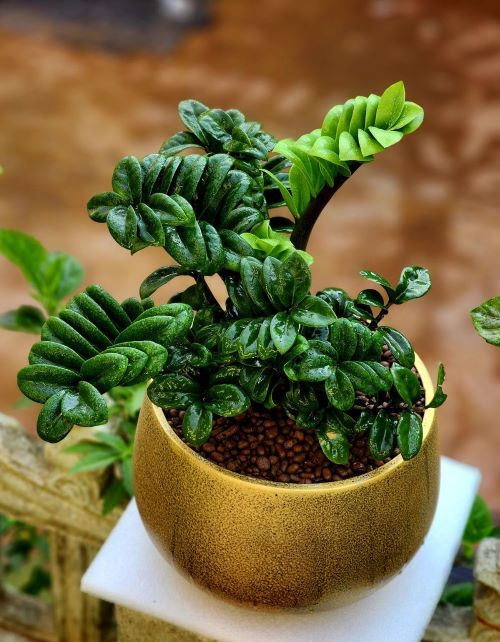
This dwarf variety wants to capture your heart as well as your desk. It grows 1–3 feet tall and has dark-green, slender leaves. Place it in bright, indirect light so that it grows beautifully. It is often included in academic research on ZZ plant propagation, tissue culture, and cultivar performance.
11. Super Nova
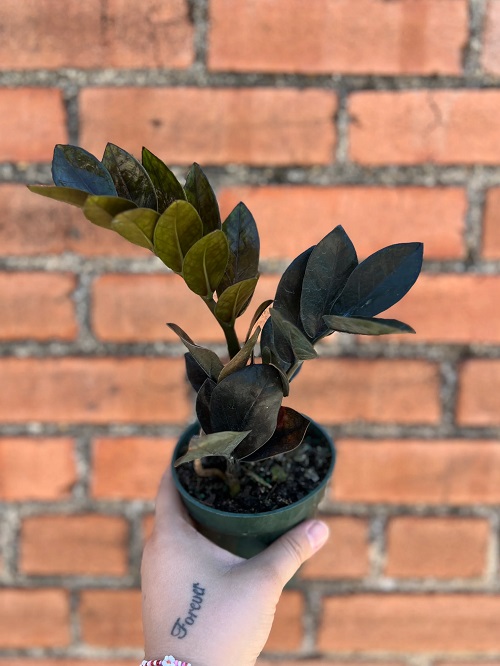
Doesn’t it sound like the name of a superhero? It does, because it has superpowers like removing toxins and improving air quality, reducing stress, and improving focus. The leaves have a green tint, but as they age, the foliage takes on a dark hue in dappled light.
12. Zenzi ZZ Plant
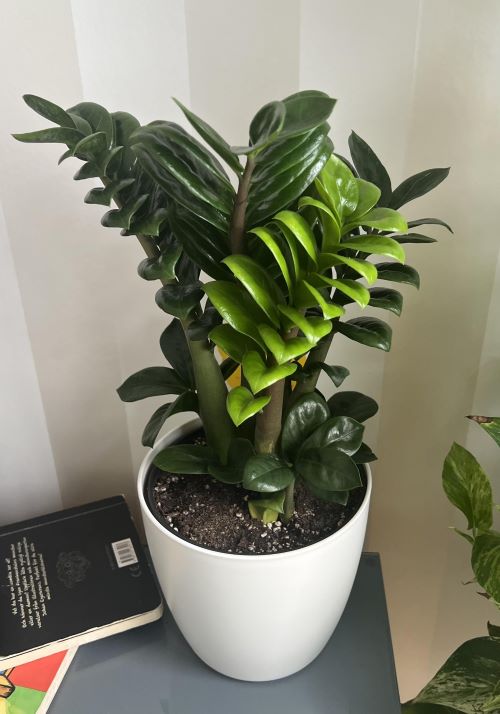
Another dwarf ZZ plant, with smaller leaves and a compact growth habit. It looks nice in small spaces and on tabletops. This slow-growing plant has potato-like rhizomes that store water, giving it exceptional drought tolerance. It is considered toxic if consumed and can cause skin irritation. It should be kept away from children or pets.
13. Dowon ZZ Plant
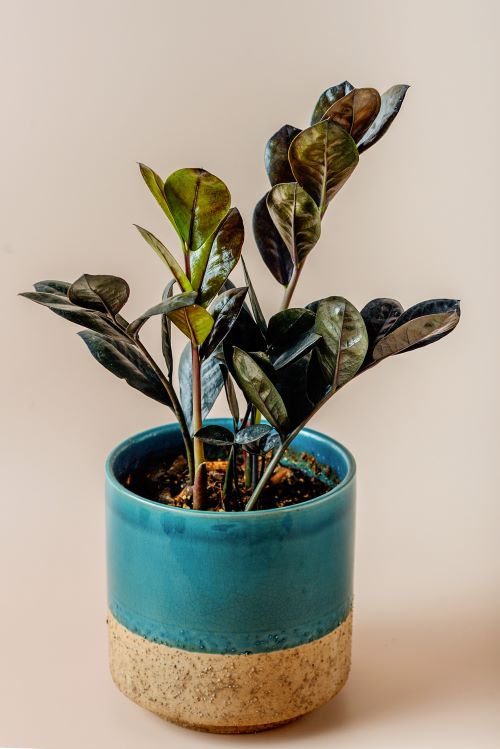
A ZZ plant ready to walk on the ramp show. This variety highlights a popular, dark-foliage cultivar with high market demand. Scientific investigations have established micropropagation protocols for this variety to facilitate rapid, consistent, and large-scale production, enabling faster propagation compared to traditional methods. It is a slow-growing plant that requires minimal care.
14. Akebono ZZ Plant
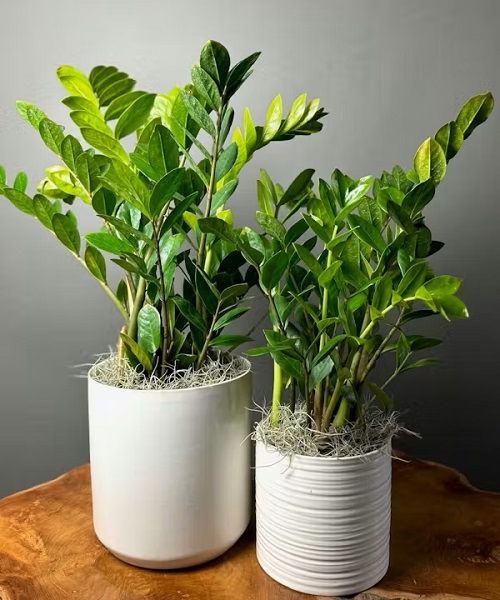
Add a pop of color to any room with this Akebono ZZ plant, which has green and yellow leaves. The intensity and pattern of the variegation are highly influenced by temperature. It has been reported that the plant may lose its distinctive color in certain conditions, such as in a cool environment. It is a low-maintenance plant that can tolerate low-light conditions.
15. Chameleon ZZ Plant
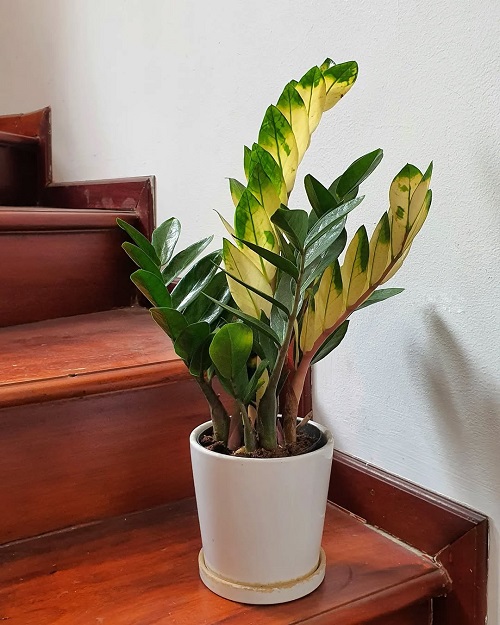
Chameleons can protect themselves from predators thanks to their ability to camouflage themselves. This plant does the same on your bookshelf. It has shades of dark green and light green, and sometimes even a touch of gold or yellow.
ZZ Plant Care Guide
1. Lighting
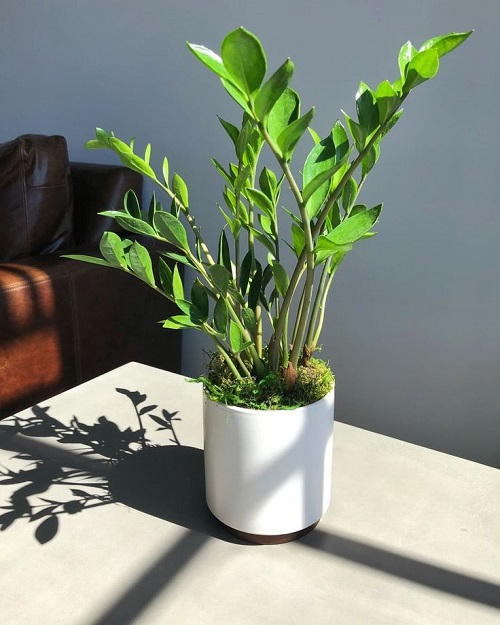
ZZ Plants are highly adaptable, making them ideal for low-light environments, but they will grow faster and fuller in bright, indirect light. They can even survive in windowless rooms with artificial lighting, making them one of the most versatile indoor plants. However, direct sunlight should be avoided as it can scorch the leaves.
2. Watering
One of the most common mistakes with ZZ Plants is overwatering. These plants have underground rhizomes that store water, allowing them to go weeks without watering. A good rule of thumb: water only when the soil is completely dry. In warmer months, this may be every 2-3 weeks, while in winter, it may extend to once a month.
3. Humidity
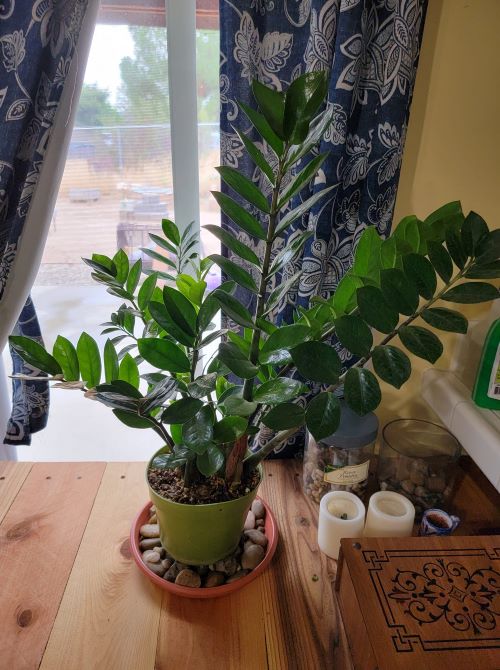
They are incredibly low-maintenance when it comes to humidity. They thrive in average household conditions and do not require misting. Excess moisture can actually lead to root rot, so it’s best to keep them in dry to moderate humidity levels.
4. Fertilization
ZZ Plants are slow growers, so they don’t need frequent feeding. During the growing season (spring and summer), fertilize once a month using a diluted, balanced houseplant fertilizer. Avoid fertilizing in the fall and winter when the plant is dormant.
5. Toxicity
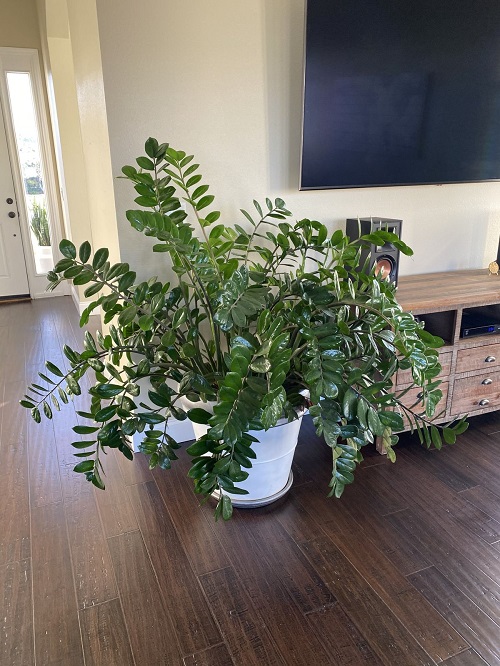
They are mildly toxic to humans and pets due to the presence of calcium oxalate crystals in their leaves and stems. If ingested, they can cause irritation, nausea, and vomiting. While touching the plant is safe, sap from broken leaves or stems can cause minor skin irritation in sensitive individuals.
To keep pets and children safe, place your ZZ Plant in an area where they won’t be tempted to chew on the leaves.
ZZ Plants will elevate your desk space while giving you filtered air. So, which one are you picking for your space? Tell us in the comments.