
As an Amazon Associate, we earn a small commission from qualifying purchases — at no extra cost to you.
A combo of shiny leaves and stunning flowers may seem unreal but these top Hoya varieties have the best of both worlds! Read on to learn more.
Hoya, also known as the wax vine, is a genus of 550+ species of absolutely gorgeous epiphytic climbing succulents. They might be known for their glossy, wax-like foliage, but every now and then, the blooms take over the spotlight! Here, we have compiled a list of the best flowering Hoya varieties, so that your garden will always have its star attraction!
Best Flowering Hoyas
1. Hoya carnosa
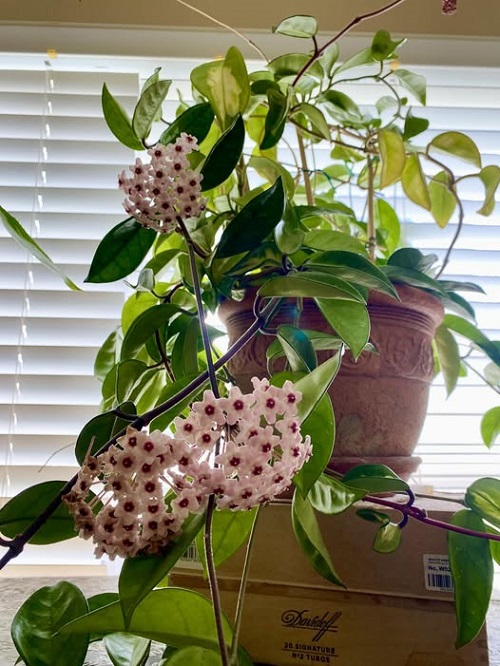
Want an umbel of thick, hairy pink flowers that look like tiny stars made of porcelain? Then this is the species for you! Each individual flower has a five-pointed center and is less than an inch in size, but don’t worry—you won’t miss them, as they grow in clusters of up to 30 blooms!
The flowers, along with the fleshy, leathery, waxy leaves, make this plant a sight to behold. But you may get yourself in a sticky situation because the blooms produce a gummy sap.
2. Hoya pubicalyx
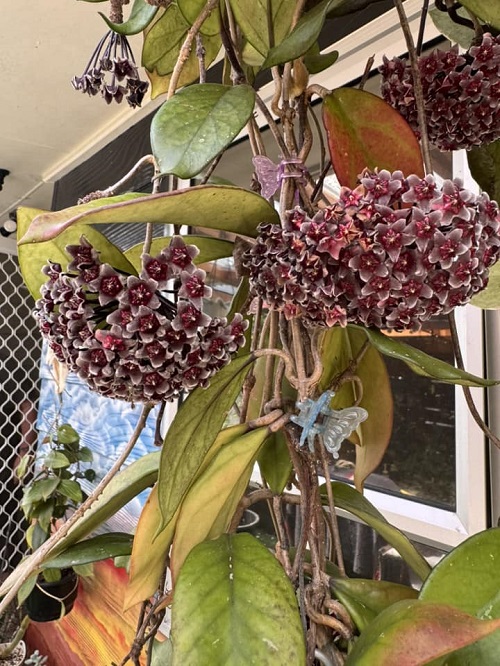
Just have a look at the image above, isn’t that a flower that comes straight out of a fairytale? This Hoya stands out with its relatively larger pink-purple blooms that, like most others on this list, are arranged in large clusters.
But the visual aspect is not the only thing that this plant is known for. The flowers also emit a pleasant fragrance, which is most noticeable during the evening hours.
3. Beautiful Hoya (Hoya bella)
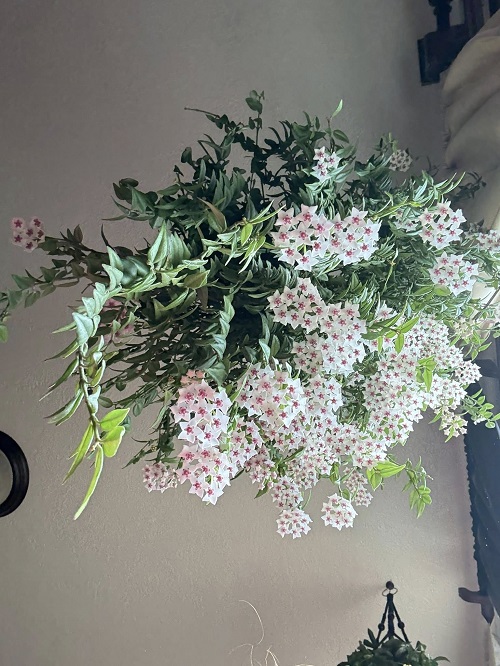
Talk about the contrast of the blooms of this Hoya! The small, attractive, white flowers have a deep pink or purple corona. These tiny beauties have no nectar but a very strong scent. The sad part is that these flowers only last for 8 days before they perish.
This species is so acclaimed that in the 1848 edition of Curtis’s Botanical Magazine, it was described as “The most lovely of all the Hoyas.”
4. Shooting Star Hoya (Hoya multiflora)
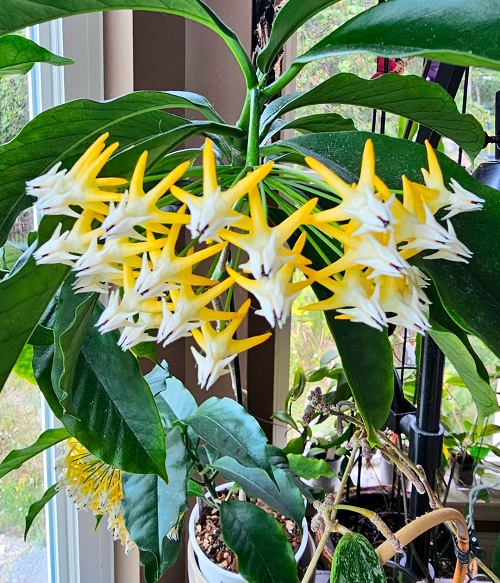
The name of this species might seem peculiar, but it is apt to describe the appearance of the flowers! The blooms look like heavenly cosmic bodies streaking across the night sky, with long, pointed petals that bend backward.
Unlike most species, the shooting star Hoya blooms multiple times throughout the year. The only drawback is that the inflorescence drips quite a bit of nectar, so using a tray would be advised.
5. Cinnamon Hoya (Hoya lacunosa)
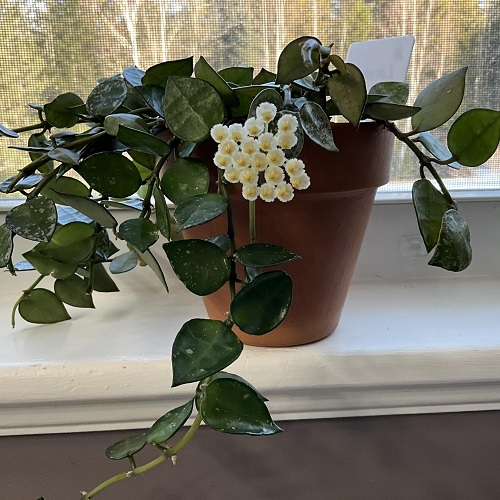
The name clearly indicates what kind of scent the blooms of this variety emit! These floral cinnamon imitators slightly lack in the visual charm department as they are tiny, fuzzy, and cream colored, but the fragrance makes up for it.
The vines of this epiphytic plant are quite thin, which makes them a great plant to decorate your home walls or display in hanging baskets.
6. Common Hoya (Hoya australis)
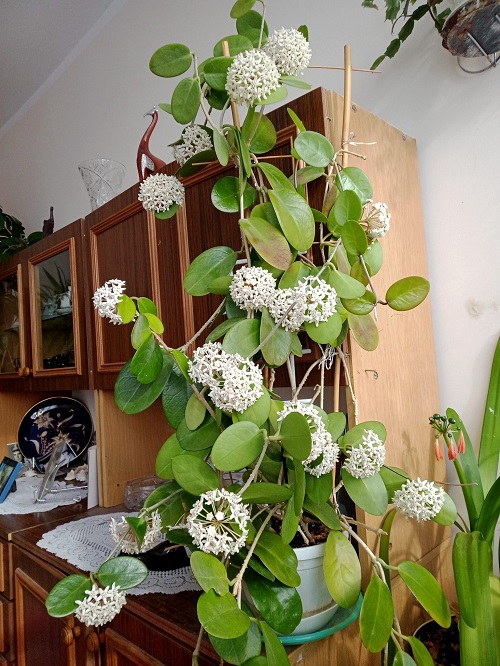
The common hoya is a top pick of many gardeners due to its overall traits. The flowers are showy, attractive, and fragrant, while the plant itself grows much faster and matures more quickly than most other species.
Coming to the details of the blooms, they are white with a red center that grow in clusters on a long stalk or pedicle. Do not make the mistake of removing this pedicle, as the new flowers will also form on it.
7. Sweetheart Plant (Hoya kerrii)
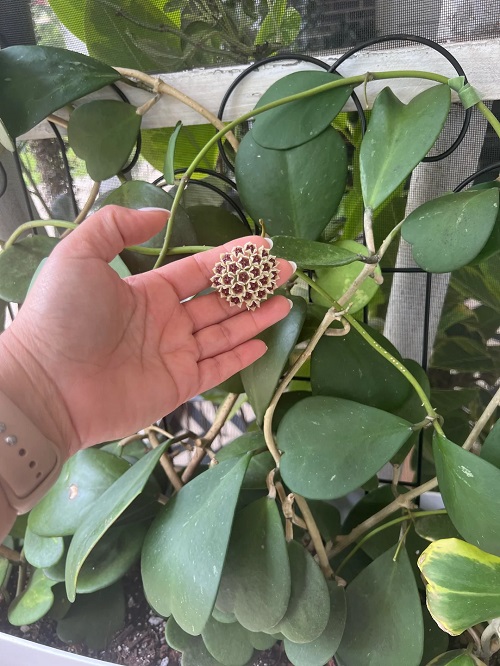
This Hoya gets its name from its iconic heart-shaped leaves, which make it a favorite among couples, especially on Valentine’s Day. But along with its stunning foliage, it also possesses pink to white star-shaped flowers, which emit a sweet fragrance at night.
The combination of the thick succulent leaves and pretty flowers makes it a top pick for indoor gardens, as long as you are fine with the reddish-brown nectar that drips from it, leaving stains.
8. Hoya obovata
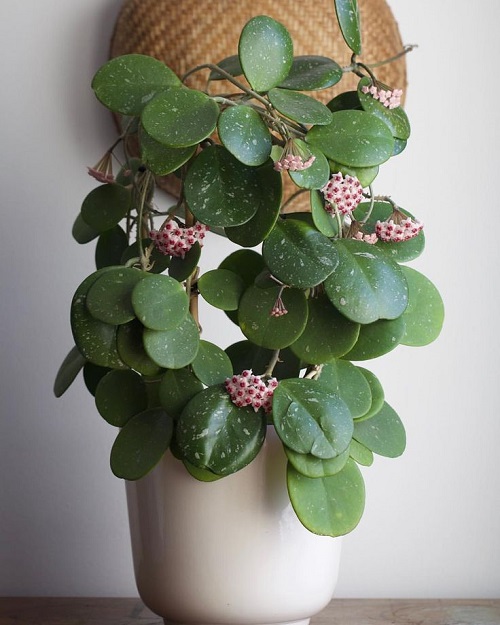
The Hoya obovata species is rather uncommon, making it a rare addition to your succulent garden. This plant shows off soft pink and fuzzy star-shaped blooms grouped in clusters. But its main claim to fame is not the flowers but the unique leaves.
This species has extremely glossy, uncannily round leaves which are dark green with splashes of silver on them. It balances out the attractive foliage with stunning flowering, making it a complete visual package.
9. Narrow Leaf Wax Flower (Hoya linearis)
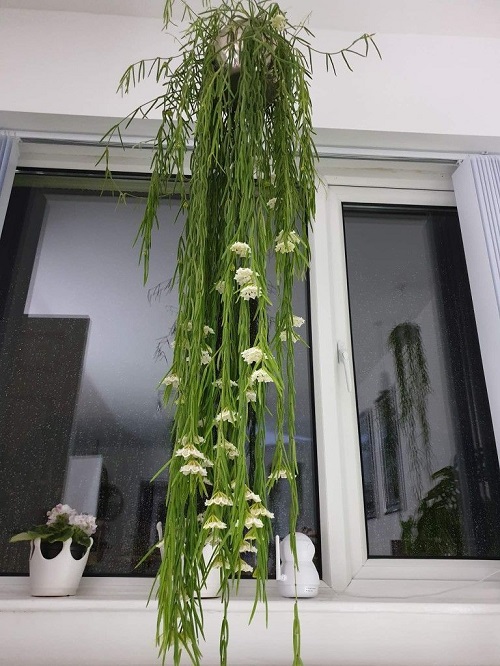
The Hoya Linearis is one of the most visually distinct Hoya species! It stands out from the bunch due to its long, thin, hair-like leaves that hang down like a curtain. These leaves can often be compared to grass blades.
Although it is not too different from the others when it comes to the blooms. It produces soft, white, velvety flowers that give off a vanilla scent. It is the perfect hoya for you if you want your plant collection to be extraordinary.
10. Hoya Callistophylla
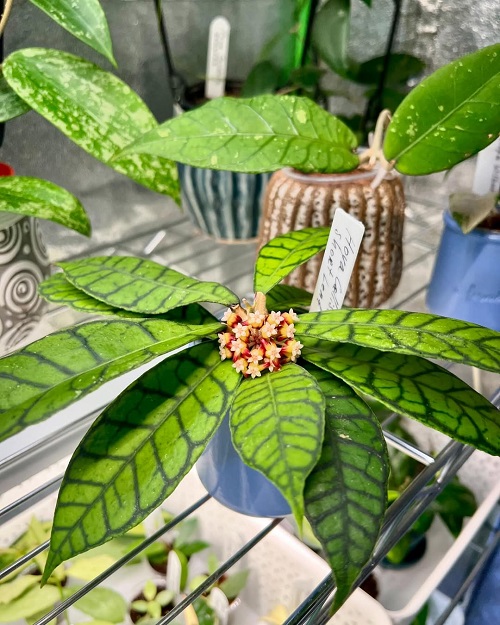
You won’t be able to decide which is more eye-catching, the thick foliage with an attractive vein pattern flowing through it, or the dual colored red and yellow blooms that are arranged in umbels of 20-40 flowers.
The best part about this species is that even when the plant is not in bloom, it is still just as charismatic, but keep away from its milky sap, which causes skin irritation and discomfort.
11. Hoya Kentiana
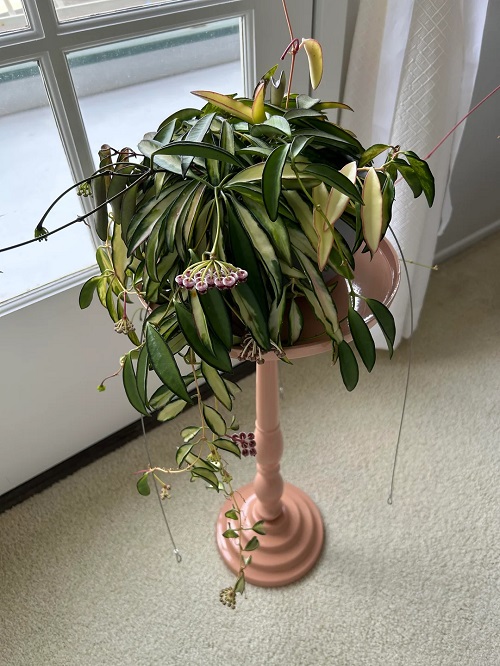
Consider yourself lucky if you come across the hoya kentiana, as this is quite a rare species. What sets this plant apart is its peculiar lance-shaped succulent leaves, which are usually dark green but can be forced to develop reddish hues through sun exposure.
The vibrant foliage, coupled with the wine-red and yellow clusters of flowers, which exude a butterscotch-like scent, can liven up your home.
12. Hoya Fitchii
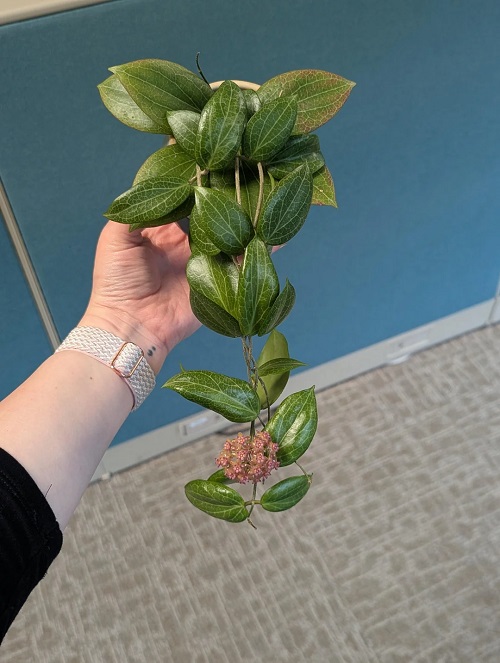
If you are a fan of cherry blossoms, then choose this hoya species to mimic its blooms, but in your home! Native to the Philippines, the Hoya fitchii produces small clusters of pink-peach flowers that slightly resemble sakura blooms.
But this plant will test your patience as it only blooms 2-3 years after being planted from a cutting. But rest assured, the wait is worth it!
Now that you know the top flowering hoya species, tell us in the comment section which one impressed you the most and why?