
As an Amazon Associate, we earn a small commission from qualifying purchases — at no extra cost to you.
Don’t give up on your plants because of their dull looks! Look at these before-and-after indoor plant makeovers to resurrect your garden!
A few tweaks can bring about a night-and-day difference in the appearance of your indoor plants! Just check out these before-and-after indoor plant makeovers that make you think that they went through cosmetic surgery! You, too, can bring your plants back to life with these simple hacks!
Before & After Indoor Plant Makeovers
1. Pot Size Matters for a Visual Uplift
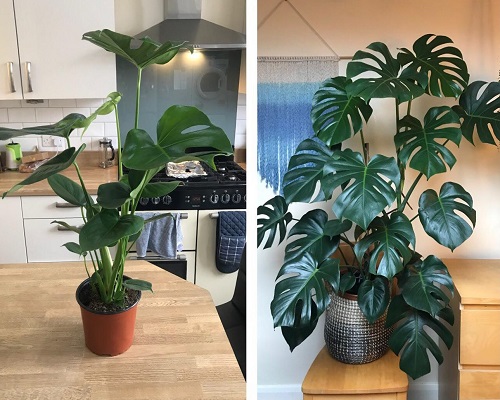
If you feel your plant is not growing to its maximum potential and does not possess the charming looks, the problem may be its home – the pot! Plants need just the right pot size for optimal root growth and functioning, which affects their overall health.
For example, in the image above, you can see an unimpressive Monstera Deliciosa that lacks foliage density. But as soon as it is shifted to a relatively larger pot that accommodates its size, the makeover is undeniable! In some cases, a smaller pot may be the solution, as too much space can lead to excessive moisture retention.
Also, make sure your pot has proper drainage holes. The right pot size won’t help much if excess water has nowhere to drain.
2. Correct and Consistent Training is Key
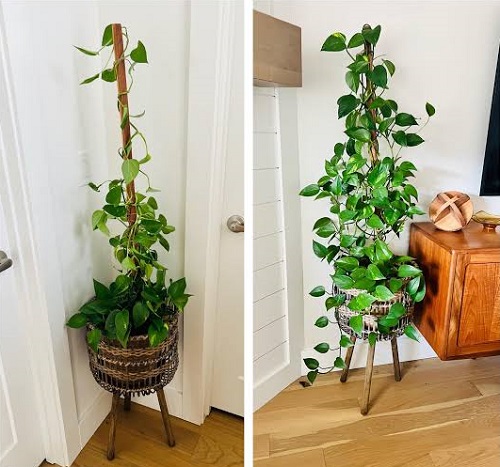
The visual appeal of a vine solely depends on how it is presented! The secret lies in the display technique. The cascading stems can be hard to manage, creating a messy appearance or, in severe cases, harming the plant’s health. But if you smartly train your plant to grow on a moss pole or a wall, the difference is as clear as night and day!
The pothos in the image above is poorly attached to the moss pole prior to the makeover; however, when it is properly attached, it makes the plant look denser and aids its growth. A cleverly trained indoor vine ensures that there is better airflow and sunlight exposure to all parts of the plant.
As your plant grows, gently guide the new vines every week to keep the shape neat and encourage fuller growth.
3. Shade is not Always a Bad Thing!
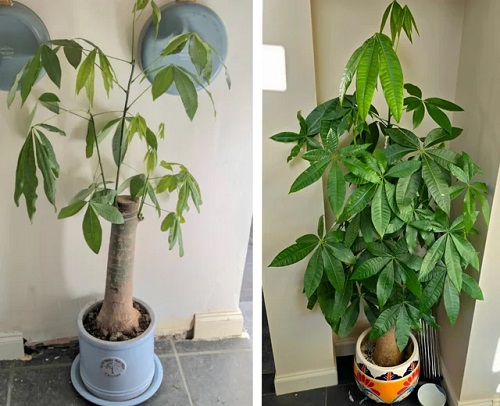
Most novice gardeners mistakenly believe that the more sunlight, the better the plant performs. However, that is a blatant myth! It all depends on the plant type and species. Certain plants have biologically adapted to thrive in dimly lit areas. As a matter of fact, bright direct sunlight can be harmful to them!
A perfect example is the money tree above. It prefers indirect sunlight or a mix of sun and shade, and leaf scorch can occur from exposure to direct sunlight. In the first image, the plant is kept in an open area that seems brighter, whereas its condition improves indoors in a quiet corner.
5. Give Your Plant Some Space
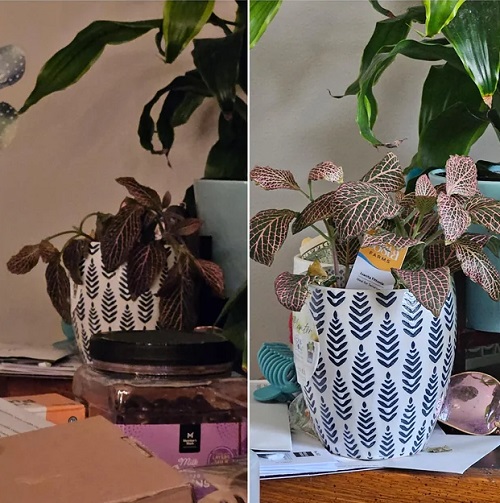
We understand that indoor gardening can be challenging, especially when it comes to allocating enough space to grow your plant. But stuffing your plant into small crowded areas will do no good! Jam-packed environments are harmful for multiple reasons, including increased risks of infection and disease, competition for survival, and a lack of basic growth needs.
You’ll need to make small tweaks or limit the number of plants in your indoor collection. Just see how a small shift of the pot to a more breathable location brings this nerve plant back to life.
6. Smart Propagation and Strategic Replanting
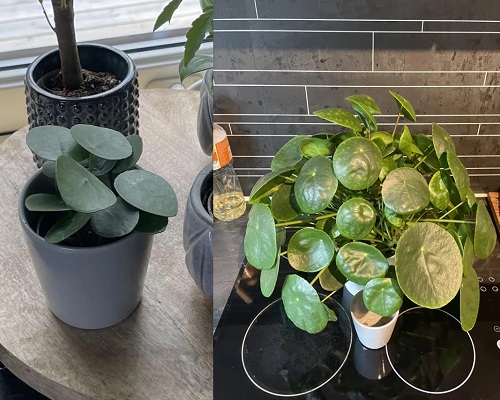
If a dense bushy plant is your goal, adequate sunlight, a good watering routine, and optimal fertilizers may not cut it. The natural expansion takes too long, and why should you wait when you can use a gardening hack instead! You can plant multiple cuttings in the same pot to simultaneously grow many plants as one!
This makes the overall look a lot denser and enhances the wow factor! It is perfect for smaller houseplants such as the Chinese money plant shown above, but you can do it with a wide variety of botanical buddies such as snake plants or spider plants as well.
7. Air Moisture Dictates the Botanical Charm
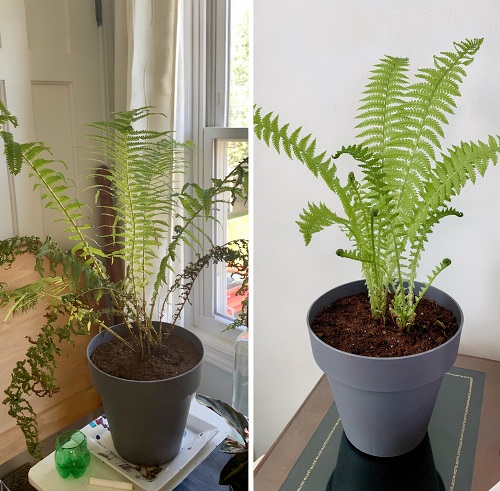
Keeping ferns looking fresh and healthy can be a nightmare, as these unusual plants have unique traits. They need a ridiculously high humidity level to survive. Anything below 60 percent and the plants start showing signs of stress like drying up or browning.
In such cases, to revive your plant, you’ll need to artificially increase the air’s moisture levels, either with a humidifier or a water pebble tray. If you don’t have access to either, relocating the plant to a room that is relatively damper, like a kitchen or bathroom, will do.
9. Sweltering Sunrays, Scorched Plant
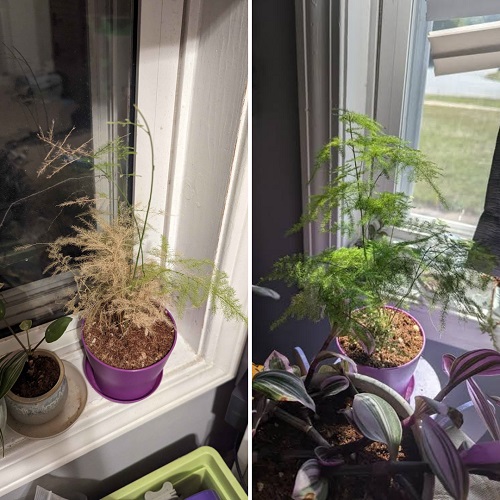
As mentioned earlier in this article, the scorching sun can burn your plant’s delicate foliage if it is not suited to such harsh conditions. Exposing tender or low-light-loving plants to the afternoon sun can lead to leaf scorch and dehydration. This makes the plant look crispy, crunchy, and brown.
To restore its natural glamour, you’ll have to protect the plant from direct sunlight. Using curtains or semi-opaque sheets can help filter out harmful UV rays. You can even depend on artificial grow lights as a much gentler alternative.
10. Excessive Water, More Harm
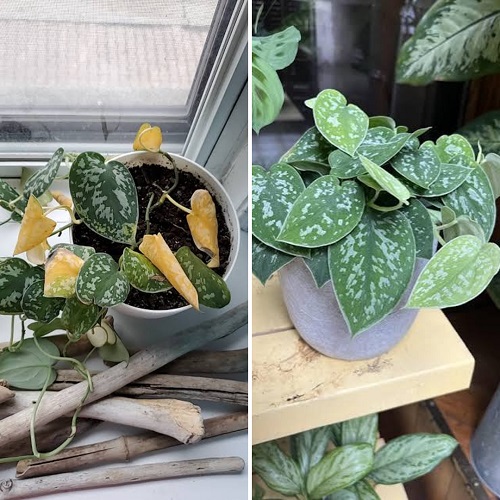
A common mistake that steals the charm of your plants is drowning them in water! Excessive moisture retention or overwatering is a breeding ground for infections and bacteria. The high water content also clogs up the soil, suffocating the roots and hindering their performance. This leads to wilting, smushy leaves that may showcase an unpleasant yellowish coloration.
You’ll need to do your homework to restore your plant’s visual glory, as water requirements vary by species. But in most cases, the rule of thumb is to follow the drench and dry method, which tells you to thoroughly irrigate a plant and not repeat until the soil completely dries out.
Now that you know what steps you must follow to give your plant that much need beauty makeover, let us know in the comments section what other problems you are facing in your gardening journey, and we will help you out!