
As an Amazon Associate, we earn a small commission from qualifying purchases — at no extra cost to you.
Noticing some unusual growth on your plants? What if they are crested and fasciated? Sounds unfamiliar? Let us help you out. Read ahead!
There is something beautiful about growing our plants. But this doesn’t mean that an atypical growth pattern is any less beautiful. And if you have been noticing that something unconventional is happening, then maybe it is just your plant being a little different but in its own sweet little way.
Explore the Amazon Gardening Storefront for succulent pots, cactus soil, decorative planters, gardening gloves, and tools to help care for your unusual plant collection.
Crested and Fasciated Succulents
What Are Crested and Fasciated Succulents?
Fasciation is an unusual growth pattern in which a plant’s growing point, known as the apical meristem, becomes elongated or reorganised instead of maintaining its typical compact shape. This can produce flattened, ribbon-like, fan-shaped, or twisted stems, often described as crested or cristate.
Why Does Fasciation Happen?
Fasciation may arise from spontaneous genetic or developmental changes, physical injury, temperature extremes, hormonal disruption, or certain infections, although the exact cause is often unknown. Some affected plants retain their unusual shape when propagated, while others may revert to normal growth.
Fasciation differs from monstrose growth, which typically produces irregular or unpredictable branched tissue rather than a distinct elongated growing ridge.
Some Stunning Crested and Fasciated Succulents
1. Coral Cactus
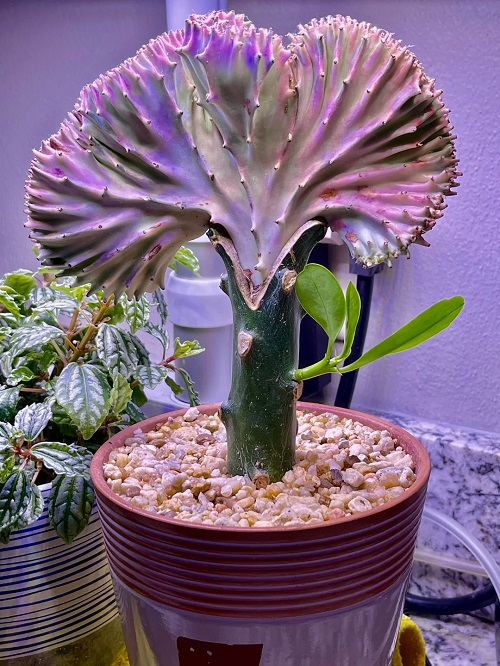
Scientific Name: Euphorbia lactea ‘Cristata’
Its ridged, fan-shaped stems form silvery-green waves, and sometimes they develop beautiful pink or cream edges. Despite its cactus-like appearance, it is a spurge rather than a true cactus and is commonly grafted onto another Euphorbia for support.
Make your plant a standout display with decorative succulent planters, sturdy plant stands, and well-draining cactus potting mixes suited to Euphorbia plants.
2. Brain Cactus
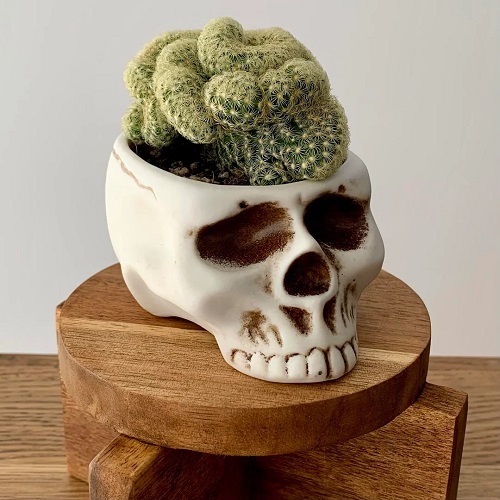
Scientific Name: Mammillaria elongata f. cristata
The normally slender, finger-like stems develop into densely folded green crests covered with clusters of short, golden-yellow spines. Its intricate texture comes from crowded cactus tubercles and spine-bearing areoles, giving the plant a brain-like appearance.
3. Crested Blue Candle Cactus
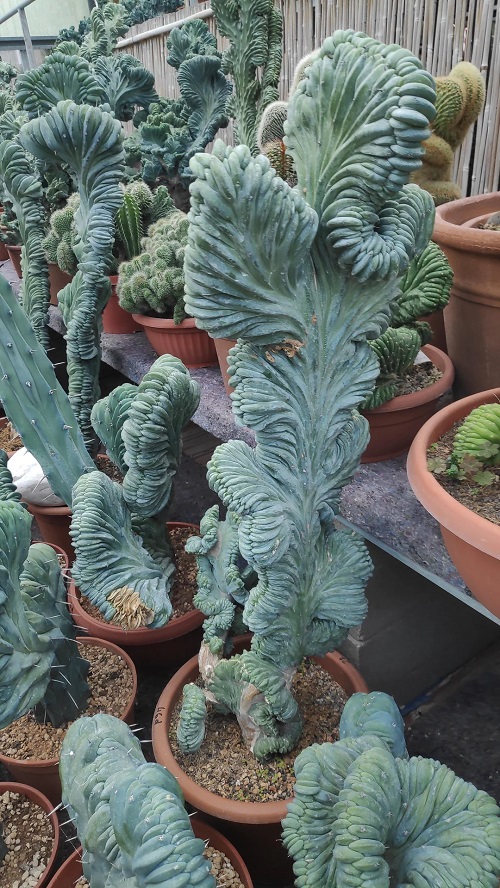
Scientific Name: Myrtillocactus geometrizans ‘Cristata’
Unlike the species’ usual upright, branching columns, this crested form develops broad, irregular folds with a striking blue-grey surface. The sculptural ridges create a beautiful combination of cool-toned colouring and an intricate growth pattern.
Show off those blue-grey folds with minimalist cactus planters, terracotta pots, mineral-rich succulent substrates, and decorative stands that complement its sculptural shape.
4. Crested Peanut Cactus
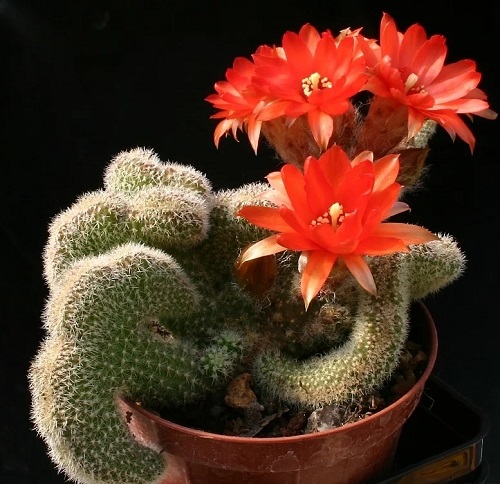
Scientific Name: Echinopsis chamaecereus f. cristata
This one doesn’t grow narrow and get trailing stems, instead the crested form develops flattened, winding growth that can spread into a compact, tangled fan. The orange-red flowers create a beautiful combination with the green.
5. Crested Apple Cactus
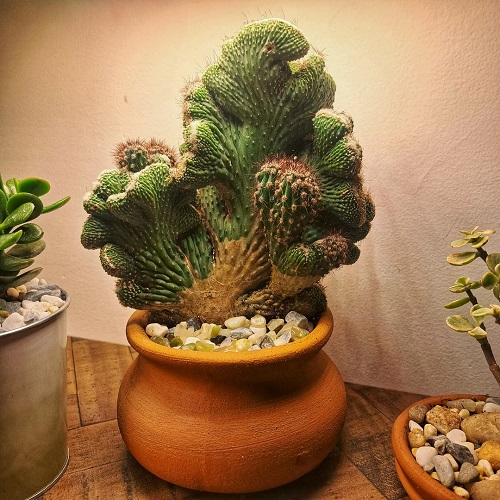
Scientific Name: Cereus repandus ‘Cristata’
This one is generally upright and ribbed. But it can develop a broad and undulating crest that doesn’t look like its usual self. The folds preserve the ribbed texture of the original stem, creating an appearance that look likes a series of overlapping ridgelines.
Create a striking cactus display with large drainage pots, cactus potting mixes, and sturdy plant stands for showcasing the unusual ridges of crested columnar cacti.
6. Crested Echeveria
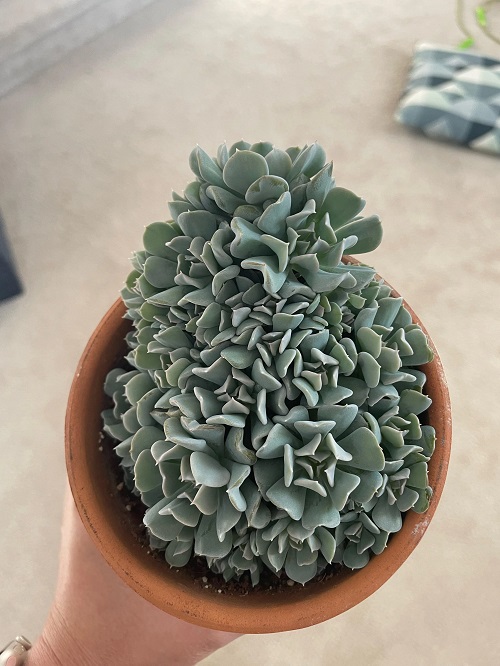
Scientific Name: Echeveria runyonii ‘Topsy Turvy’ Cristata
A crested tree aeonium is a rare, mutated form of Aeonium in which the growing tip flattens out into a fan-shaped or wavy crest instead of growing a standard round rosette on a branching stem.
7. Crested Tree Aeonium
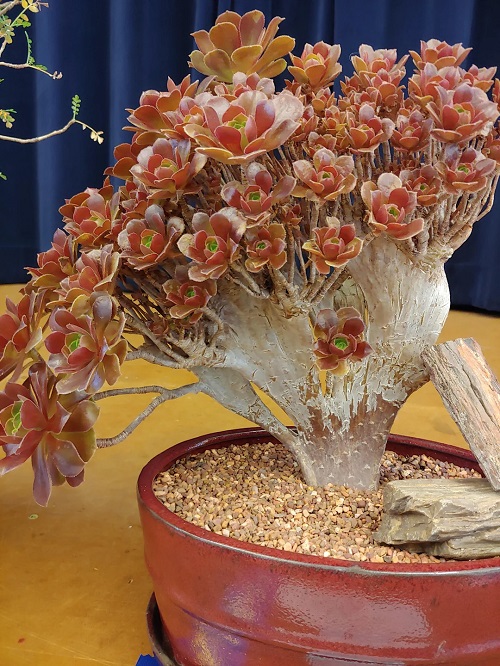
Scientific Name: Aeonium arboreum ‘Cristata’
A crested tree aeonium is a rare, mutated form of the Aeonium where the growing tip flattens out into a fan-shaped or wavy crest instead of growing a standard round rosette on a branching stem.
Need new pots, gritty soil, succulent care essentials, or gardening tools? Explore Amazon Prime benefits to make ordering your succulent-care essentials more convenient.
8. Fasciated Madagascar Palm
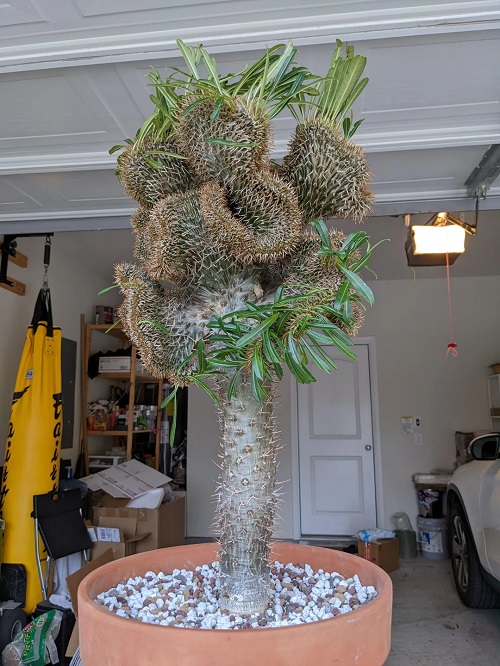
Scientific Name: Pachypodium lamerei
Commonly known as the Madagascar palm, this plant can develop a growing stem that flattens, widens, and elongates instead of growing in a normal cylindrical shape.
Not every succulent with multiple heads or extra branches is crested. The defining feature is an elongated or reorganised growing region that produces a ridge or flattened axis. Every crested plant differs in its appearance and stability. But we hope this helped you to understand them a little better. Let us know your pick in the comments below!
Want to understand unusual plant growth and succulent care better? Explore cactus and succulent gardening books for practical guidance on light, watering, potting mixes, and propagation.