
As an Amazon Associate, we earn a small commission from qualifying purchases — at no extra cost to you.
Ever touched a plant and watched its leaves fold or snap shut in an instant? Discover the secret behind plants that move when you touch them.
If you picture plants as the silent observers rooted in place, these plants will prove you wrong. Touch these plants, and they droop or snap shut. This isn’t magic. Meet the dynamic world of sensitive plants that flinch, fold, or snap to protect themselves or catch prey. So, read on to learn why and how these touch-sensitive plants move.
Ready to grow your own collection of moving wonders? Visit our Gardening Storefront for everything you need—to keep your sensitive plants thriving!
Strange Plants That Move When You Touch Them
Did you know that plants can respond to touch without having a brain, muscles, or a nervous system like ours? Their movements are the result of specialized cells, electrical signals, and changes in water pressure. Some react in seconds, while others move so slowly that you might not notice without watching closely.
Touch-Me-Not, Sensitive Plant: Mimosa Pudica
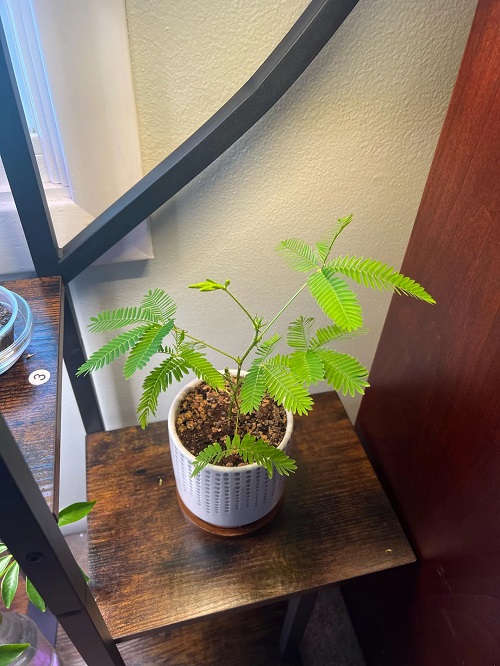
If you think of plants that move when you touch them, the name that first pops into your mind is undoubtedly the Sensitive plant, aka Touch-me-not. If you gently brush its leaves, it frowns and droops, but give it a minute or two, and it’s back to its sturdy self.
Curious how it happens? Read on to explore thigmonasty, the science behind touch-sensitive plants.
Why Mimosa Plants Close When You Touch Them
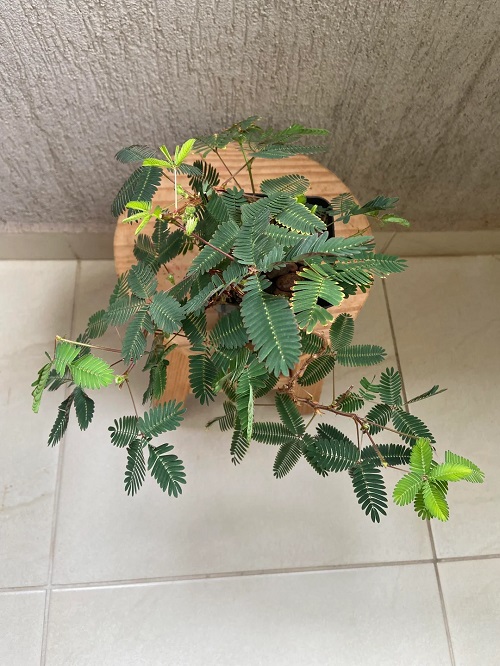
Just like humans respond to touch with an electrical impulse, sensitive plants mimic the same nervous response.
Thanks to a specialized organ, the pulvinus, seated at the base of leaves and leaflets, plants can regulate water in and out, hence moving when you touch them.
Usually, pulvinus cells are filled with water and appear turgid. However, when touched, these cells lose water, and the leaves begin to shrivel. Leave it for a few minutes; the water begins to pump back into the pulvinus cells, and the leaves come back to life.
This quick response is called a nastic movement because it happens in response to a stimulus rather than depending on the direction from which the touch comes. The plant’s ability to fold its leaves is one of the most fascinating examples of rapid movement in the plant kingdom.
You may wonder why sensitive plants go through all this trouble. The answer is simple. It’s a clever physiological defense! After all, grazing animals find shriveled, dead-looking leaves less appetizing than lush, thriving foliage.
Ready for a dramatic little friend that flinches when you say hi? Bring home the Mimosa Pudica (Sensitive Plant / Touch-Me-Not) seeds on Amazon and watch your houseplant literally jump to attention!
Other Touch-Sensitive Plants That Move
Mimosa isn’t the only wonder of the plants’ kinetic world. Surprisingly, there are many more plants out there that respond to touch:
Venus Flytrap
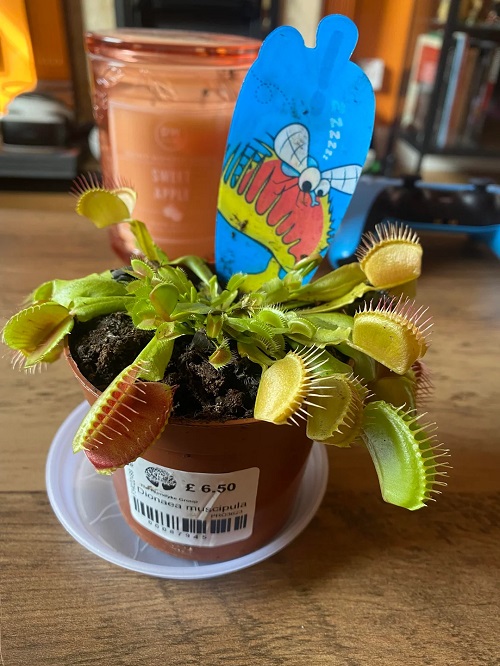
Unlike Mimosa, which engages thigmonasty to defend itself, the Venus flytrap (Dionaea muscipula) is a ruthless predator. Now, don’t misunderstand these plants; They survive in nutrient-poor bogs and need to prey upon insects to meet their dietary needs.
The Venus flytrap’s specialized bi-lobed leaves have trigger hairs, or trichomes, that trap insects when touched at least twice.
Give your dramatic little divas the spotlight they deserve! Snag the Venus Fly Trap Terrarium Pot on Amazon to give them their very own high-tech stage.
Sundews
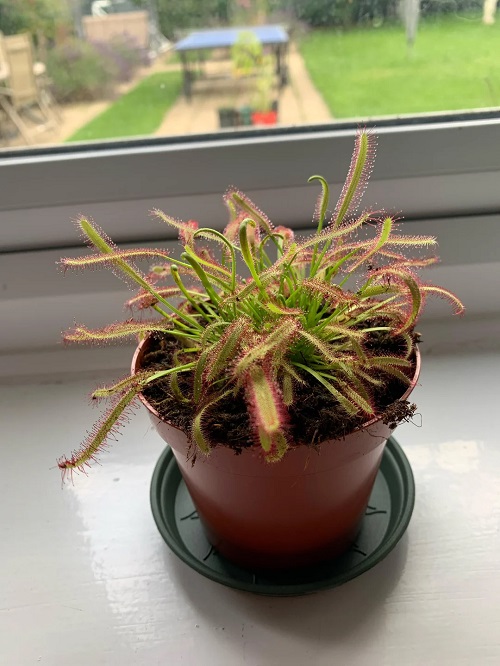
These beautiful carnivorous plants feature tentacles that secrete sticky, shiny dew that glistens in the light (hence the name Sundew). When touched, some sundew species slowly bend their sticky tentacles toward captured prey, and certain species can curl parts of their leaves around it. This helps keep the prey in contact with the sticky surface.
Unlike the Venus flytrap’s quick snap, sundew movements are generally slower. Their sticky droplets help catch small insects, which the plant then digests to obtain nutrients.
Telegraph Plant
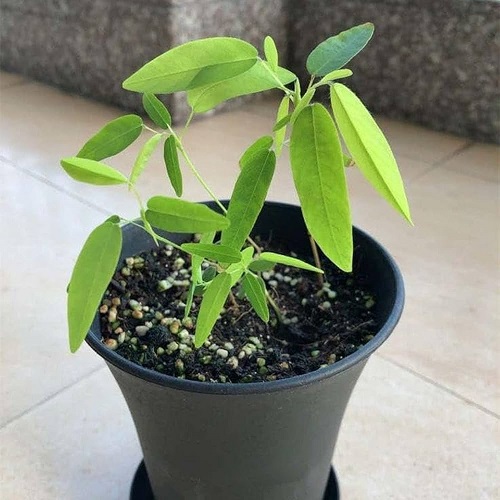
A very unique plant that moves on its own! Yes, you don’t even need to touch it. These plants feature leaflets that rotate in elliptical loops in response to environmental cues, including changes in light and temperature.
Indeed, it’s a treat to the eyes to watch a plant dance in the sunlight!
The telegraph plant (Codariocalyx motorius), also known as the dancing plant, is especially interesting because its small side leaflets can move visibly without being touched. Unlike the touch-me-not, which folds in response to disturbance, the telegraph plant is known for its spontaneous leaflet movements.
Sensitive Partridge Pea
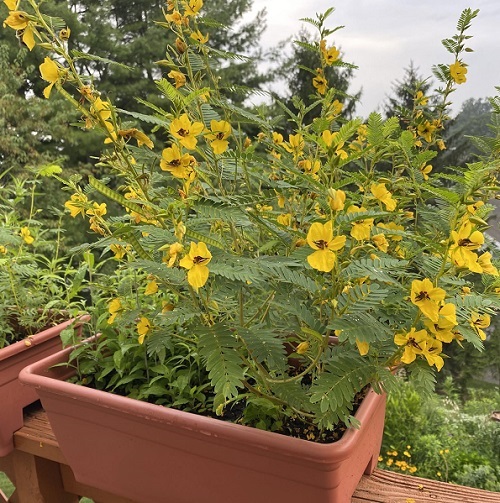
Lastly, Sensitive Partridge Pea (Chamaecrista nictitans) is a wild legume that reacts to touch, just like Mimosa. But its reaction is generally less dramatic and may be slower or less noticeable, depending on the conditions.
Its leaflets can fold when disturbed, making it another interesting example of how different plants respond to physical contact. If you enjoy observing plant behavior, comparing its response with that of Mimosa pudica can be a fun little experiment.
Want to skip the wait and get straight to planting? Sign up for Amazon Prime to unlock fast, free delivery—on all the specialized soils and grow lights your sensitive plants need.
Can You Grow Touch-Sensitive Plants Indoors?
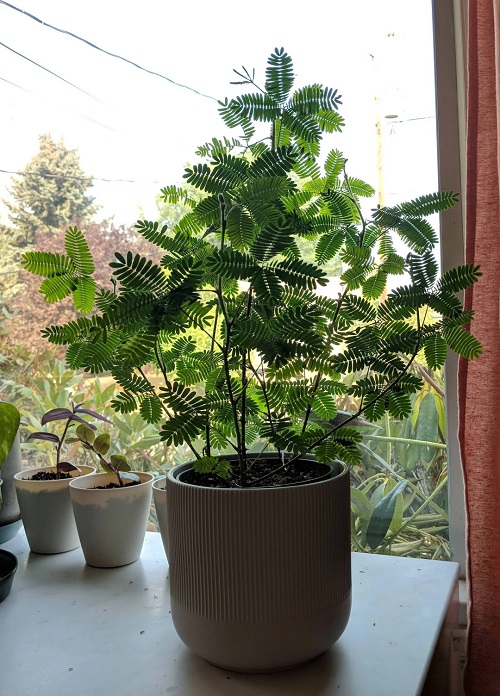
Although not your regular indoor dweller, you can surely grow these plants indoors with extra attention and care tricks:
Bright sun lovers: Mimosa and Venus Flytrap love those warm sun rays. So, make sure to give them at least 6 hours of sunlight daily. Install an LED grow light if your indoors are too shady.
Keep them moist and humid: Touch-sensitive plants hate drying out. Keep their potting mixture moist, but not too soggy to invite rot. Also, install a humidifier if your rooms are too dry.
Use distilled or RO water only: Venus flytraps and sundews thrive in zero-mineral soils; hence, adding regular water with minerals results in root burn.
Use nutrient-poor soil: For carnivorous plants like Venus flytraps and Sundews, use nutrient-free moss or perlite, as they are native to poor, boggy soil.
Don’t make the wrong assumption that providing nutrient-rich soil makes them thrive.
Touch-them-not: It may be quite tempting to touch these moving plants, but in reality, these plants expend a lot of their energy to move, so limit touching them to keep them strong and healthy.
Toxicity: Remember these plants are non-toxic to humans; However like many plants, they can upset your pets’ health if ingested in large quantities.
Plants aren’t as sedentary as they seem; they have their own clever ways of sensing their environment and responding. Whether it is the Mimosa’s defensive droop, the Venus flytrap’s hunt, or a dancing telegraph plant, these unique species prove just how diverse the plant kingdom truly is. Thinking of taming these wild beauties? Follow our quick care tips and have a thriving, unique plant collection.
Want to master the art of the bite? Snag a copy of The Savage Garden, Revised: Cultivating Carnivorous Plants on Amazon to unlock all the expert secrets for growing your very own ruthless green collection!