
As an Amazon Associate, we earn a small commission from qualifying purchases — at no extra cost to you.
Upgrade your plant collection with palm-like succulents that will give you a tropical vibe and are easy to care for.
Do you know that the most popular “palms” are succulents or succulent-form plants that store water in their stems or trunks? Not every plant with palm-like foliage belongs to the palm family. Here is a list of some succulents disguised as palms.
Why The Confusion In The First Place
The confusion between palms and succulents comes from their appearance rather than their botanical classification. Many succulents have evolved features that closely resemble palm trees, even though they belong to completely different plant families; this is known as Convergent Evolution.
Although they may look alike, their care requirements can be quite different. Knowing whether your plant is a true palm or a succulent will help you water it correctly and avoid common care mistakes.
Palms That Are Actually Succulents
1. Ponytail Palm (Beaucarnea recurvata)
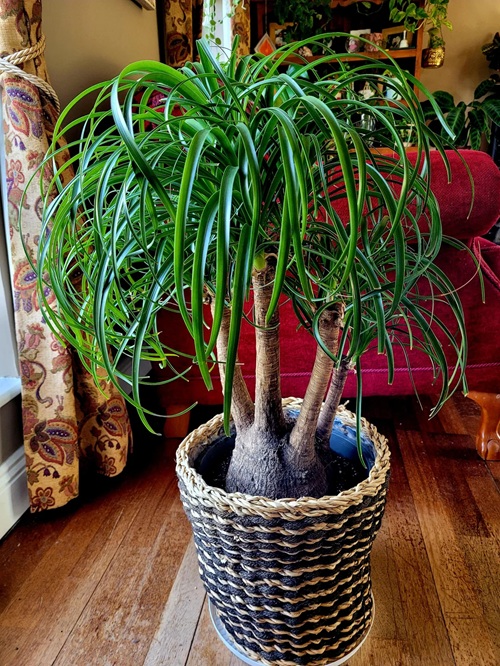
This one stands out with its unique shape and easy-to-care nature. Whether grown indoors as a statement piece or outdoors in a rock garden, it adds exotic flair to any setting. This succulent is popular for its adaptability, non-toxicity, and drought tolerance.
The ponytail palm is native to semi-desert areas of southeastern Mexico. They are extremely slow-growing plant, so you have to be patient during its growth.
It likes full sun or bright indirect light. When grown as an indoor plant, situate it in the brightest location you can find.
Fun fact: The plant owes its nickname to its large stem, which resembles an elephant’s foot or a bottle, and to the top of the plant, which resembles a ponytail.
2. Madagascar Palm (Pachypodium lamerei)
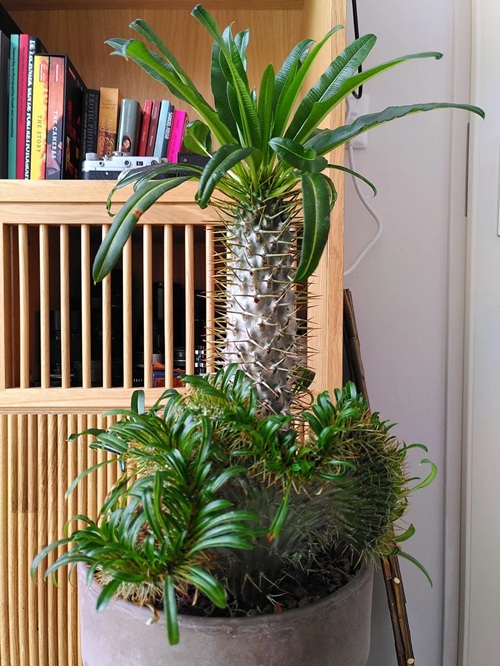
Introducing the Madagascar palm, also known as Pachypodium lamerei. This unusual succulent is sure to spark conversation with its adorable, grey-green leaves and eye-catching white flowers. Pachypodium, which means “thick foot,” refers to the plant’s thick, swollen stem, which stores water and provides structure and strength to the Madagascar Palm.
It is native to Southwest Madagascar. It thrives in bright, indirect light and prefers well-draining soil, requiring minimal watering during its dormant winter months, with its exotic appearance and low maintenance requirements.
Its thorny trunk is part of its natural defense, so place it where children and pets are less likely to brush against it.
3. Sago Palm (Cycas revoluta)
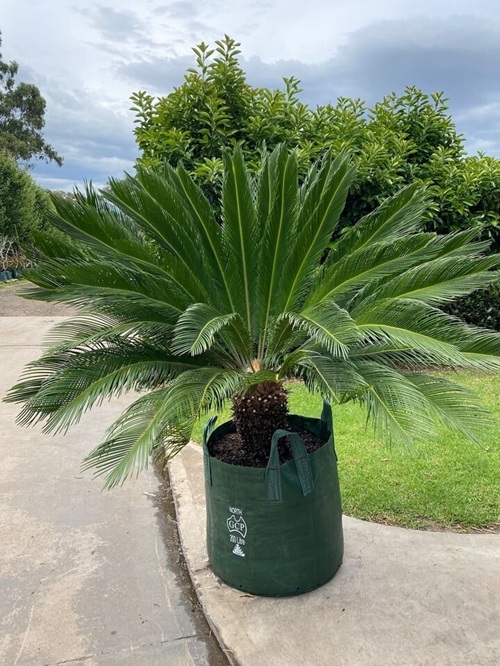
It is a low-growing plant with long green fronds, and despite its common name, it’s not a true palm tree. It’s a cycad, an ancient plant group that predates palms and even flowering plants by millions of years.
It is native to warm parts of Japan and southern China. Place your sago palm near, but not directly in front of, a window. Mist sago palms for additional humidity or place the plant container on a tray filled with water and pebbles.
Sago Palm (Cycas revoluta) is toxic to pets. All parts of the plant, including stems, leaves, and roots, it conatins Cycasin. It is also known as a living fossil.
4. Aroid Palm (Zamioculcas zamiifolia)
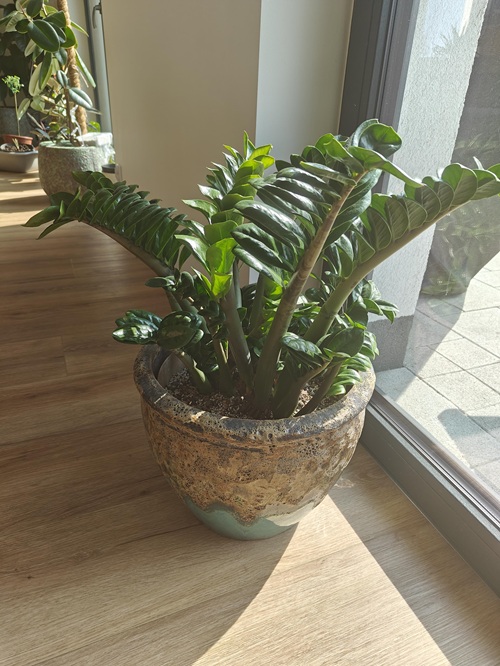
It is a common house plant and a succulent as well, but this one does not even begin to look like a palm (multiple rubber, succulent stems covered with ‘non-palm-like’ leaves).
This lush, tropical perennial is adaptable to infrequent waterings and all kinds of light conditions. These plants are slow growers that are highly adaptable and low-maintenance.
As they can tolerate many different conditions, ZZ plants are a great option for beginner plant parents.
5. St. Peter’s Palm(Yucca filifera)
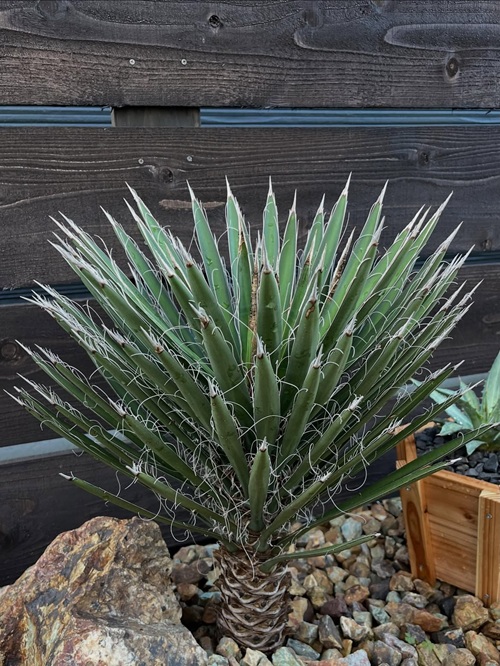
Yucca filifera is an evergreen cactus/succulent or tree with blue and green foliage. In summer, white flowers emerges in the plant.
It grows well with sun and prefers regular, low water. It is drought-tolerant once established. As a succulent, it prefers to be dry in winter and to go dormant.
Plant it in a gritty, lean, rocky, and well-drained soil. A good option if you’re seeking something heat-tolerant and verticillium wilt-resistant.
Next time you spot a palm-looking plant, take a closer look; it might actually be a succulent. These succulents offer the perfect blend of tropical beauty and style. Add these to your collection and let us know in the comments how it turned out in your space.