
As an Amazon Associate, we earn a small commission from qualifying purchases — at no extra cost to you.
Curiosity leads to wonders! Here’s a thought-provoking question you may have raised “Can Fishbone Cactus Grow in Water?” Let’s find out!
Sometimes doing things out of the norm brings miraculous results. Why not apply the same to gardening? Why stick to the same old soil as the substrate for propagating your fishbone cactus? Let’s try switching it up to water! Will it work, and what are the steps you should follow? We’ll answer all that and more with this article.
Fishbone Cactus Information
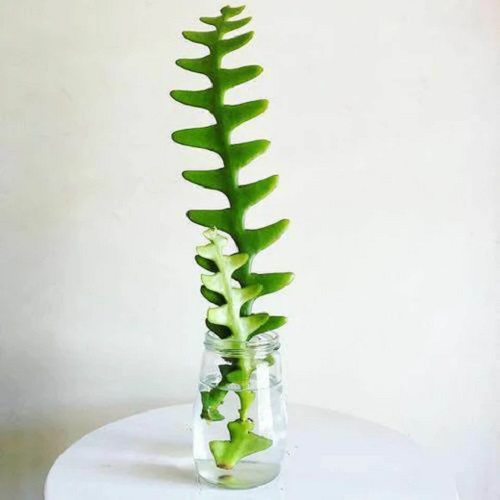
Native to the tropical rainforests of mexico, the fishbone cactus is a peculiar epiphytic succulent for 2 main reasons—its shape and its growth traits in the wild. Unlike most cacti that have oval paddle-like stems with sharp thorns or spikes, the fishbone cactus is easily recognized by its unusual flat, wavy, zig-zag stems that resemble a fish skeleton, hence the name.
The other bizarre claim to fame of this cactus is that in its natural habitat, it grows upon other trees rather than directly on the ground. Since it is a tropical plant, its growth requirements are quite straightforward. It loves bright but filtered sunlight, high humidity, average watering frequency, and soil that is slightly high in organic matter.
A plant so distinct deserves a spot in your plant collection. But instead of using the regular soil propagation method, can we start the process in water? The next section will answer that.
Can We Propagate Fishbone Cactus in Water?
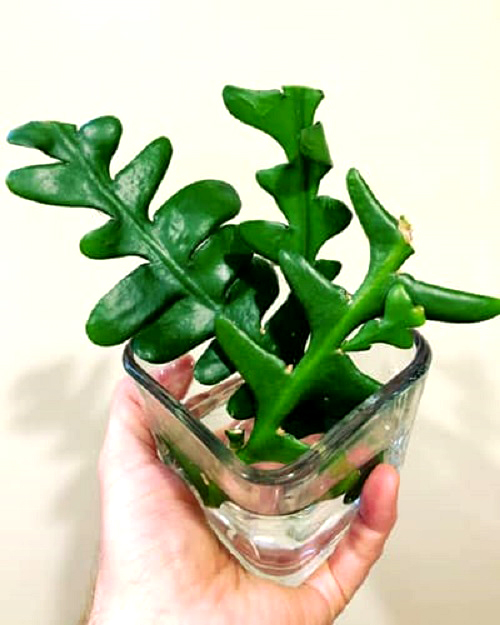
The answer to the million-dollar question is YES! Fishbone cactus actually does quite well when propagated in water. Due to its epiphytic tendencies, this plant absorbs water from the air along with water, allowing it to easily adapt to a liquid medium.
You can monitor the root growth and alter the growing environment accordingly. The success rate of rooting is quite high, but this method also comes with its downsides.
Sometimes, fishbone cacti propagated through water have difficulty adapting to the soil substrate when transplanted later on. Also, if not taken care of properly, they are susceptible to rot or other diseases. Therefore, knowing the right steps to complete this process is vital.
Steps to Propagate Fishbone Cactus in Water
1. Choose the Ideal Cutting
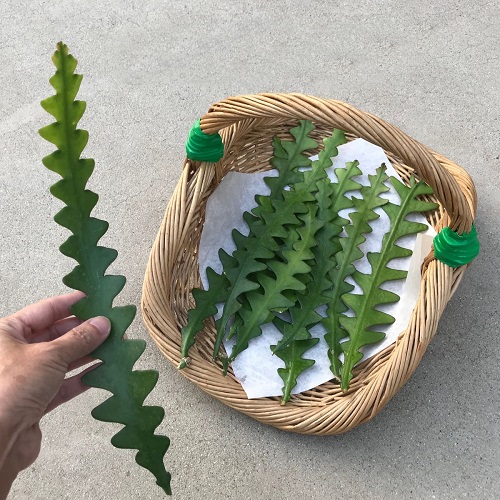
To get the ideal cutting, you not only have to get the portion of the plant right but also ensure that the entire succulent is healthy. This is because plants grown from stem propagation are an exact clone of their mother plant. Therefore, choose a firm, green cutting of about 4–6 inches from a disease-free mother plant.
2. Allow the Cutting to Callus
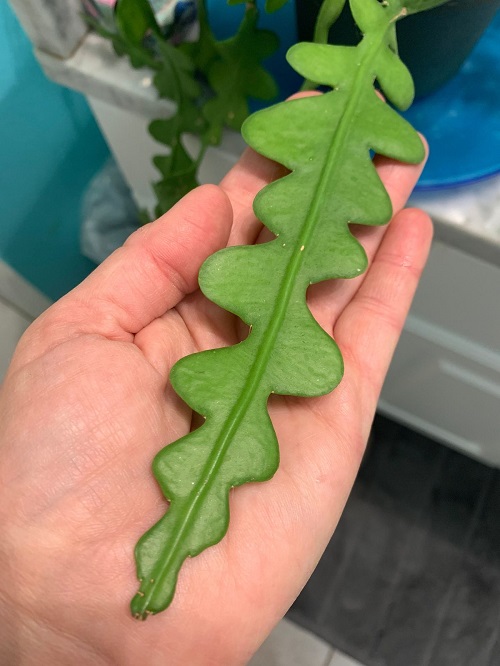
Once you have obtained the cutting, you must allow it to rest and dry until it forms a callus around the sliced cross-section (usually around 2-5 days). This is a crucial step for water propagation, as an uncallused cutting may rot when placed in water.
3. Submerge in Water
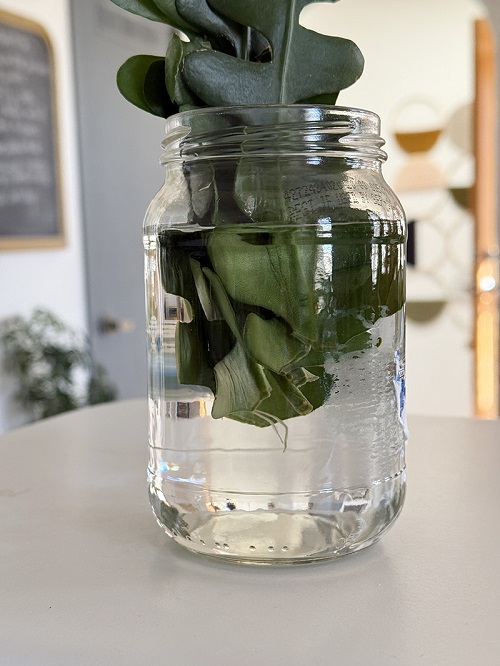
Now that your cutting is ready for propagation, you must choose a transparent container that is not too deep. Fill it with just enough water to submerge the bottom 1/3 to 1/2 of the cutting. Submerging it all the way would simply be drowning the plant-to-be.
Pro Tip: Use room temperature RO water for best results.
4. Provide the Right Environment
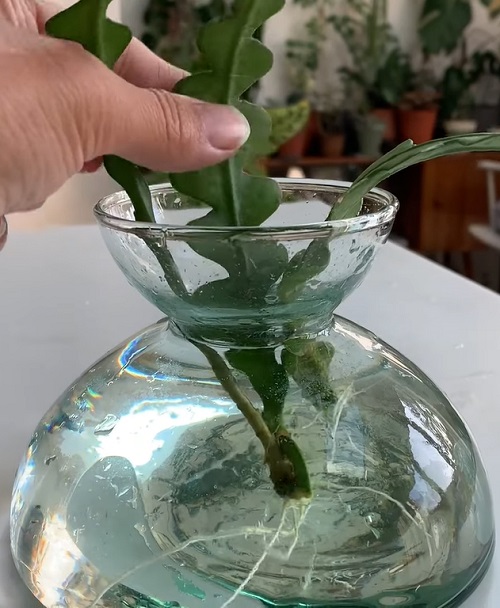
You are not done yet! You must ensure that the growing environment is conducive to the rooting process to begin. For this place the container near an east-facing window or a brightly lit spot in your home. Also, keep an eye out for temperature drops. Your cutting is sensitive and will not respond well to sudden temperature fluctuations.
Note: When the water in the container turns cloudy, you must change it. Also, do not expose the cutting to direct sunlight as it may lead to burns.
5. Monitor Growth
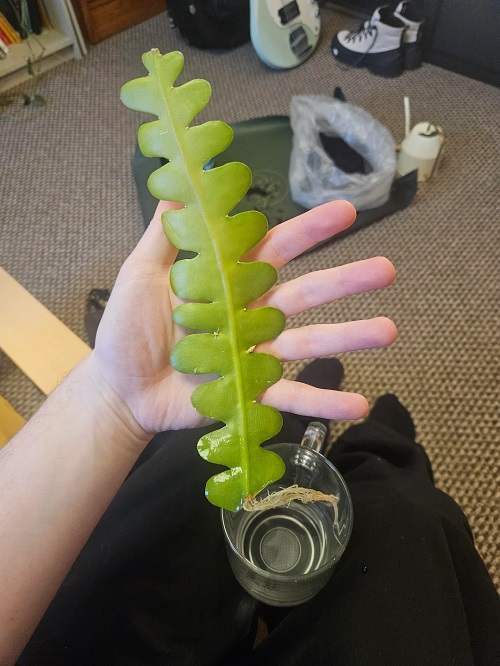
We have chosen a clear, transparent container for the sole reason of monitoring growth along with adequate sunlight exposure. If all the growing conditions are favorable, the cutting will begin to produce roots within a couple of weeks.
6. Transplant to Soil
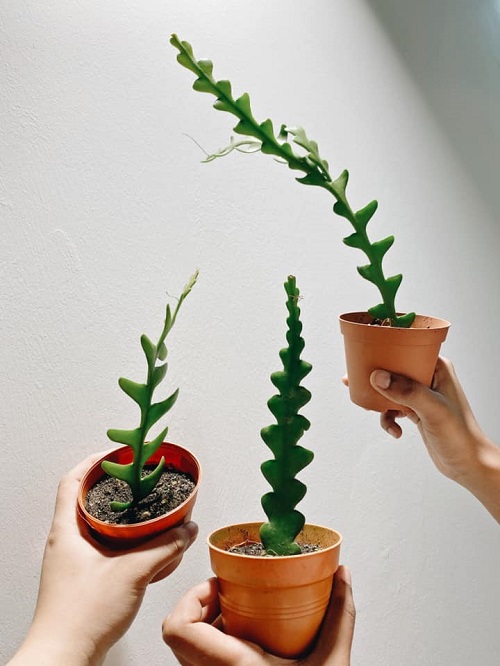
Once the roots are 1–2 inches long, you may transplant the cuttings to a pot filled with soil. This isn’t the final step as the young plantlet will require basic care in the pot as well.
Pro Tip: The success ratio of growing a healthy plant from cuttings is never 100%; therefore, try using multiple cuttings simultaneously to increase your chances of getting a thriving succulent.
Key Points to Remember
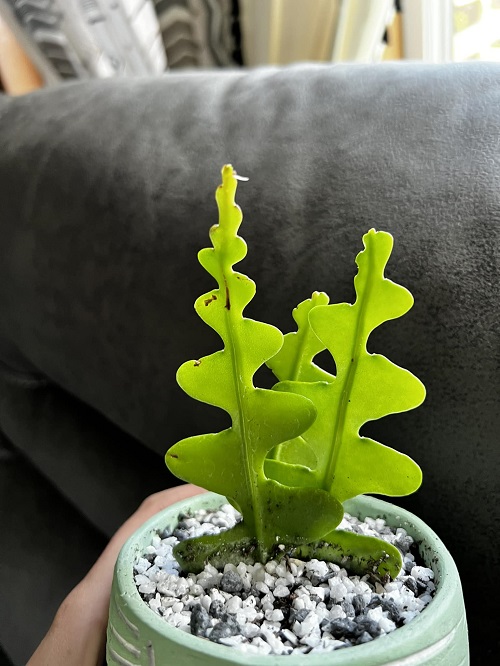
- Healthy cutting equals a healthy plant. The best time to commence this process is in spring or summer, which is the plant’s natural growing season.
- Do not forget to allow the cutting to callus.
- Water quality and temperature play a big role in the plant’s survival.
- Change the water frequently.
- Never expose the cutting to harsh, direct sunrays (especially in the afternoon).
- Handle the cutting with care once the roots have formed, as they are very tender.
- Continue to care for the plant even after it has been transplanted.
Now that you know everything about propagating fishbone cactus in water, let us know in the comment section which other plant you would like to multiply in a liquid medium!