
As an Amazon Associate, we earn a small commission from qualifying purchases — at no extra cost to you.
Beauty is on the inside, literally! From furry rabbit’s foot to bear paws, explore 8 stunning houseplants with naturally patterned roots.
Houseplants are often chosen for their charming foliage, but these 8 unique houseplants with naturally patterned roots will make you question your choices! Because if you sneak a peek in the pot, you are in for some surprising examples of nature’s artwork.
So, without further ado, stroll through our collection, ranging from fuzzy animal paws to fun braided buttresses, and find the best pick for your indoor space!
Peek Inside the Pot! Discover our top picks from Gardening Essentials Storefront to help your unique root beauties thrive!
8 Houseplants with Naturally Patterned Roots
1. Rabbit’s Foot Fern
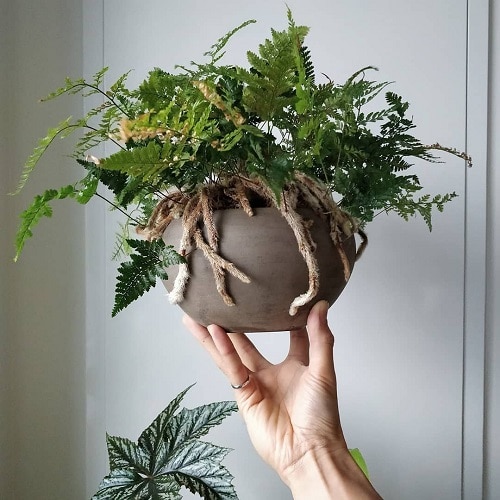
Scientific name: Davallia fejeensis
Want a sneaky green pet that peeks from the pot? This fern features thick rhizomes that crawl over the pot edges. Covered in brown, fur-like scales, they look uncanny, like a rabbit’s paw reaching out to your indoor space.
Care Tips: It prefers bright, indirect light and thrives in consistently moist soil. Also, pot in standard soil mixed with draining agents like perlite or orchid bark.
Pro-Tip: Mist roots regularly to maintain ambient moisture suitable for the fern.
2. Desert Rose

Scientific name: Adenium obesum
An interesting plant with beautiful flowers, stems, and roots! It features a swollen, thick stem called a caudex, with twisty roots that split and fuse into bonsai-like shapes. Additionally, trumpet-shaped flowers give it a striking look.
Care Tips: It thrives in bright direct sunlight (at least 6 hours a day). Let the potting mix dry out completely between waterings.
Boost your indoor growth with high-performance Full Spectrum LEDs to keep your foliage vibrant all year round!
3. Bear’s Paw Fern
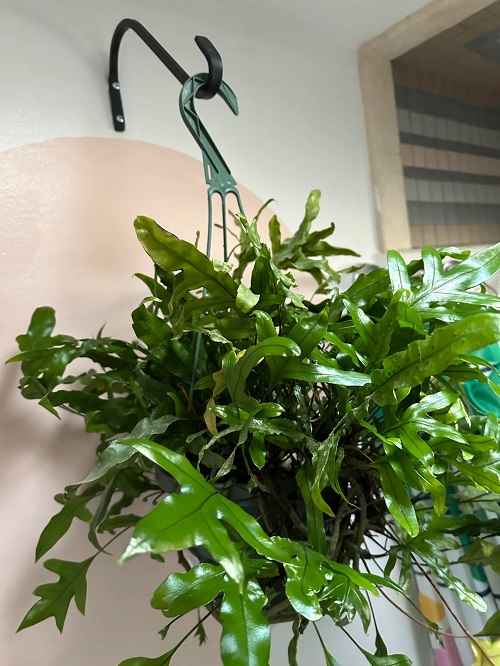
Scientific name: Aglaomorpha coronata
Like its rabbit fern cousin, this plant has robust, furry rhizomes that grow across the soil surface. Moreover, the golden-brown rhizomes are covered in soft hairs and resemble the soft, fluffy bear paw.
Care Tips: Like other ferns, it thrives in bright indirect light and consistently moist soil. Also, don’t cover the creeping rhizomes, as they may suffocate.
4. Moth Orchid
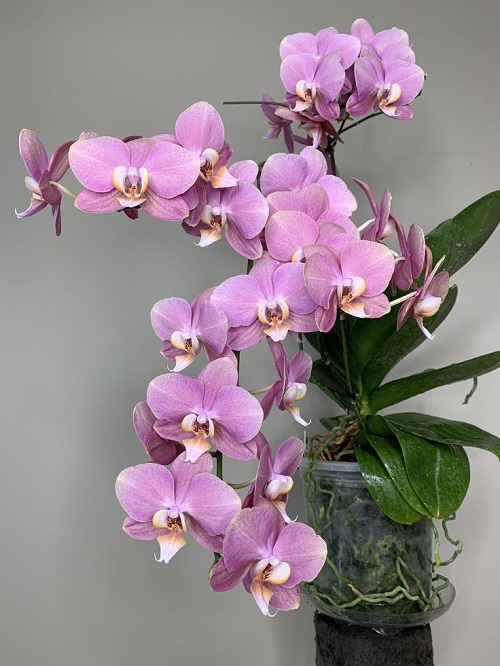
Scientific name: Phalaenopsis spp.
Add a fun, color-changing plant to your indoor space with this interesting moth orchid. Usually, the roots appear silvery-white or gray due to trapped air in the velamen (the epidermal tissue covering the roots). But when hydrated, chlorophyll beneath the velamen shines through, and the roots appear green.
Care Tips: Since it’s an epiphyte, it prefers bright, filtered light. Also, place it in coarse orchid bark and soak the pot mix only when roots turn silvery grey.
Prefer Reading on the Go? Take this houseplant guide with you! Grab the Kindle edition on Amazon and explore plant care tips anytime, anywhere.
5. Dragon Tree
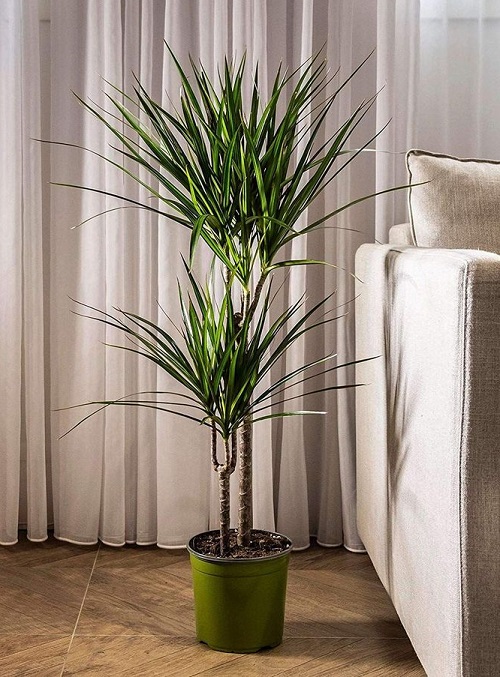
Scientific name: Dracaena marginata
This unusual tree sports orange-red roots underground and unique diamond-shaped leaf scars along its gray trunk as it matures.
Care Tips: It thrives in bright, indirect light and prefers soil to dry out between waterings. Additionally, it prefers a well-draining indoor potting mix.
Warning: It is toxic to pets if ingested.
Want to Keep Your Roots Thriving? Stock up on nutrient-rich Good Potting Mix to give your unique houseplants the perfect base!
6. Fiddle Leaf Fig
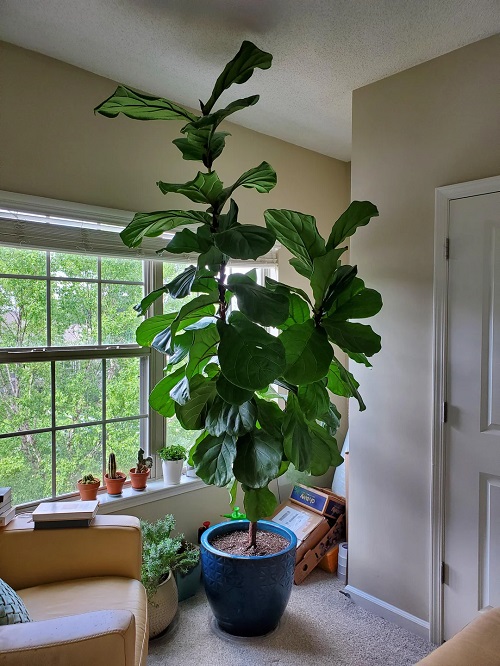
Scientific name: Ficus lyrata
Famed for its large, broad leaves among plant lovers, this plant has another charming feature: as it matures, it develops thick, woody stems and roots that intertwine into braided buttresses.
Care Tips: Place it in bright, indirect light and water when the top two inches of soil dries out. Also, amend potting mix with perlite and bark to ensure proper drainage.
Pro-Tip: Its glossy leaves catch dust easily, so clean them every day with plant wipes.
7. Snake Plant
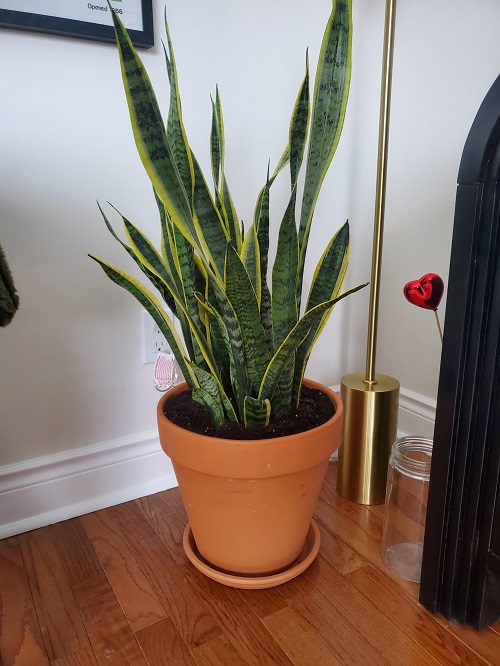
Scientific name: Dracaena trifasciata
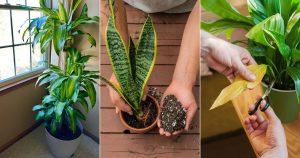
This easy-to-maintain houseplant features bright orange-red underground rhizomes that push out new pups. Additionally, its sharp, upright-angled shoots make it a great, beginner-friendly indoor decor plant.
Care Tips: A truly hardy plant that thrives on neglect. It thrives in any sunlight, but use a fast-draining chunky mix to ensure proper drainage.
Want to Master Snake Plant Care? Check out our comprehensive Snake Plant Care Guide for expert tips on watering, lighting, soil, and propagation to keep your indoor plants thriving!
8. Elephant Foot Stephania
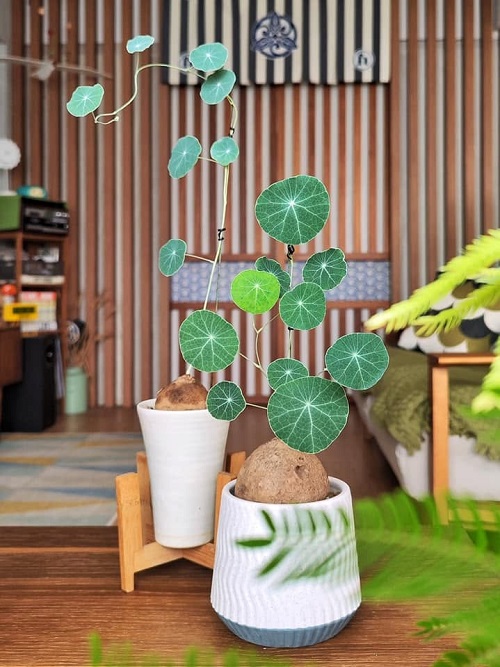
Scientific name: Stephania erecta
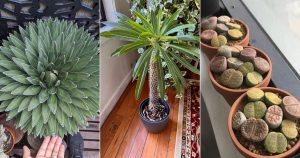
It is a favorite among collectors for its round woody caudex that looks like a patterned stone or tortoise shell. From this stone-like caudex, delicate roots arise, anchoring the plant in the soil.
Care Tips: Place the tuberous caudex halfway in a fast-draining, gritty potting mix. It loves bright, indirect light and Water it sparingly during the active growing season. And let it be near-dry when the dormant winter arrives.
Next time you are on a hunt for a houseplant treasure, don’t just look at the leaves! Take a moment to appreciate the hidden beauty beneath the soil. Houseplants with naturally patterned roots add texture and personality to your indoor jungle. And with the right care, you can watch the unusual earthy magic unfold right in your home.
Want More Houseplant Secrets? Grab the ultimate guidebook to master unique roots, rare foliage, and thriving indoor spaces.