
As an Amazon Associate, we earn a small commission from qualifying purchases — at no extra cost to you.
Ready to add twisty drama to your indoor jungle? Explore 6 houseplants with naturally curved leaves, plus care tips to keep them happy.
Time to look past flat, boring leaves. Curved leaves can sometimes signal hidden pests, but don’t let these houseplants fool you. These naturally sculpted houseplants love to show off their wavy foliage and bring drama to any indoor space. Read on to learn about these 6 quirky houseplants with naturally curved leaves that deserve a spot in your thriving collection.
Ready to grow your own twisted indoor jungle? Head over to our Gardening Storefront to grab everything you need—from chunky succulent soils and perlite blends to stylish hanging baskets and self-watering pots.
6 Houseplants with Naturally Curved Leaves
1. Curly Spider Plant
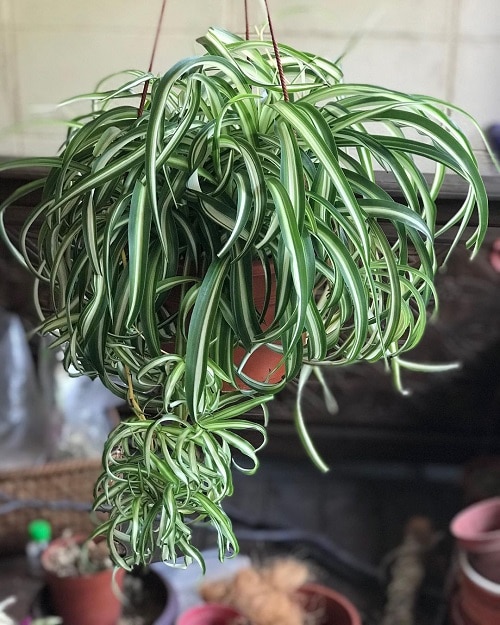
Scientific name: Chlorophytum comosum ‘‘Bonnie’
Traditional spider plants already look charming with white-green stripes on their foliage. The spectacular ‘Bonnie’ cultivar doubles up its charm with bouncy, curled leaves that form coiled ringlets. Also, watch for tiny spiderettes offsetting from stems that can be propagated into a fully grown spider plant!
Light: Bright, indirect light.
Watering: Water when the top 1-2 inches of soil feel dry. It is sensitive to fluoride or chlorine. Therefore, use distilled water to prevent leaf tip browning.
Soil: Well-draining, standard potting mix with blends of perlite or pumice is ideal.
Bonus: It is non-toxic and has air-purifying abilities.
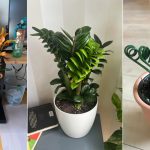
2. Curly ZZ Plant
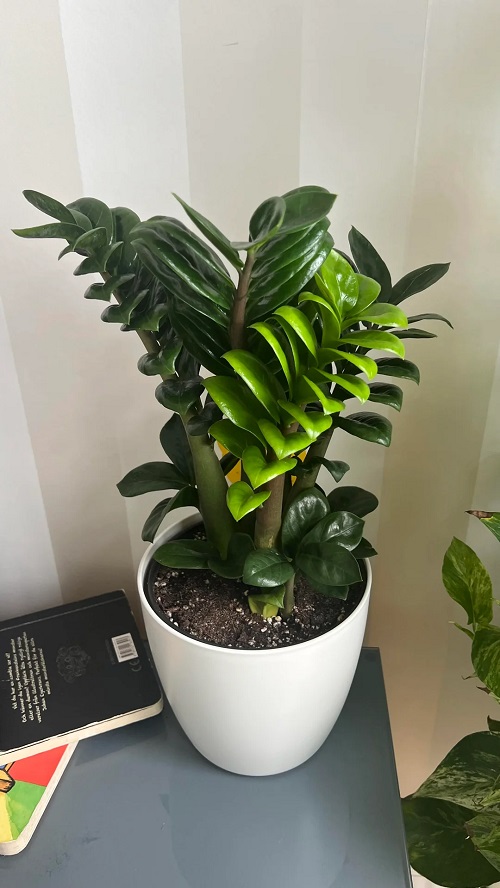
Scientific name: Zamioculcas zamiifolia ‘Zenzi’
A compact, dwarf variety of the popular ZZ plant. It features thick, waxy foliage that curves elegantly along an upright stem.
Light: Medium to bright, indirect light.
Watering: It has a thick rhizome that stores water and makes it highly drought-tolerant, so let the potting mix dry out completely between waterings.
Soil: Fast-draining, chunky succulent potting mix is the best choice.
Warning: Toxic to pets, and the exuding sap causes skin irritation.
3. Hindu Rope / Krinkle Kurl
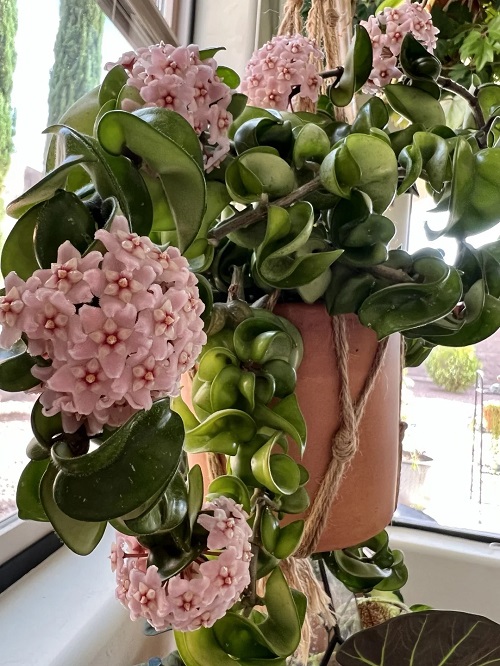
Scientific name: Hoya carnosa ‘Compacta’
It is a natural, semi-succulent trailer and hence is a perfect fit to beautify your hanging baskets. Its thick leaves fold on themselves along the thin trailing stem, resembling a live rope. Additionally, Hoya’s star-shaped flowers that emit a spellbinding fragrance are an added charm to its beauty.
Light: Bright, indirect light
Watering: Similar to the ZZ plant, follow the classic ‘soak and dry’ method
Soil: Chunky, well-aerated potting mix with blends of orchid bark, perlite, or pumice.
Ready to take your plant care guides anywhere? Upgrade your reading setup with the latest Amazon Kindle; Carry your entire botanical library—and your favorite gardening eBooks—right in the palm of your hand!
4. Frizzle Sizzle
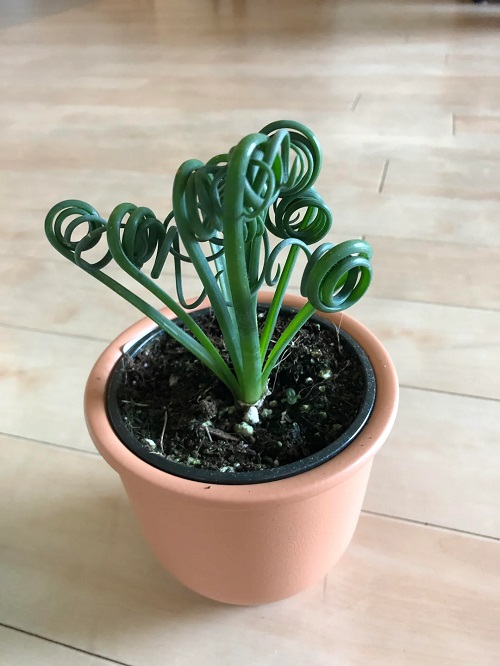
Scientific name: Albuca spiralis
A unique, bulbous plant that produces tightly spiraled leaves resembling a rosette. However, if light is deficient, these leaves uncurl and grow out long in a desperate search for the sun. In the spring, the plant blossoms with yellow, vanilla-scented flowers.
Light: Full, bright sun (essential to maintain its signature curls). If you lack the perfect sun spot, then opt for full-spectrum LED grow lights for your houseplant.
Watering: Allow the soil to dry between waterings. Also, hold back on watering in the dormant season (summer).
Soil: Fast-draining, succulent potting mix is ideal.
Warning: Toxic to pets and humans if ingested.
Give your curly plants the exact soil they crave! Shop fast-draining, chunky succulent potting mix designed to prevent root rot and keep your indoor jungle thriving.
5. Bird Nest Fern
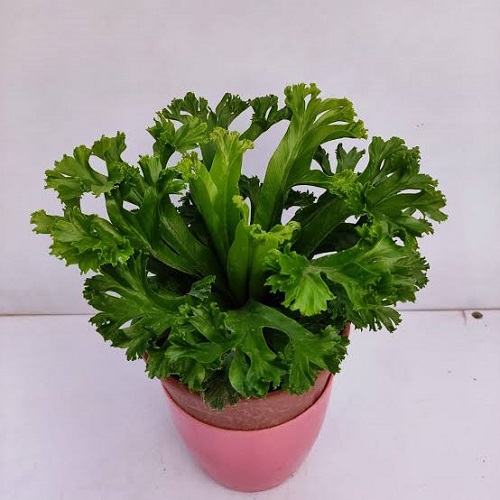
Scientific name: Asplenium nidus ‘Leslie’
Ferns usually bear feathery leaves. However, this variety features broad leaves that clump to resemble a bird’s nest. Additionally, the tips of the Leslie cultivar are rippled and bent, creating a living artistic masterpiece.
Light: Medium to bright indirect light
Watering: Hates drying out, so keep it consistently moist. Water at the edges, away from the crown, to prevent rot.
Soil: Rich, peat-based organic soil that supports good drainage.
6. Croton Mammy
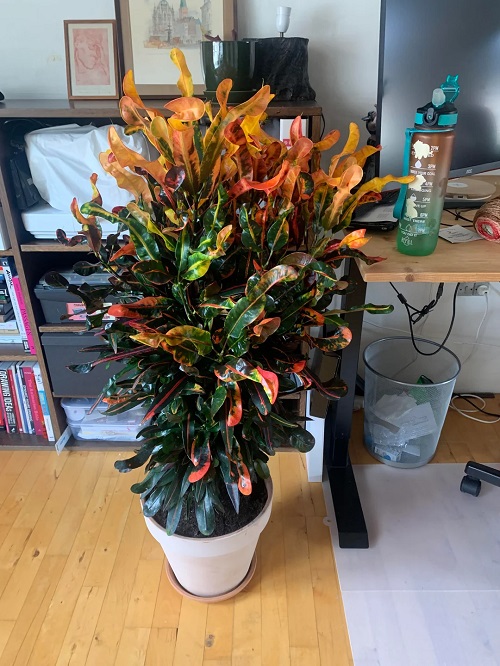
Scientific name: Codiaeum variegatum ‘Mammy’
If you love bright colors, then adopt Croton Mammy, featuring thick, glossy leaves in fiery red, bright orange, and yellow shades. These leaves spiral upward around the stem.
Light: Bright, indirect light
Watering: Keep the soil consistently moist.
Soil: Rich, well-draining organic potting soil
Healthy Curly Leaves Vs Sick Curly Leaves
Many houseplants curl up or down when under stress. So, here is a quick guide to clear up your confusion and differentiate them:
Healthy curled leaves: These are uniform and exist throughout the plant. They appear firm to the touch. Also, leaves look fresh and vibrant without yellowing or browning.
Sick curled leaves: When attacked by pests or under water stress, plant leaves lose luster and appear dull; moreover, yellowing or browning sets in. Leaves may suddenly droop or curl, with visible signs of pests, usually on the underside.
Houseplants with naturally curved leaves elevate your indoor space’s texture and dynamic appeal. Whether it is the coily spider plant or the trailing ropes of Hoya that caught your eye, these living architectures are sure to bring quirky and charming energy to your indoor plant collection. Keep our expert care tips in mind and have fun growing your new twisted beauties!
Looking for the ultimate companion for your growing indoor jungle? Order your copy of the Houseplant Care Guide Book and unlock expert secrets to a greener, happier home!