
As an Amazon Associate, we earn a small commission from qualifying purchases — at no extra cost to you.
Learn how this simple kitchen ingredient can revive your struggling peace lily and make it grow into a beautiful plant that blooms healthily.
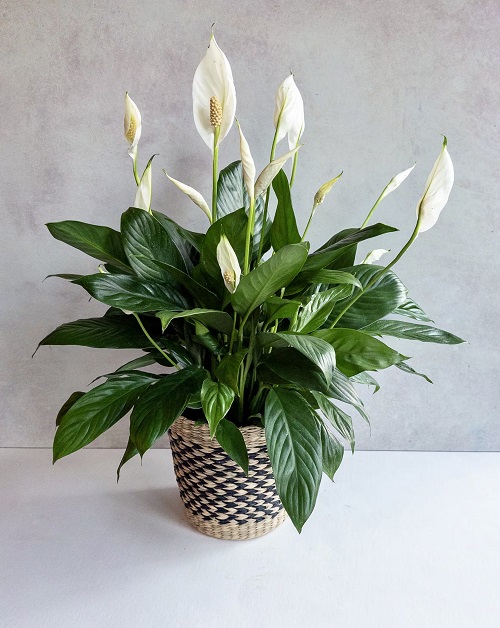
There must have been parts of your plant growth journey where you felt defeated. And for us, it was the time when we thought we had lost our peace lilies altogether. No shine, no growth, no care routine helped, until one day. One day came, and after that day, an ingredient from our kitchen helped revive our peace lilies to bloom like they had never before.
Giving your peace lily a little extra care? Skip the shopping hassle and explore our curated Amazon Gardening Storefront for plant-care essentials, tools, and supplies we’ve picked for you.
A Kitchen Ingredient that Revived our Peace Lilies
Do you know which ingredient we are talking about? Well, it is rice water.
The same cloudy water that we all throw away, considering it is useless. Use that, and you will see how your peace lilies grow greener, healthier, and much more beautiful than ever. But how do you use it?
Let Us Clear Our Basics First
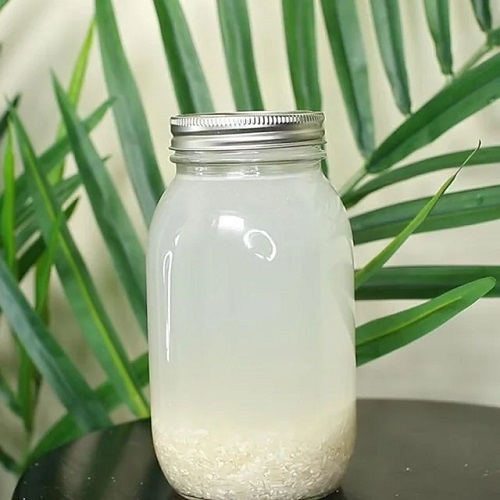
What exactly is rice water may be your biggest concern. Rice soaked in water, rice mixed with water, rice boiled in water? Perhaps. It is that starchy liquid that is left behind after rinsing or soaking rice.
And for decades, it has been used as a natural fertilizer because it contains small amounts of nutrients that plants love, like nitrogen, phosphorus, potassium, magnesium, trace minerals, and beneficial starch. Although the nutrient levels are relatively low compared to commercial fertilizers, hey, at least it is natural.
Why Peace Lilies Love It?
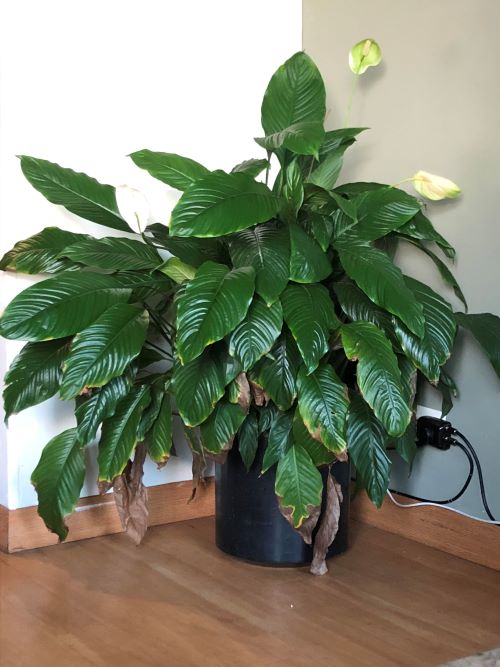
Peace lilies remind us of lush green leaves and elegant white blooms. And to maintain that beautiful appearance, they need a good intake of nutrients. Now, when we grow them indoors for long periods, the potting soil will obviously lose its fertility.
Over time, this may lead the plant to show signs of nutrient deficiency like slow growth, pale leaves, reduced blooms, and yellow-brown or smaller leaves.
Rice water will help support recovery by providing beneficial nutrients and microbes to the soil.
One more benefit is that rice water is extremely gentle when used correctly. Unlike some strong fertilizers that can overwhelm sensitive houseplants, diluted rice water provides a mild nutrient boost without putting too much stress on the roots.
Not sure whether your peace lily actually needs water? A soil moisture meter can help you check the soil before reaching for the watering can.
What Will Happen to Your Peace Lilies if You Use Rice Water?
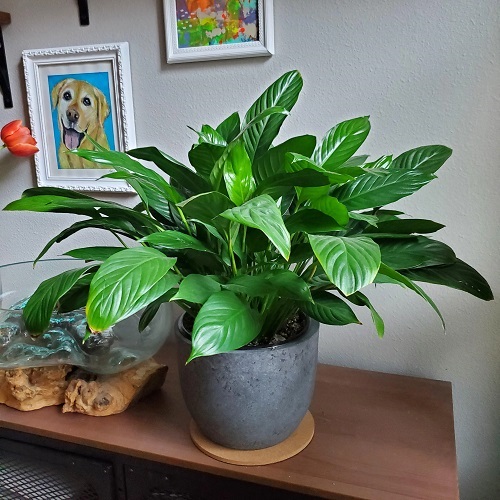
You will notice changes after a few weeks of using it. New growth will emerge, glossier leaves will dance, and the plant will be full of life again.
It will no longer look as if it was surviving; it will look like it is growing. Now see, rice water is not the only main actor here. The care routine including lighting, watering, soil, temperature, humidity, and potting conditions all play their role too.
Do keep your expectations realistic, though. Rice water will not create overnight blooms or dramatic growth spurts. Instead, it works gradually by supporting the plant’s overall health, which eventually leads to stronger foliage and better flowering potential.
Looking for a more consistent nutrient boost? Try a balanced indoor plant fertilizer alongside a healthy care routine rather than relying on homemade supplements alone.
How Do We Use Rice Water (Correctly)?
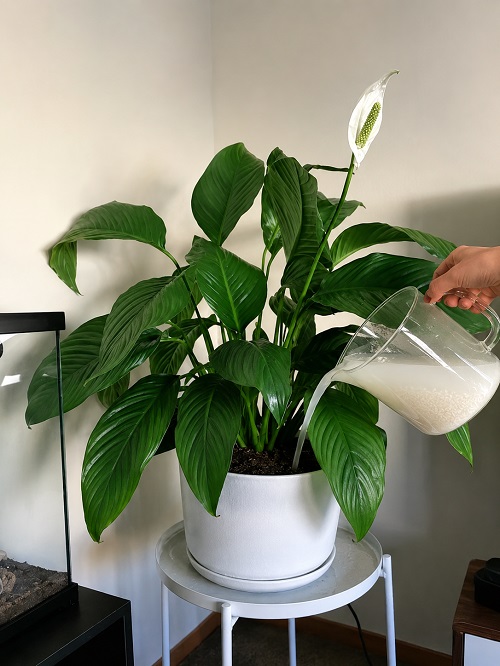
More is never better when it comes to plants. So, begin by rinsing plain rice in clean water, collect that water, and allow it to cool if needed. Dilute this with an equal amount of fresh water and use it on your peace lily once every 2 to 4 weeks.
If your peace lily’s soil stays wet for too long, consider refreshing it with a quality indoor potting mix designed to provide good drainage and aeration.
Caution: Always use unsalted rice water.
Watch Out!
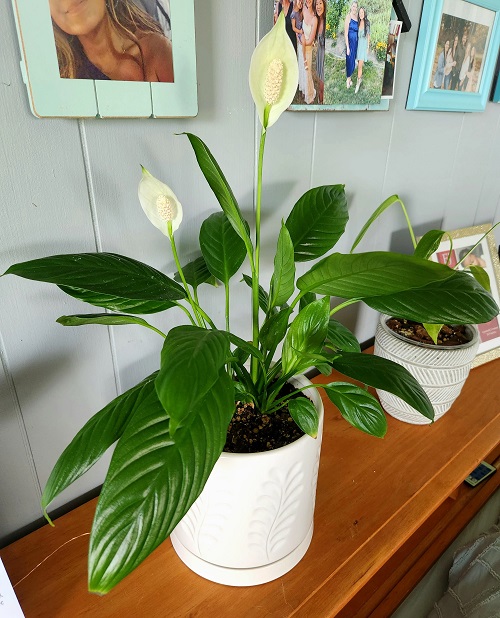
Rice water is a supplement, not a substitute. If your peace lilies don’t get enough light, water, or timely treatment for pests, then rice water cannot save them.
If you overuse rice water, that is problematic too because excess starch can lead to fungal growth, an unpleasant smell, and soil imbalance. So, balance it all out.
Give your peace lily a healthier home with a decorative pot with drainage holes, so excess water has somewhere to escape.
If you notice a sour smell coming from the soil or see a white film forming on the surface, pause the rice water applications for a while and flush the soil with plain water. This can help remove excess starch buildup.
Want more natural ways to care for your indoor plants? Explore a houseplant care book for practical guidance on watering, feeding, light, soil, and common plant problems.
In a world obsessed with commercial and chemical-based fertilizers, rice water and natural ingredients feels fresh. If you wish your peace lilies to also refresh and bloom, take this as your sign to use rice water. Let us know how they reacted to it in the comments below!
Want to become more confident with peace lily and houseplant care? Explore Kindle Unlimited for gardening books covering watering, lighting, humidity, soil, fertilizing, pests, repotting, and common plant problems.