
As an Amazon Associate, we earn a small commission from qualifying purchases — at no extra cost to you.
Wondering why your ZZ plant stems bend instead of growing upright? Here are the causes of bent stems and tips for correcting them.
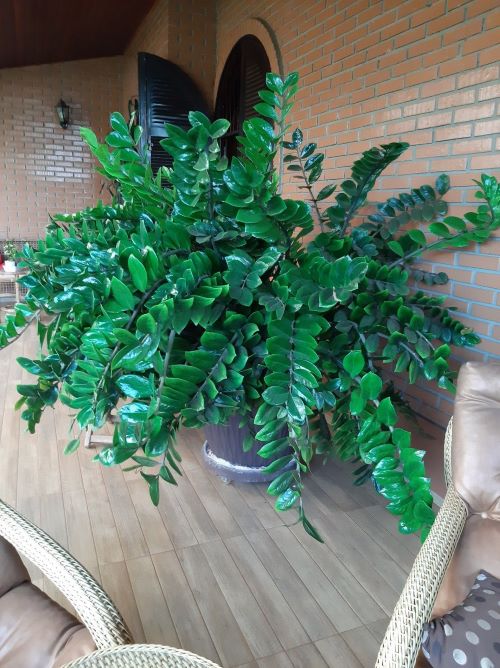
ZZ plant is popular among the gardening community for its neat, architectural shape, so it can be surprising when its stems start leaning in different directions. Whether the change happened gradually or appeared suddenly, there are several reasons your plant may no longer be growing upright. Let’s find out the reasons here.
Looking for everything you need to keep your ZZ plant healthy and upright? Explore our Amazon Gardening Storefront for grow lights, planters, plant supports, watering tools, potting essentials, and more.
ZZ Plant
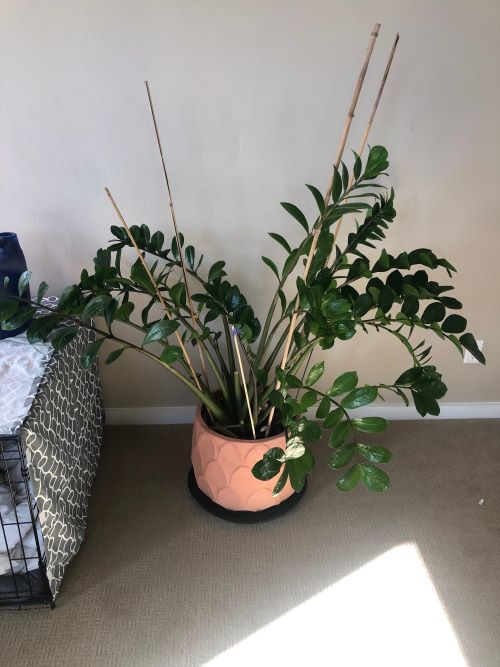
Zamioculcas zamifolia, also known as the ZZ plant, Zanzibar gem, Zuzu plant, and Emerald palm, is a medium-sized, attractive yet undemanding houseplant that will add a touch of green to indoor surroundings. They are native to East Africa, from Kenya to South Africa. ZZ plants have become popular because they’re tolerant of many conditions. They do well in low light and don’t need frequent watering. In fact, you should avoid watering them too much altogether.
Looking for affordable ways to keep your ZZ plant healthy? Explore Amazon Haul for budget-friendly moisture meters, plant supports, pots, gardening tools, and other houseplant essentials starting at just $2.99.
Are Your ZZ Plant Stems Bending? Why And How To Fix It?
1. Insufficient or Uneven Lighting
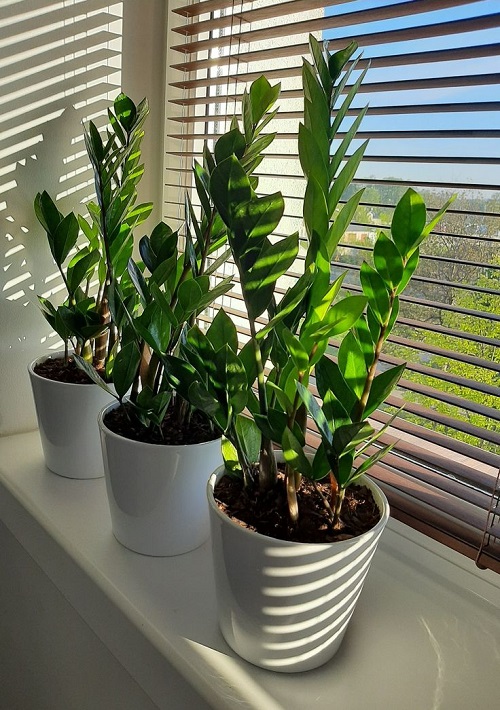
One of the most common reasons ZZ stems lean is the direction of the light. If the plant sits near a window and receives light from only one side, the stems will gradually grow toward that light source. When light comes from one direction, the stems naturally grow towards it in search of more sunshine. Try turning the pot every few weeks and watch how your plant gradually evens itself out.
Make rotating your ZZ plant effortless with a rotating plant stand that lets you give every side of the plant equal access to light.
ZZ plants are famous for tolerating low-light conditions, but that doesn’t mean they love being tucked away in a dark corner. When light is low, the plant may stretch its stems in search of a brighter spot. Check if your ZZ plant is suffering from low-light conditions.
Not getting enough natural light? A full-spectrum grow light can give your ZZ plant more consistent illumination and help prevent one-sided growth.
2. Growing Old
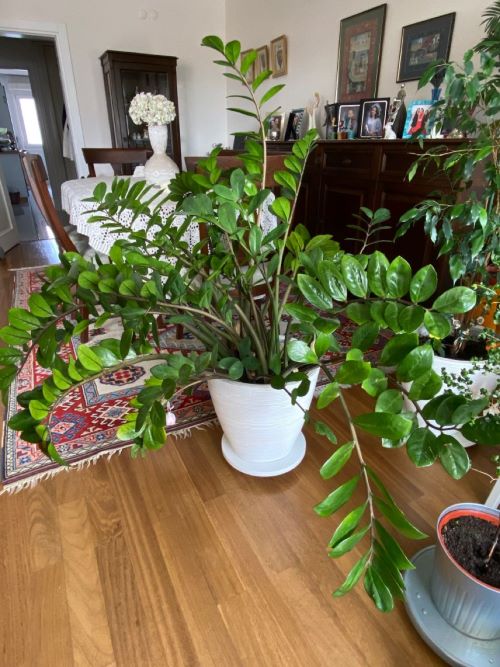
Sometimes, a bending ZZ plant isn’t a problem at all—it is a sign that your plant is growing up. On mature ZZ plants, it’s normal for older stems to arch slightly outward. I’ve noticed this especially on larger plants with several years of growth.
As the stems become longer and carry more foliage, they naturally lose some of their upright appearance.
3. Overwatering
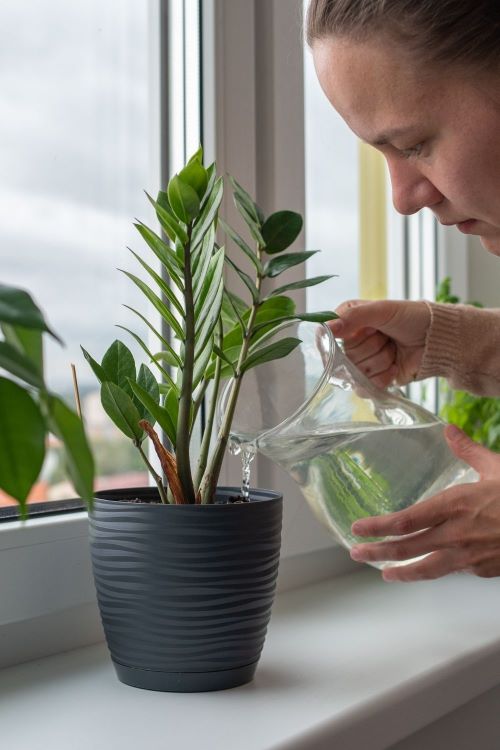
If your ZZ plant’s stem feels softer than usual, your watering routine might be worth a second look. Too much water can stress the roots and weaken the plant’s structure, making stems less able to hold themselves upright. Your ZZ plant prefers a “less is more” approach to watering.
They store water in their rhizomes, so the soil should be allowed to dry almost completely between waterings.
Not sure whether your ZZ plant actually needs water? A soil moisture meter can help you check before reaching for the watering can.
4. Overcrowded Rhizomes
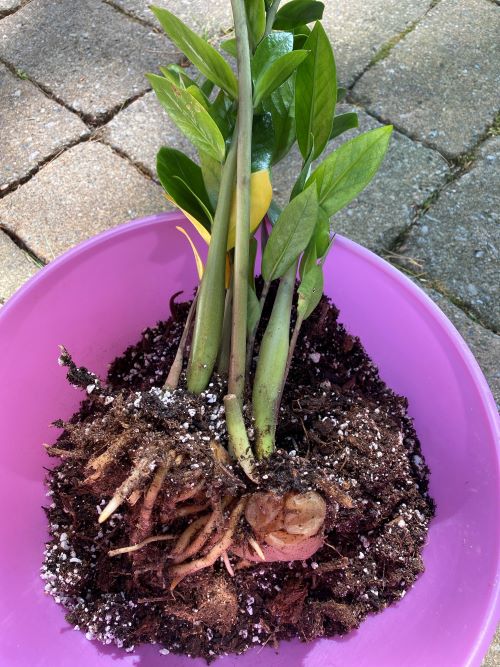
Take a look beneath the soil, and you may discover the real reason behind those bending stems. ZZ plants grow from chunky underground rhizomes that multiply over time. As the pot fills up, new growth starts competing for space, pushing stems outward in every direction. If your plant seems to be bursting at the stems, it may be hinting that it’s ready for a roomier home.
Repotting your crowded ZZ plant? A reusable potting mat keeps soil contained and makes the whole process much easier to clean up.
5. Heavy Foliage
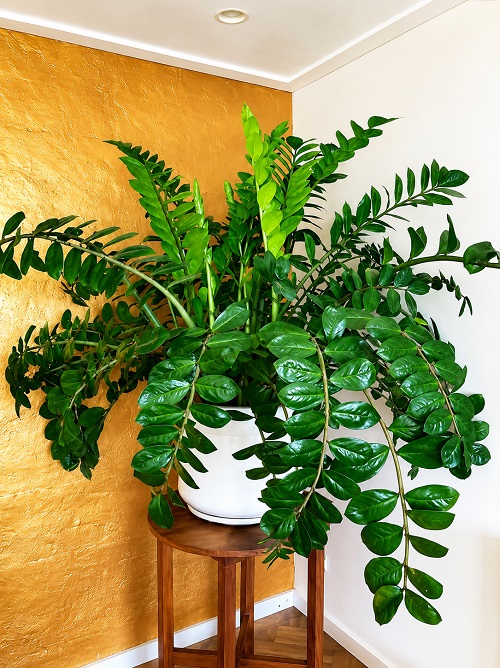
Is your plant fuller? A healthy ZZ plant can sometimes become a victim of its own success. The heavy foliage adds weight to the stems, and eventually some may begin to bow under the load. If your plant is otherwise healthy and producing lots of lush foliage, a few gently arching stems are often nothing more than a badge of vigorous growth.
If heavy stems are starting to lean, discreet plant support clips can help guide them upright without making your ZZ plant look over-supported.
7. Wrong Pot Size
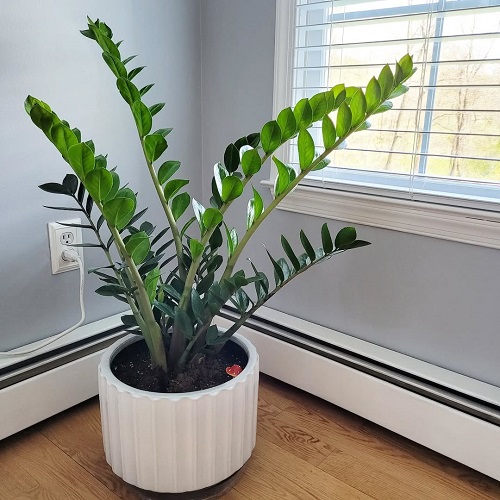
Your ZZ plant’s pot plays a bigger role than you might think. A cramped pot can force stems outwards as the roots and rhizomes run out of room, while an oversized pot may hold too much moisture and affect overall stem strength. Finding the right-sized pot helps your plant stay both comfortable and upright.
Looking for affordable supplies for your plants? Explore Amazon Haul for budget-friendly plant pots, soil mixes, fertilizers, moisture meters, gardening tools, pest-control supplies, and other plant-care essentials starting at just $2.99.
8. Physical Damage
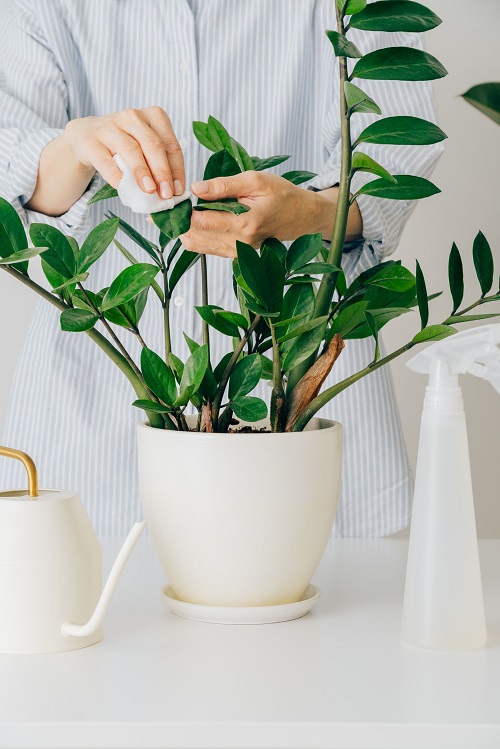
A bumped stem, an accidental knock while cleaning, or even a curious pet brushing past the plant can leave stems bent. Unlike some plants, ZZ stems don’t always spring back into place so that a single mishap can have a lasting effect on the plant’s shape.
Now you know the reasons why your ZZ plant stems are bending. If you take care of daily plant care, like lighting, watering, pot size, and overall plant health, you will see balanced growth and an upright structure. However, if the leaning appears suddenly or is accompanied by yellowing leaves, soft stems, or poor growth, it’s worth checking the plant’s lighting, watering routine, and root health.
Want to understand your ZZ plant beyond its leaning stems? A good indoor plant care book can help you learn about lighting, watering, repotting, propagation, and common houseplant problems.
Do let us know in the comments if your ZZ plant comes back to shape after following this guide.