
As an Amazon Associate, we earn a small commission from qualifying purchases — at no extra cost to you.
If you are looking for the easiest plant to propagate, then Pothos is where you need to start. Follow this simple guide to learn more.
Got a pothos that’s growing a little too long? Instead of trimming those vines and tossing them away, turn them into new plants. Pothos propagation is simple, beginner-friendly, and a great way to grow your indoor jungle. Here’s exactly how to do it.
Pothos
Pothos (Epipremnum aureum) is an ivy-like tropical plant known for its heart-shaped leaves. It’s a tropical vine native to the Solomon Islands in the South Pacific, and it is easily trained to climb a support or trail from a pot or hanging basket. Its adaptability and minimal maintenance make it a great plant for any houseplant collection.
Pothos Propagation
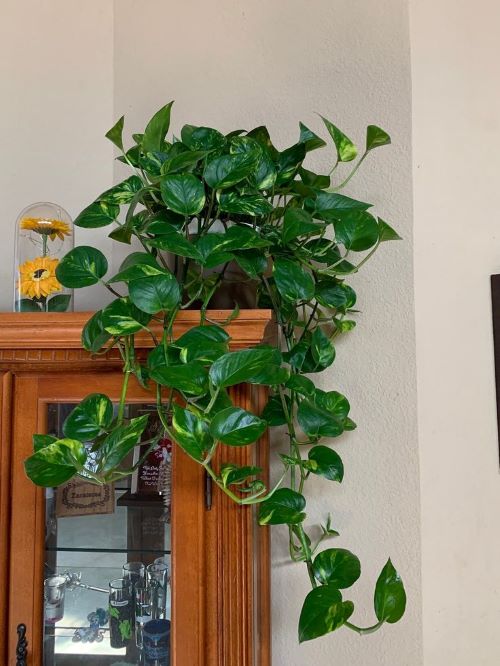
It’s a great way to rejuvenate a leggy or overgrown plant by trimming long vines and rooting the cuttings. One of the best parts is seeing roots appear from a cutting that looked like an ordinary stem just a few weeks earlier.
Best Time to Propagate Pothos
Pothos can be propagated year-round indoors, but spring and summer usually produce the fastest results. During these warmer months, the plant is actively growing, which helps cuttings develop roots more quickly and establish themselves faster.
Before you begin, gather the basics:
- A healthy, established pothos plant
- Clean, sharp scissors or pruning shears
- A glass or jar of water, or a small pot with well-draining potting mix
1. Choosing A Healthy Vine
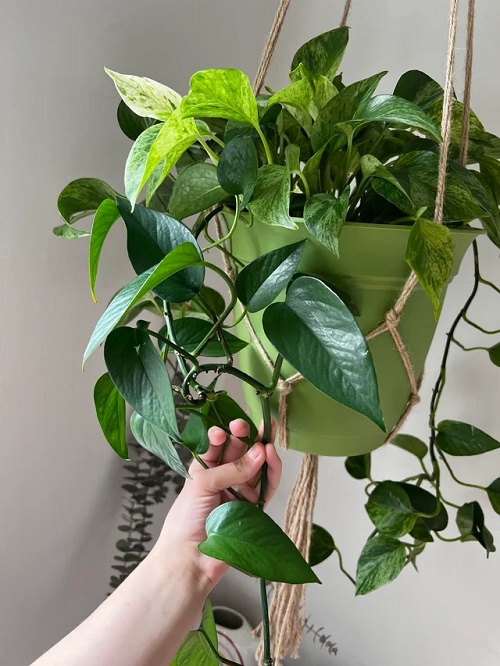
The first and foremost thing for successful propagation is choosing the right vine. Select a vine that is at least 10–15 cm (4–6 inches) long and has several healthy, fully developed leaves. Avoid stems that look yellowed, wilted, or damaged. Healthy stems are firm and bright green (or variegated, depending on your variety).
Older, more mature vines tend to root more reliably than very young, tender growth at the tips of the plant.
2. Cut the Pothos Stems Into Individual Nodes
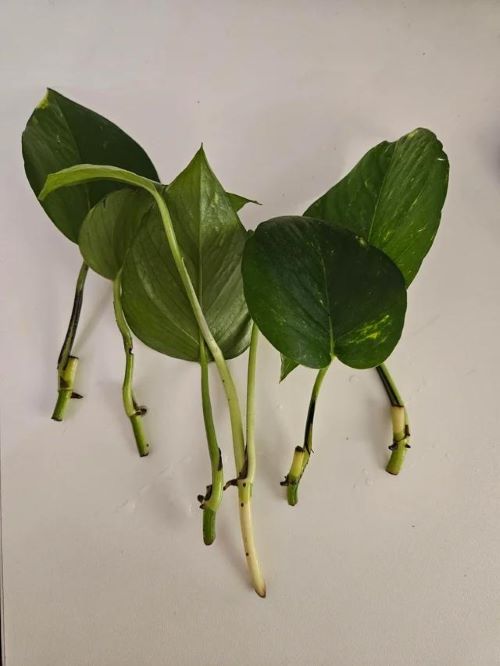
Use sterilized scissors, cut the stem just below a node—leaving about 1–2 cm of stem beneath the node. Your cutting should ideally have two to four leaves and at least two nodes. Remove one or two leaves from the bottom, exposing the nodes that will sit in water or soil. Leaves left submerged in water will rot and invite bacteria, so keeping them clear of the rooting medium is important.
Bonus Tip: Rooting Hormone Is Optional
Many beginners think they need rooting hormone to propagate pothos successfully. The good news is that pothos naturally roots very easily and usually doesn’t need any extra help. However, if you already have rooting hormone at home, you can dip the cut end into it before planting in soil to encourage slightly faster root development.
3. Different Methods
There are two methods for successfully rooting pothos: water propagation and soil propagation. Both work well if you follow the instructions carefully.
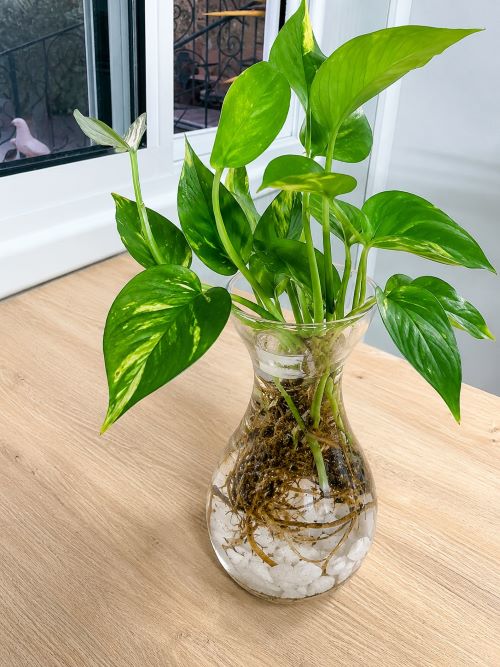
I. Water Propagation.
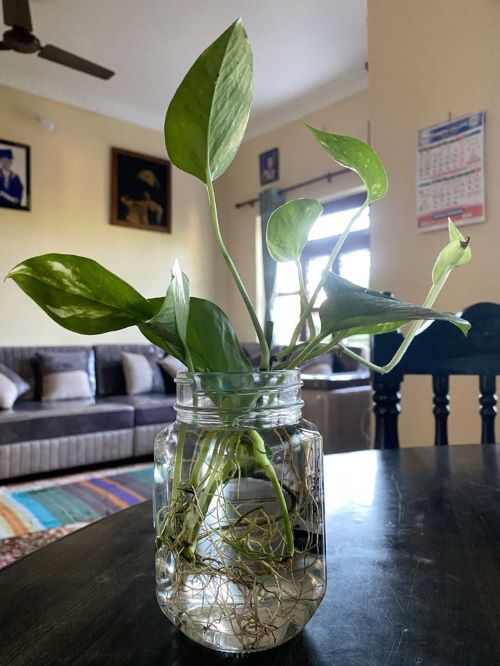
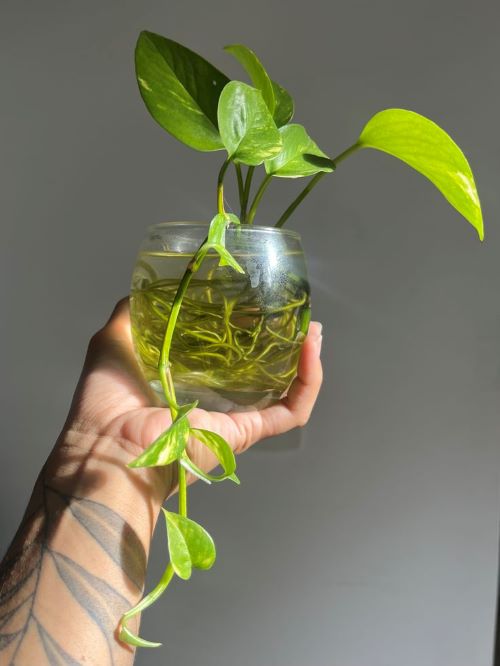
Place the cutting in a glass of clean water and keep it in a bright spot, out of direct sunlight. Change the water once a week to keep it fresh. Within one to three weeks, you’ll see white roots beginning to emerge from the nodes. Once the roots are about 3–5 cm (1–2 inches) long, the cutting is ready to be potted.
Water propagation has one advantage: you can watch the roots develop, which is deeply satisfying. The slight drawback is that water-rooted cuttings need a period of adjustment when moved to soil, as they’ve adapted to a low-resistance environment.
II. Soil Propagation
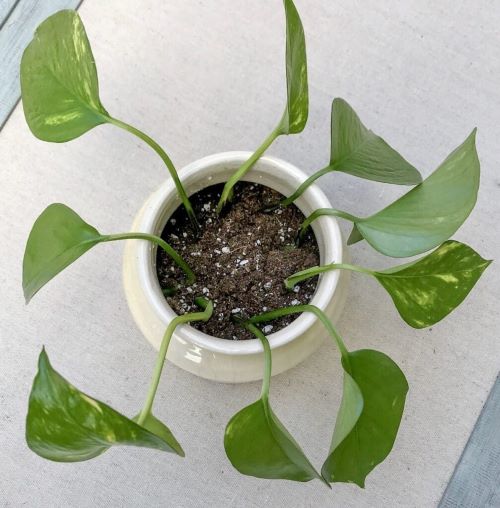
Fill a small pot with well-draining potting mix—a standard houseplant mix with a little added perlite works perfectly. Make a small hole in the soil with a pencil or your finger, insert the cutting so the nodes are buried, and gently firm the soil around the stem.
Water lightly and place the pot in bright, indirect light. Keep the soil consistently moist but not waterlogged. You can place a clear plastic bag loosely over the cutting for the first week or so to retain humidity, which encourages rooting.
With soil propagation, you won’t be able to see the roots directly, but you’ll know the cutting has rooted when you feel gentle resistance after giving the stem a very light tug after two to four weeks.
4. Right Environment
Both methods need the same basic care while the cutting roots:
Light: Bright, indirect light. A north- or east-facing windowsill is ideal. Avoid harsh afternoon sun, which can stress the cutting before it has roots to absorb water.
Temperature: Pothos roots best between 18–27°C (65–80°F). Avoid cold windowsills in winter—roots form much more slowly in the cold.
Patience: This is the hardest part. Rooting typically takes two to four weeks. Resist the urge to tug the cutting or move it around frequently.
5. Pot Up Your Cutting
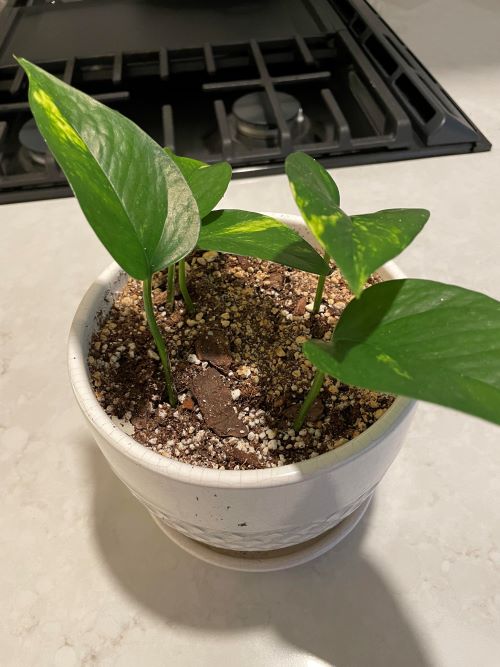
Once your water-propagated cutting has roots 3–5 cm long, it’s time to move it to soil. Choose a small pot with a drainage hole, a pot that’s too large can lead to soggy soil and root rot. Fill the pot with potting mix, create a small hole, place the cutting inside, and firm the soil gently around the roots. Water well and place it in its permanent spot.
For the first week or two after potting, keep the soil a little more moist than you usually would, giving the plant time to adjust from water to soil. After that, settle into a normal watering routine—water when the top inch or two of soil is dry.
How Many Cuttings Can You Take at Once?
If your pothos is healthy and mature, you can take several cuttings at the same time. In fact, propagating multiple cuttings together often creates a fuller-looking plant when you pot them up later. Just avoid removing more than one-third of the parent plant at once so it can continue growing without stress.
Common Mistakes To Avoid
Here are some mistakes that you must avoid for a successful propagation:
Cutting without a node: Rooting is impossible. Always double-check before you cut.
Leaving leaves in water: Submerged leaves rot and cloud the water with bacteria, harming the developing roots. Strip any leaves that sit at or below the waterline.
Too much direct sun: Strong sun can wilt or scorch a rootless cutting before it has any way to take up water. Indirect light is always safer while rooting.
Potting too early: Wait until roots are genuinely established—at least 3 cm long—before moving a water-rooted cutting to soil. A cutting potted too soon may struggle to take hold.
Overwatering after potting: Once in soil, pothos roots need both oxygen and water. Soggy, waterlogged soil leads to root rot. When in doubt, water less.
Propagating pothos is an easy and rewarding way to grow your plant collection without spending a penny. With a little patience and the right care, a single cutting can develop into a healthy new plant in just a few weeks. Whether you’re filling an empty corner of your home or sharing cuttings with friends, pothos propagation is a simple gardening skill that’s well worth learning.