
As an Amazon Associate, we earn a small commission from qualifying purchases — at no extra cost to you.
Is your String of Pearls plant dying? Panic won’t solve it. But these tips would. Ready to learn the causes and simple fixes for every ache?
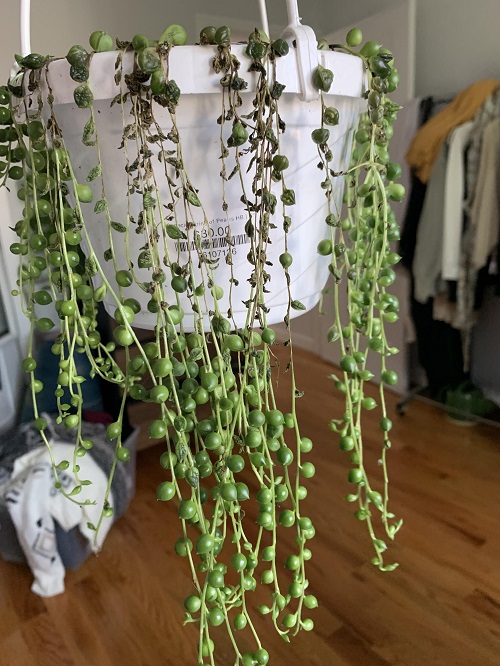
One day your string of pearls looks lush, full of life, and cascading beautifully from its pot. The next, the pearls are shriveling, turning yellow, or acting all mysterious. Sounds familiar? Well, we all have been there. But hey, don’t panic. We have something for you.
The expedition to save our string of pearls require some essentials, and we have them compiled for you at our Amazon Gardening Storefront.
String of Pearls Dying?
You are far from alone in this journey. This unique succulent is notorious for confusing everyone. It looks delicate and dainty while it grows and cascades, and we agree but the good news is that most problems are easy to identify and once you understand them and fix it, you’ll bring these babies back to life. Look out for:
1. Overwatering
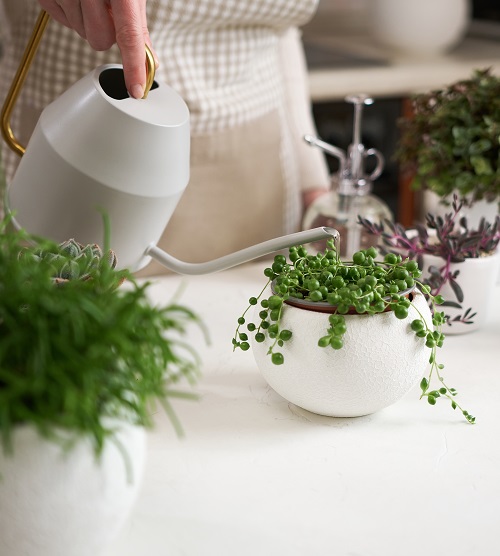
The main villain we cannot emphasize much upon. If the pearls feel mushy, transparent, yellow, or are falling off with little effort, overwatering is likely the culprit. These succulents store water in their bead-like leaves and constantly moist soil can lead to root rot that prevents the plant from absorbing water and nutrients.
No more guesses. Use a moisture-meter to eliminate any watering guesswork and prevent future root rot because we are not compromising on those beaded leaves.
2. Underwatering
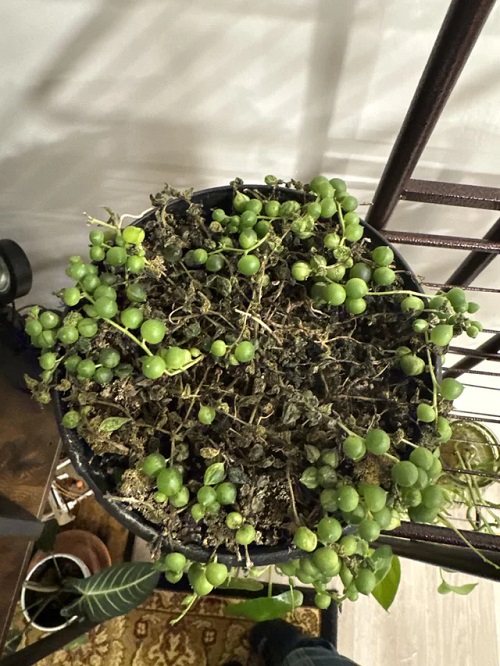
The opposite is equally hurtful. Though the plant is drought-tolerant but they still need occasional watering. When the plant becomes too dry, the pearls begin to wrinkle, flatten, and lose their firm appearance. Water thoroughly until excess water drains from the bottom and then allow the soil to dry before the next watering.
A quality succulent potting mix will help maintain the perfect moisture balance for healthy roots and ensure drainage and airflow, making you and your plant stress-free.
3. Not Enough Light
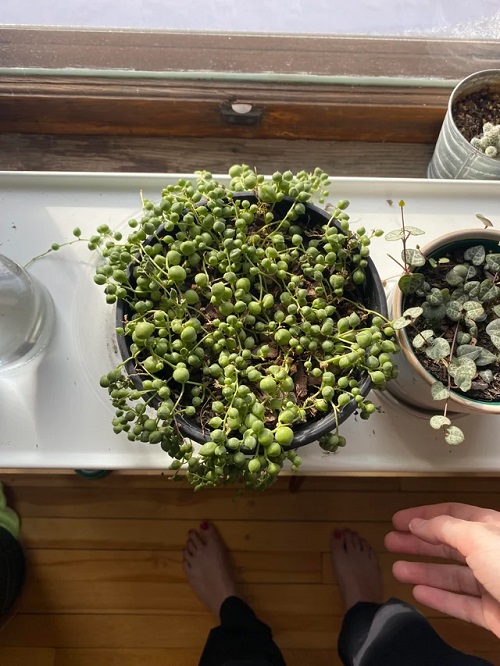
These babies love bright light. One of the biggest mistakes we make is placing them in a dark corner where they slowly weaken over time. Without enough light, stems become thin and stretched, and the pearls become smaller and more widely spaced.
But if you are struggling to provide enough sunlight indoors, then a full-spectrum grow light will rescue you from this trouble because it encourages strong, upright growth and can make training easier.
4. Poor Drainage is Suffocating the Roots
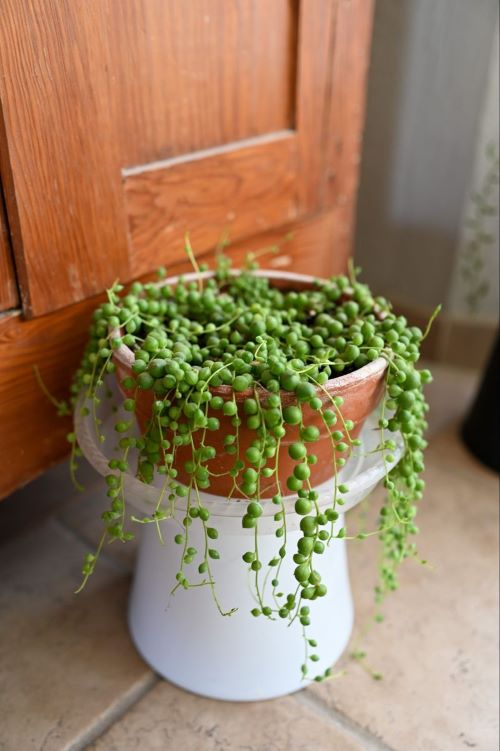
Even if you’re watering correctly, a pot without drainage holes can create serious problems. Water trapped at the bottom of the container keeps the root constantly wet, leading to root rot and plant decline. Move your plant into a terracotta pot or a pot with drainage holes and use a fast-draining cactus or succulent mix.
You may think, why terracotta pots? It is because terracotta pots are porous and they naturally wick away excess moisture, which helps to prevent overwatering.
5. Temperature and Humidity, Check?
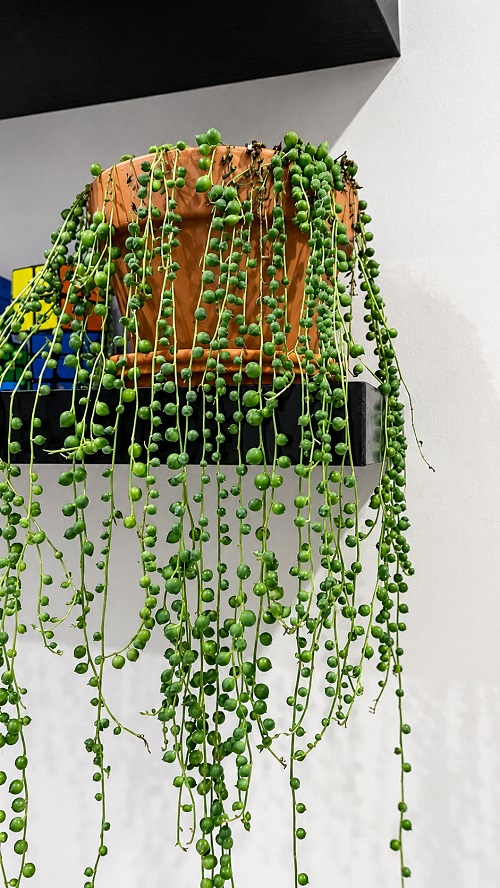
String of pearls likes warm temperatures and dislikes sudden changes. Cold drafts from air conditioners, open windows, or winter weather can shock the plant and cause pearl drop. In addition, they don’t hate humidity, but they don’t love staying in humid conditions either.
Tip: Keep the plant in a location where temperatures remain consistently warm and avoid placing it near heating or cooling vents.
Want to check if your snake plants are growing in the right temperature and humidity levels? Then check out TempPro Store’s Digital Hygrometer.
6. Soil needs a Change
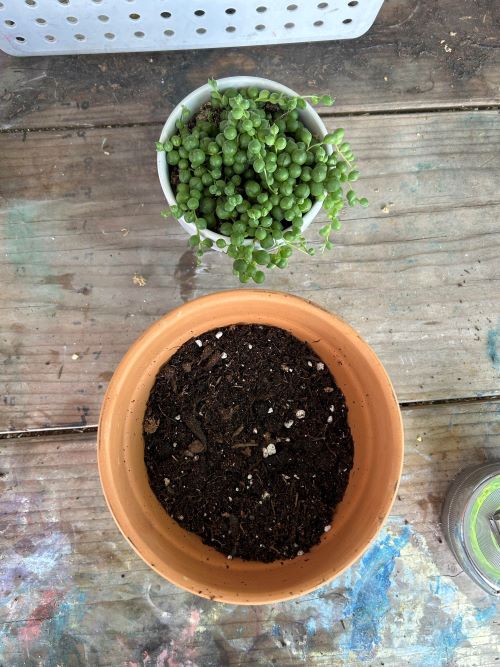
Over time, potting soil breaks down and loses its ability to drain properly. Roots become crowded, airflow decreases, and growth slows down. Repot your string of pearls every two to three years using fresh succulent soil and see the magic flowing through its longer vines.
7. Check as you go
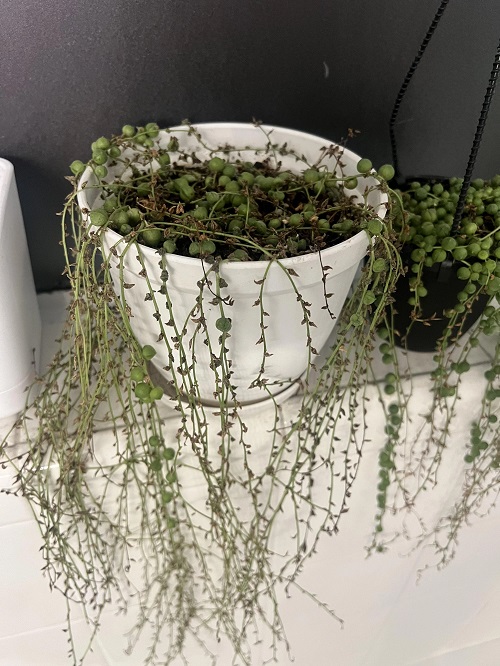
If your string of pearls is dying, check the most important five things. Start from soil moisture, drainage holes, light levels, root health, and then check for temperature and humidity levels. In many cases, correcting just one of these issues can help you transform your plant within weeks and make it bloom magnificently.
If you wish to give your string of pearls a speedy recovery then a guide to succulents can be your best friend in that journey with this checklist. And now it is your turn to remove their problems one by one. Let us know how it went for your string of pearls until then we’ll bring some other tricks for you.