
As an Amazon Associate, we earn a small commission from qualifying purchases — at no extra cost to you.
Zero ocean required! Dive into String of Dolphins care and learn how to keep this trailing succulent for shelves thriving with easy care tips.
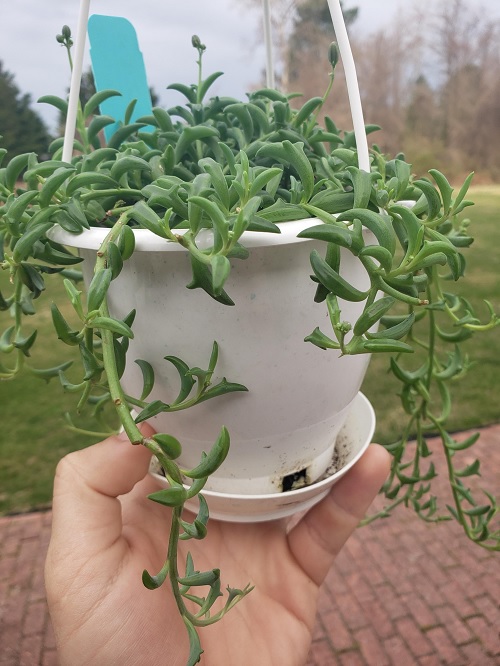
Plants really excel at mimicking everything from land animals to sea creatures! So, do you want a pod of tiny leaping dolphins right on your shelf? Then the String of Dolphins is the closest option the plant world has to offer. Read this complete String of Dolphins care guide to keep this beautiful trailing succulent for shelves and hanging baskets thriving indoors.
Ready to set up your own trailing plant corner? Explore all the pots, soils, and everyday tools we recommend in our gardening essentials storefront.
String of Dolphins Key Facts
| Common Name | Dolphin Plant, Flying Dolphins, Dolphin Necklace |
| Botanical Name | Curio peregrinus |
| Plant Type | Trailing Succulent |
| Mature Size | Stems trail upto 3 feet |
| Sun Exposure | Bright, indirect light |
| Soil Type | Well-draining, chunky mix |
| Soil pH | Slightly acidic to neutral (6.5-7.0) |
| Bloom Time | Spring |
| Flower Color | White |
| Hardiness Zones | USDA (9-11) |
| Native Area | South Africa |
| Toxicity | Toxic to humans and pets |
| Best for | Intermediate |
String of Dolphins Information
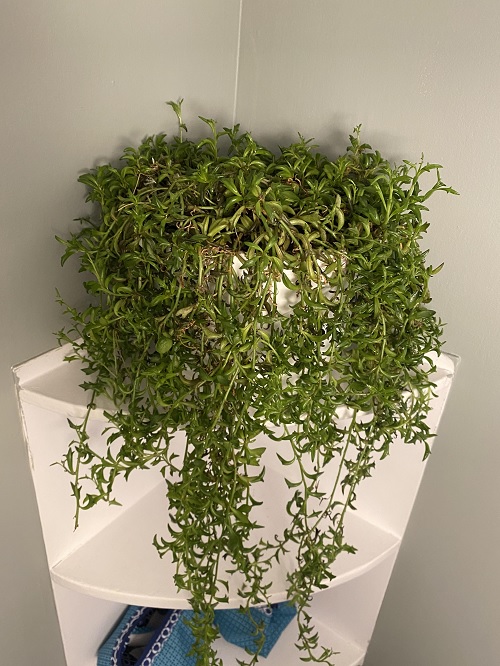
The String of Dolphins is an unusual cultivar that doesn’t exist in the wild; it is a crossbreed between the String of Pearls and the Candle Plant, both native to South Africa.
It features crescent-shaped leaves with stretched bases that resemble fins, making each leaf look like a leaping dolphin. It also has a translucent leaf window that lets light reach its photosynthetic zones effectively. Let this dolphin necklace trail from a macrame hanger or hanging basket for a dreamy look of leaping dolphin pods.
Styling a plant shelf on a budget? Browse budget-friendly planters, shelves, and small decor finds on Amazon Haul.
Propagation
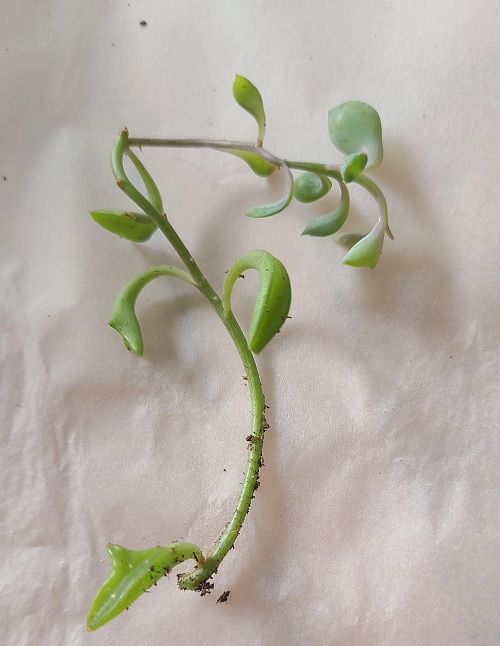
The String of Dolphins propagates best from stem cuttings, which can be rooted in water or soil. Follow this easy four-step guide to get lush trails of the dolphin plant:
- First, select an active stem with at least 3–4 nodes and cut it off using sharp pruning shears. Remove the bottom leaves to expose the nodes.
- Let the cut ends of the dolphin plant callus in filtered light for 1–2 days, resting or wrapping them lightly in a dry paper towel. This simple step helps prevent root rot.
- To propagate in soil, plant the stem cutting in a gritty succulent potting mix and lightly mist the top of the soil every 2–3 days. For water propagation, submerge the bare stem nodes while keeping the leaves above the waterline. Refresh the water every 4–5 days until 1–2 inch roots form on the String of Dolphins cuttings.
- Finally, once roots develop, transfer the water-rooted cuttings into succulent potting mix, just like soil-propagated plants.
Pot Size for Trailing Succulent: String of Dolphins
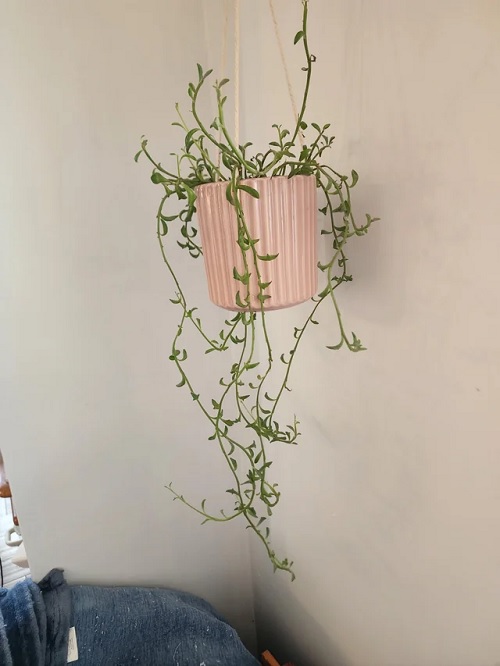
String of Dolphins are shallow rooters and love snug-fit pots, so opt for containers that are shallow and 1–2 inches wider than the plant’s root ball. Usually, a newly rooted plant fits well in 3–4 inch pots, whereas a fully mature dolphin plant needs a larger 6–8 inch pot.
Additionally, as a trailing vine, hanging planters or shallow pots with attached saucers work best—especially those made from unglazed terracotta—to support even drying of the soil and protect the delicate, shallow roots from staying wet too long and developing rot.
Pro-Tip: If you love a decorative pot that doesn’t drain well, plant the String of Dolphins in a well-draining plastic nursery pot and slip it inside as a cache pot, then lift it out to drain excess water.
Looking for drainage-friendly pots? Browse our favorite pots for succulents and trailing vines.
Requirements of String of Dolphins
Light
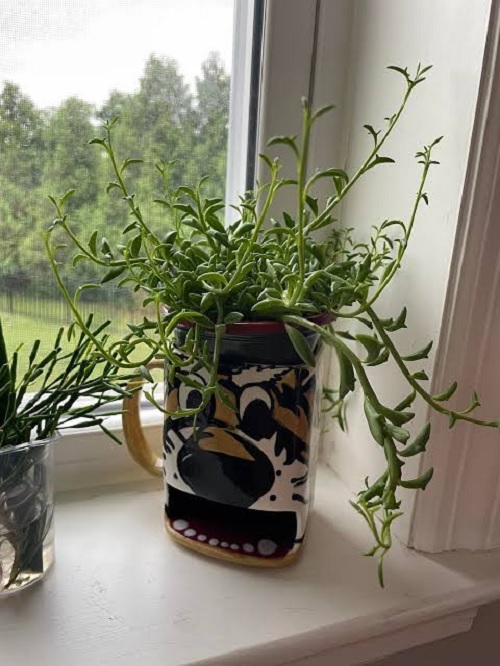
String of Dolphins thrive in 4–6 hours of bright, indirect sunlight daily. Also, make sure both the trailing stem and the crown of the plant get light.
Pro-Tip: If you are unsure whether the succulent is getting enough light, look for the signature sign of a light deficit: the dolphin plant’s leaves lose their curved structure and broaden to capture more light.
Soil
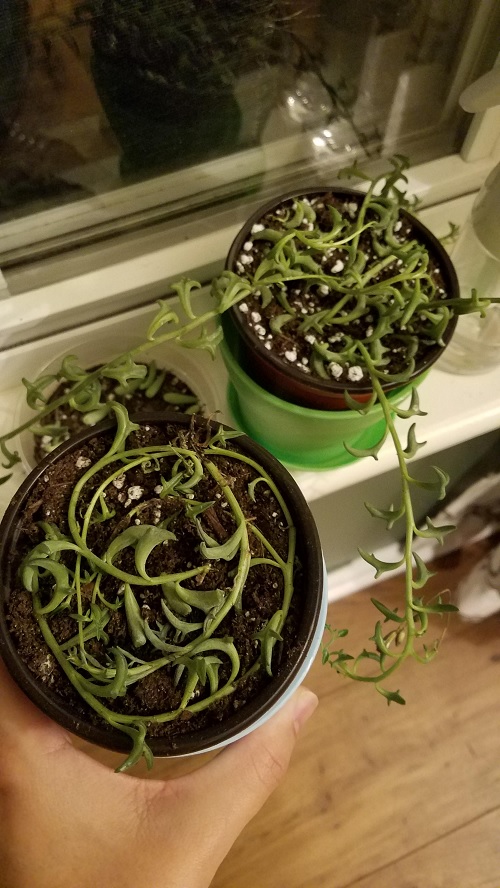
Like every other succulent, the String of Dolphins doesn’t thrive in soggy soil. Hence, use a well-draining, gritty soil mix amended with pumice or perlite.
Need a chunky, airy soil blend for trailing succulents? Explore our go-to succulent soil mixes here.
Watering
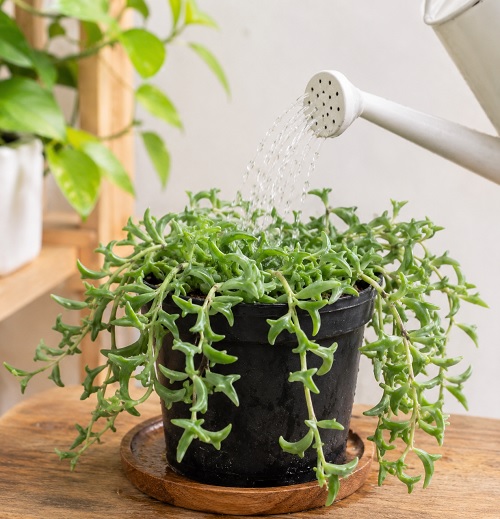
Follow the classic soak-and-dry method: let moisture evenly seep and drain through the drainage holes, and wait until the soil dries out completely before starting the next watering session.
Temperature
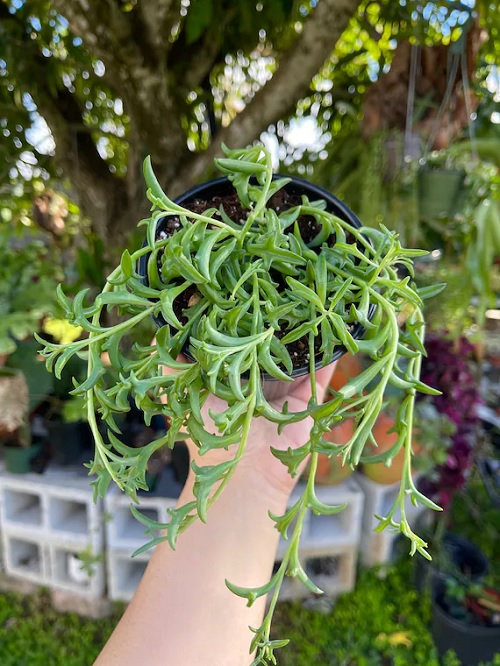
It is well-adapted to normal room temperatures between 65–80°F (18–27°C). However, it needs a cooler winter dormancy phase (50–55°F / 10–13°C) to encourage blooms in the spring.
Humidity
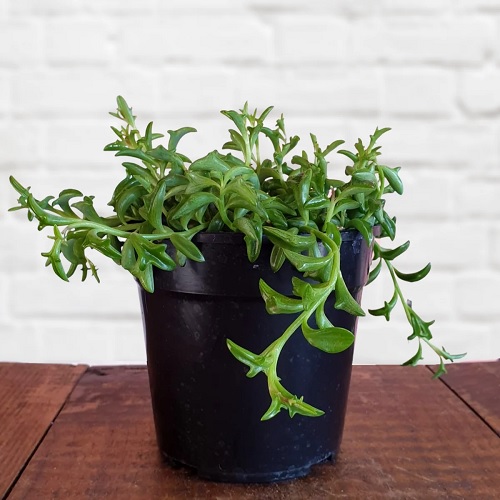
It thrives in low to average household humidity (30–50%), so you don’t need to buy a mister or humidifier.
String of Dolphins Care: Trailing Succulent for Shelves
Fertilizers
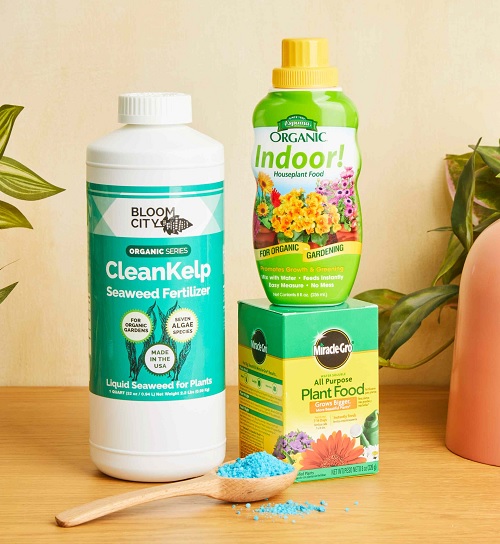
String of Dolphins is a light feeder, so an annual feeding during the active growing season—typically spring or summer—with a balanced fertilizer designed for succulents is usually plenty.
Pro-Tip: Always add a little water to the soil before feeding so the fertilizer is diluted and doesn’t burn the roots.
Pruning
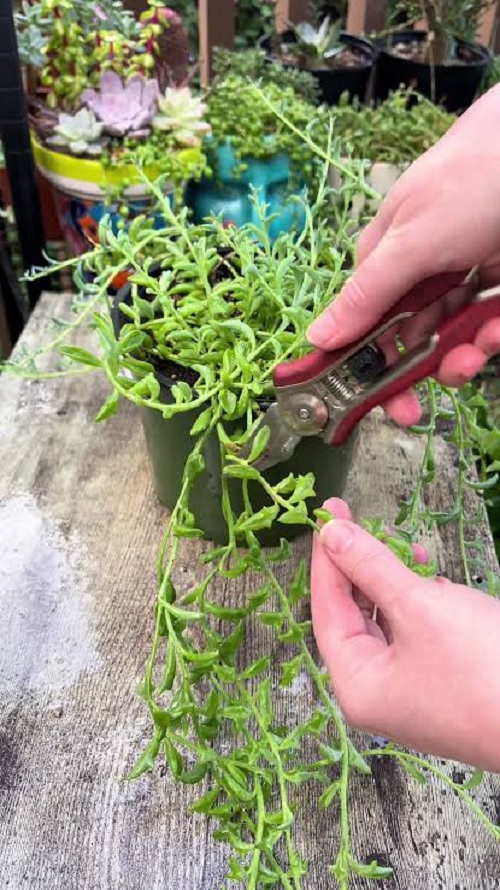
Pruning is essential to keep your String of Dolphins lush and full. When the vines grow long, trim them with a sharp pruning shear just above a leaf node, let the cut ends callus, and tuck the cuttings back into the soil to propagate new trails while keeping the crown fuller.
Repotting
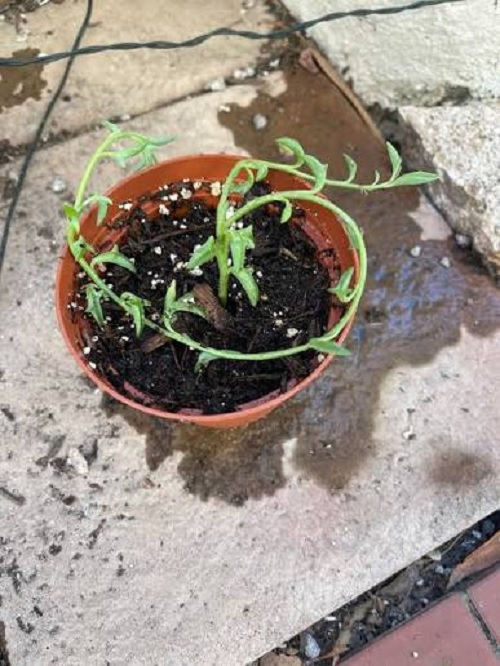
Repot every 1–2 years in the spring into a pot that is 1–2 inches larger than the previous one. Also, hold off on watering for 4–5 days after repotting to allow any damaged roots to heal and callus.
Common Pests
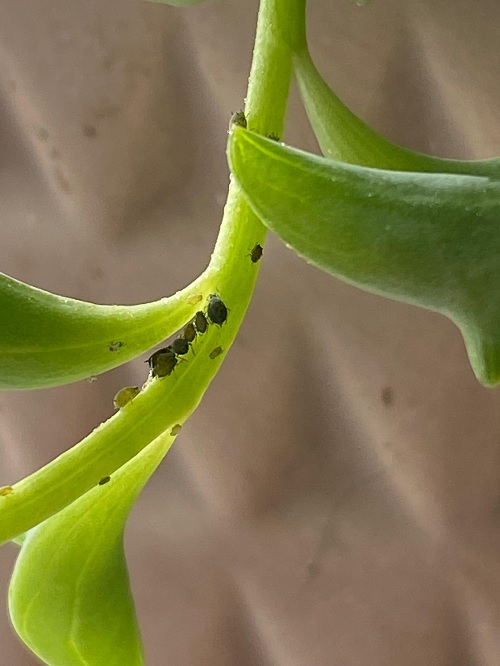
The usual sucking pests of houseplants—such as mealybugs, aphids, and spider mites—are its nemesis too.
Mealybugs: Watch out for white, cushiony scales along trailing vines. Dab or wipe them off with 70% isopropyl alcohol if you spot any.
Aphids: Aphids tuck into tender clusters of leaves. Spray them with insecticidal soap or neem oil to get rid of them.
Spider mites: If you spot webbing and fine speckles under leaves, it points to spider mites. Spray neem oil to get rid of the mites.
Love this String of Dolphins guide? Get our favorite indoor plant care guide book packed with expert tips, troubleshooting hacks, and seasonal advice.