
As an Amazon Associate, we earn a small commission from qualifying purchases — at no extra cost to you.
Elated to see new growth but saddened to let the old one go? Learn why your Alocasia grows one new leaf while losing another!
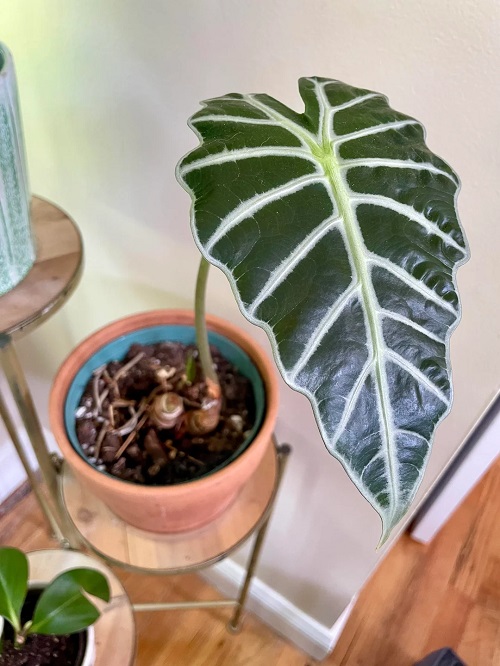
Sometimes to win you must lose something! But who knew that was the case for Alocasia foliage! Do you also notice that your plant is playing a game of seesaw? It is growing one new leaf but simultaneously dropping one of its old ones. Is this normal, or do you need to intervene to ensure your plant becomes a foliage hoarder? Answer all that and more with this article!
Is It Normal for an Alocasia to Lose a Leaf When Growing a New One?
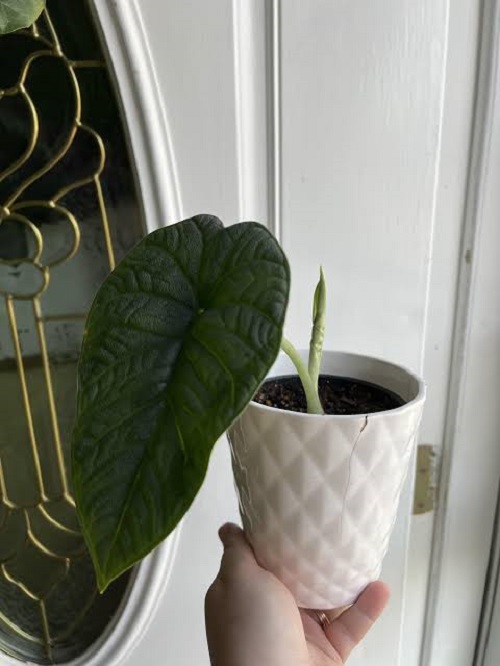
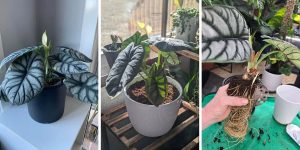
Just like how parents give a lot more attention and care to a baby and not so much to a grown, adult child, your Alocasia plant also tends to divert its resources to newer, upcoming foliage rather than established or older and spent leaves.
Since it has limited energy, it cannot choose both – aiding growth of new leaves or repairing damaged or dying ones; therefore, sometimes your plant will make the hard decision to let the latter go.
However, this is not a regular phenomenon. Occasional loss of a lower, older leaf is generally not concerning if the plant continues producing healthy new leaves and the remaining foliage looks good. But if your Alocasia is instantaneously growing one leaf and losing another, and the overall number of leaves remains about the same over a prolonged period of time, it is a sign of concern.
The following are the reasons why this may be happening.
Why Does an Alocasia Grow One Leaf and Lose Another?
1. It is Following Mother Nature’s Wishes
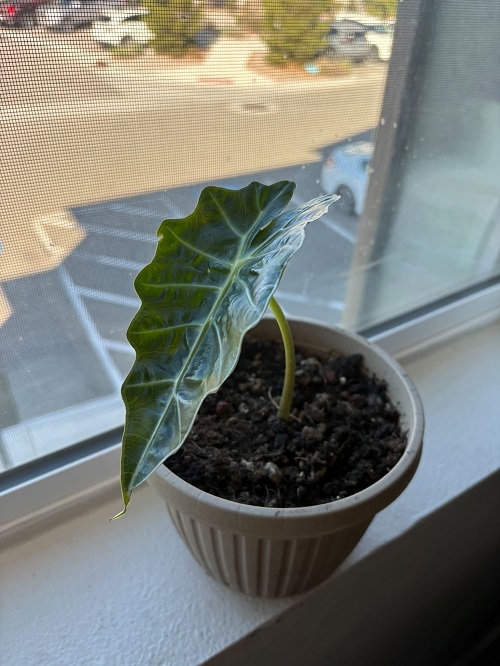
This is one of the simplest explanations that does not warrant any worry. It is a natural process in which the newer and more efficient leaf replaces one that has already served its purpose and is ready to let go. It is strictly for a stronger photosynthetic investment.
The most common sign that the leaf’s time has come is that it begins yellowing while the rest of the plant remains healthy. This is really important to notice. If only one or two leaves are yellowing without any pest infestations or external stress, it is generally considered ok. However, if multiple or all show these symptoms, then the environmental factors are not suitable.
Note: You will usually find these older, spent leaves at a lower position on the plant.
Fix
There is no fix required. It is as Mother Nature intends and does not harm your plant at all. Therefore, continue providing your plant with the optimal conditions and care, and let biology run its course.
2. Lack of Sunlight = Lack of Leaves
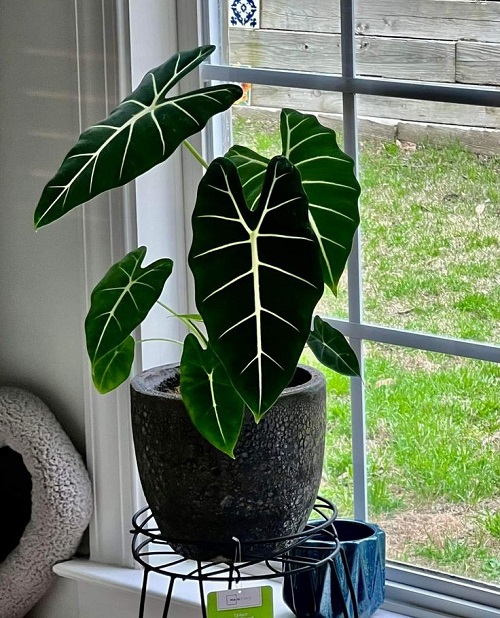
We all know that sunlight is the most important factor to trigger the process of photosynthesis in plants, which in turn leads to the production of energy that is utilized for repair and new growth. But what if your plant is not getting enough sunlight?
Alocasias grow best in bright, indirect light, and low light conditions can lead to stunted growth, yellowing, and, in some cases, dropping of leaves. In your case, if your plant is able to generate new leaves but drop the old ones, it is struggling to get enough sunlight to perform both functions – repair and growth. Hence, it is choosing only new leaves.
Fix
The solution is straightforward – more sunlight! Relocate your plant to a spot where it is exposed to a lot more sunlight, such as a south- or east-facing window. You can also get creative and strategically place mirrors to intensify and prolong sunlight hours. In places where it is hard to obtain natural sunlight, using grow lamps is a neat alternative/supplement.
Note: Remember that Alocasias love dappled and filtered sunlight. The harsh afternoon rays can scorch their tender foliage.
3. Too much or Too little Water Leads to Leaf Loss
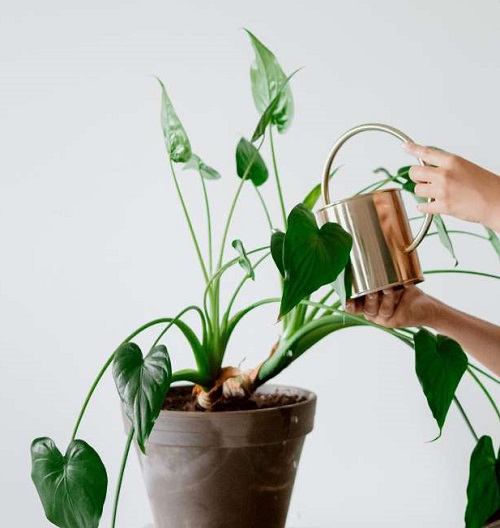
They say too much of anything is a poison, even if it is necessary to live or thrive! This includes water for your Alocasia! Despite it being necessary to help your plant obtain the essential nutrients, it can also clog up the soil and cut off the oxygen supply to the roots, and cause infections as well.
On the flip side, an extended spell of dryness can make your plants too thirsty and deprived of nutrition and hydration, leading to wilting, crispy edges, and leaf drop. Hence, you must find the right balance.
Fix
Watering and the kind of substrate go hand in hand. You can water perfectly, but the wrong soil conditions will cancel out your efforts. Therefore, ensure that you grow your plant in slightly acidic, moist, well-drained, humus-rich, fertile loam and then water accordingly.
Pro Tip: A general rule of thumb is to use the “Drench and dry” method, where you thoroughly saturate the soil and wait for it to dry out. You can feel it by inserting your finger into the top layer and then repeat the process.
4. Non-Tropical Conditions Making Your Alocasia Miss Home
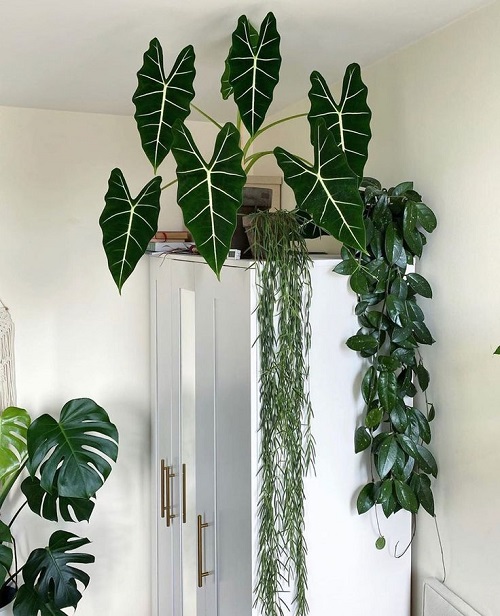
Alocasias originate from the tropical lands of Asia and Australia, and as most tropical plants do, they prefer warm and humid conditions. If you don’t mimic the environment of their natural habitat, they may tend to lose leaves out of stress and unfavorable growing conditions.
Dry and cold air can cause brown edges, crispy foliage, and premature leaf loss. At the same time, cold temperatures and drafts below 16 C (60 F) can cause them to be unable to maintain their foliage.
Fix
Since changing the entire climate of your region is not possible, you’ll have to make a microclimate suited for your Alocasia. This involves using a humidifier, grouping plants, or placing the Alocasia in a naturally more humid room like a kitchen or bathroom. Keeping your plant away from ACs or in rooms where the temperature is slightly higher will help.
Get your hands on one of the top humidifiers- DREO 4L Humidifier that will help your Alocasia feel right at home!
5. Reaction to Stress
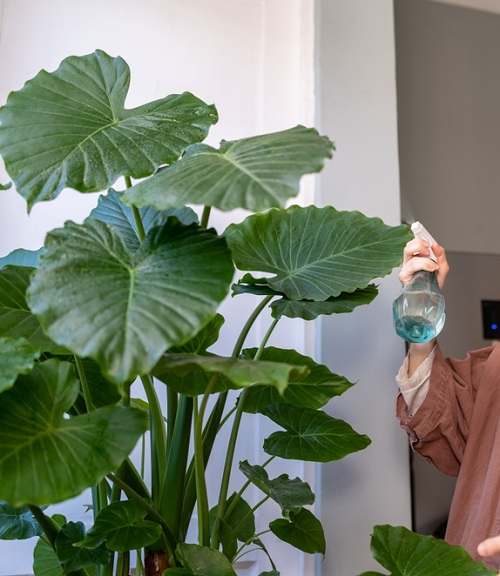
Do you know that plants also go into a trance or a state of shock? This happens when they are repotted, shifted to a completely new location, sustain a physical injury, or are tampered with at the wrong time (like pruning during dormancy).
During this period of stress and shock, your Alocasia will completely reboot! Which means they drop all their leaves and grow new foliage. However, in some cases, they can begin to grow newer foliage simultaneously while shedding the old one.
Fix
There is no solution per se; all you can do is give your Alocasia some care and time. Patience is key here. Do not force it to grow foliage by overwatering, fertilizing, or frequently shifting locations.
Pro tip: Do not prune or pile up additional stress on the plant right before and during this state of stress, as it won’t be able to repair itself.
6. Maximum Capacity has been Reached
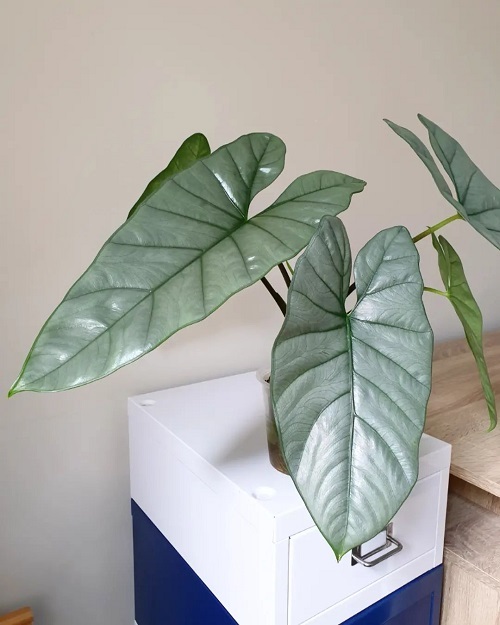
Just like how your phone’s storage gets filled up, you have to delete certain items to download more; your Alocasia foliage capacity has been maxed out! It can no longer hold more leaves without harming itself or neglecting them, and hence chooses to drop the inefficient ones to make room for new leaves.
This is also normal, and you don’t have to panic about it. In many cases, they stick to only 3-5 leaves, which is directly tied to their energy balance, root system, and corm size.
Fix
You can’t expect your Alocasia to keep hoarding onto leaves forever, can you? Let the plant decide what its maximum leaf capacity is; subsequently, let go of the extra burden.
Does this Worsen in Winter?
This behavior is a lot more noticeable during winter, and there is a scientific explanation behind it. During winter, Alocasia tapers down its growth rate, which is called seasonal slowdown or dormancy. So what happens is that the newer growth is much slower, while the plant still tends to let go of its waste leaves to conserve energy.
Since there is little to no growth, they do not need as much nutrition or watering. Do not try to force winter growth by keeping the soil constantly wet or using fertilizers, as this will only build up and lead to diseases and complications.
When you do choose to fertilize your plant, opt for Indoor Plant Food by TPS Nutrients for the best results!
When Should You Be Concerned?
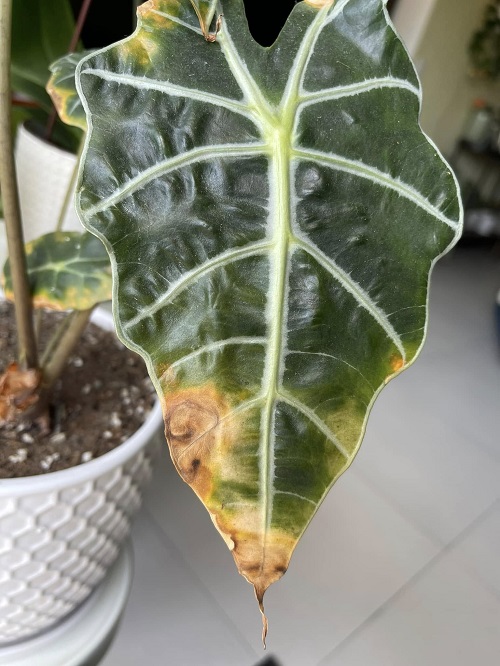
As we mentioned, in most cases a few leaf drops aren’t that serious. But if too many fall in a short span of time, there is something else at play that is hampering the health of your plant.
Some more telltale signs that you must keep an eye out for are your plant producing increasingly smaller leaves, developing widespread yellowing, or showing a soft or collapsing stem.
Pests can also be the silent killers. Therefore, regularly check for symptoms of an infestation and take the necessary steps to get rid of it.
If you don’t see any visible issue, then the problem may be underground! Pay attention to root health, as they are the foundation for your plant.
If you think you can’t handle the real deal, then go for the next best thing and crochet a cute Alocasia for display instead!
Finally, now that you know the reasons for your Alocasia’s unusual leaf loss, revive it and bring it back to its former foliage glory! Also, let us know in the comments section what other plants are giving you a headache, and we’ll help you out with them!