
As an Amazon Associate, we earn a small commission from qualifying purchases — at no extra cost to you.
Can Desert Succulents Really Grow in Water? Explore Succulent Water Propagation, Its Pros, Cons, and Tips.
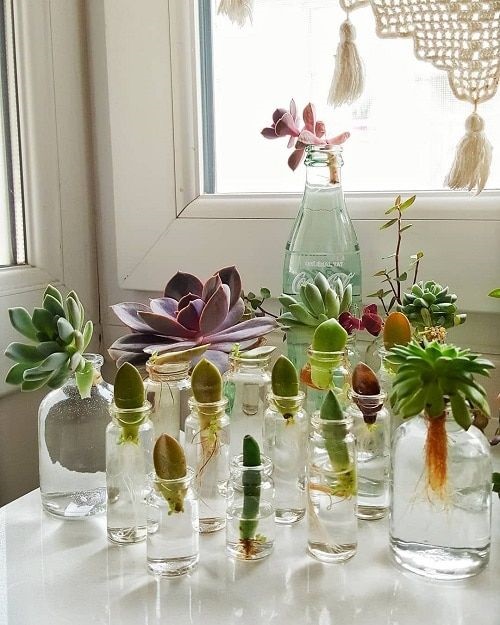
Succulents are the ultimate wet-feet haters, so propagating them in water can sound doubtful at first. Explore succulent water propagation: does it work, and what are its pros and cons? And if growing succulents in water got you curious, follow our easy step-by-step guide to propagate your cuttings and watch this amazing process happen right before your eyes.
Need jars, pruning shears, or gritty potting mix for your cuttings? Browse our gardening essentials storefront and pick up everything you need in one spot.
Does Succulent Water Propagation Work?
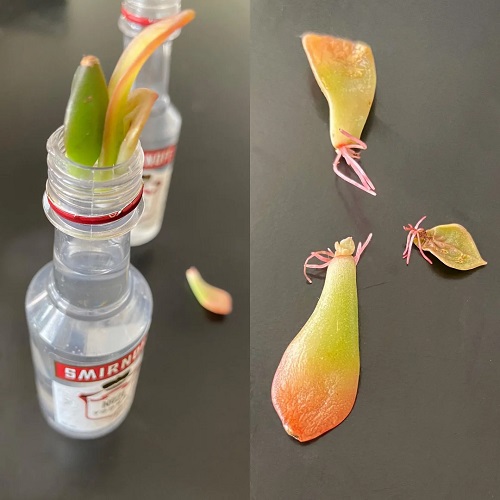
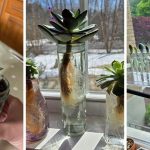
Succulents have moisture-seeking roots that quickly respond to water. Because of this, they can easily grow roots—and even sprout baby rosettes—when suspended just above the waterline.
However, remember that water roots and soil roots are built differently. While succulents grown in water produce delicate roots faster, those roots are adapted strictly to an aquatic environment. Soil roots, on the other hand, are sturdier and can penetrate gritty potting mixes and absorb nutrients.
To get the best of both worlds, use water as a kickstarter for dehydrated cuttings, and gradually transition them to soil once established. Simply follow the care guide below to propagate your succulents in water.
Curious to see moisture-seeking roots sprout in real time? Pick up clear propagation jars from Amazon and set up your first jar today.
Pros & Cons of Succulent Water Propagation
Pros of Water Propagation
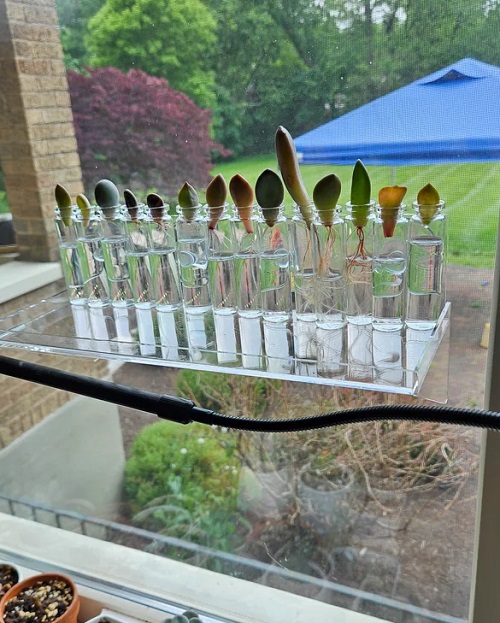
Early Visible Root Growth: Cuttings often push roots quickly in water. Therefore, making it a better option if you are in a rush. Roots are also easy to monitor in a clear container, hence a handy option when you want to see rooting progress.
Revive Droopy Cuttings: If you have a shriveling stem cutting, water propagation works better. Suspending a calloused cutting just above water can help perk it back up and rehydrate the tissue before potting.
Another Option for Woody Stems: Woody stems on plants like Jade or Aeonium can sometimes start slowly in gritty, dry potting mix. So water is a useful alternative before moving them to soil.
Cons of Water Propagation
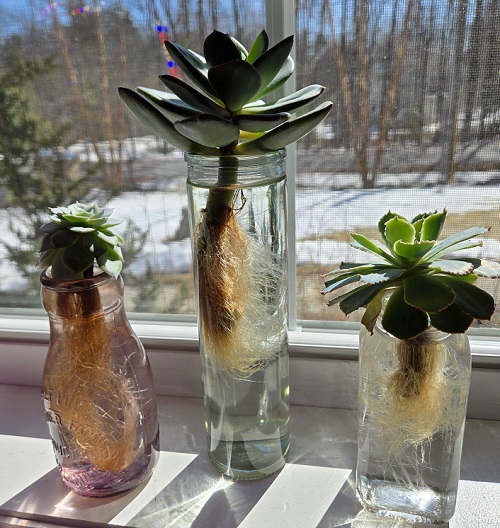
Transplant Shock: Because roots grown in water are fragile, they can experience transplant shock when potted into gritty soil. As the cutting or baby succulent settles in, those delicate water roots may shrivel. Later, the sturdier soil roots gradually take over.
Risk of Mushy Rot: Take extra care to ensure succulent leaves and uncalloused cuts do not sit in water. Skipping the callous step—or letting moisture hit fresh tissue—invites rot pathogens. This can quickly turn leaves or stems mushy.
Maintenance: Refresh the water every few days (around every 3–5 days). This limits bacterial buildup and keeps oxygen levels balanced.
Not a Permanent Home: While water propagation can serve as a helpful short-term starter compared to soil, it is not a good long-term substitute for well-draining potting mix.
Hunting for budget-friendly jars, trays, or everyday plant accessories without overspending? Check out Amazon Haul for low-cost finds delivered right to your door.
How to Propagate Succulents in Water
1. Snip & Callous a Healthy Cutting
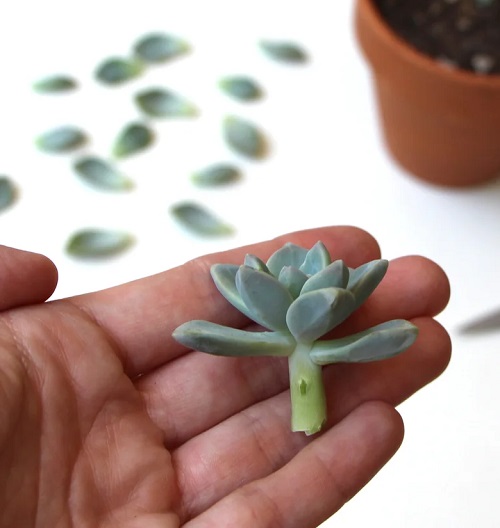
Select a Healthy Cutting: Choose a healthy stem cutting about 2–4 inches tall. Snip it cleanly with sharp pruning shears, then remove any leaves from the bottom end. Another option is to pick a healthy, plump leaf cutting—just make sure it comes off cleanly with the base intact.
Callous the Cutting: Keep the stem cuttings for 2-3 days in a dry tray in indirect light until they callous. Whereas, let the leaves heal for 4-5 days.
2. Set Up the Propagation Jar
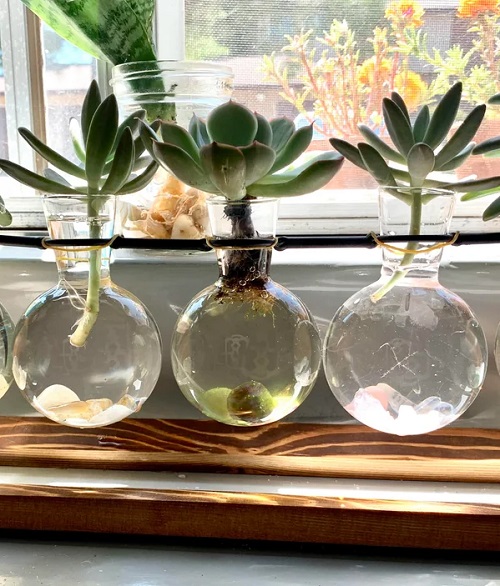
Set up the Propagation Jar: A narrow-mouthed bottle or jar is ideal to position the cutting firmly just above the water line. If you don’t have one, cover the mouth with plastic wrap and stabilize your cutting by passing it through the wrap.
Place in Bright, Indirect Light: Since cuttings are sensitive to harsh sun, set your jar in a bright spot with filtered light. Glass jars also heat up quickly in direct sunlight and can damage the tender tissue.
No bright windowsill? Give your water cuttings steady, gentle illumination without the scorching heat—browse compact grow lights from Amazon.
3. Maintain Water & Shift to Soil
Refresh Water: Stagnant water quickly develops bacterial buildup, leading to oxygen depletion and rot. To keep your cuttings healthy, replace the water with fresh room-temperature water every 3–4 days.
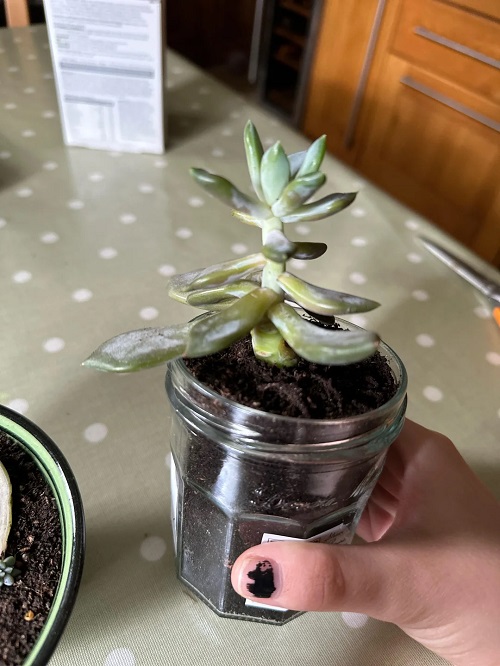
Shift to Gritty Succulent Soil: Once your cutting’s roots reach about 1–2 inches long, transplant it into a gritty succulent potting mix. Keep the soil slightly moist for 1-2 weeks to help the delicate water roots adjust. Then transition to the standard soak-and-dry watering method.
Succulent water propagation may sound wild, but it works—as long as you follow a few key rules like placing cuttings in bright, indirect light and refreshing the water regularly. Keep in mind that water is only a temporary setup, so move your cuttings back to soil once the roots are well established. Grab a clear container, fill it with water, set a cutting in place, and watch the process unfold in real time!
Want to master succulent care beyond water propagation? Check out our favorite succulent care guide book for expert tips on soil, lighting, repotting, and pest control.