
As an Amazon Associate, we earn a small commission from qualifying purchases — at no extra cost to you.
Spotted black flies coming out of your plant soil? Relax, they are fungus gnats, and they won’t do much harm if you know how to treat them!
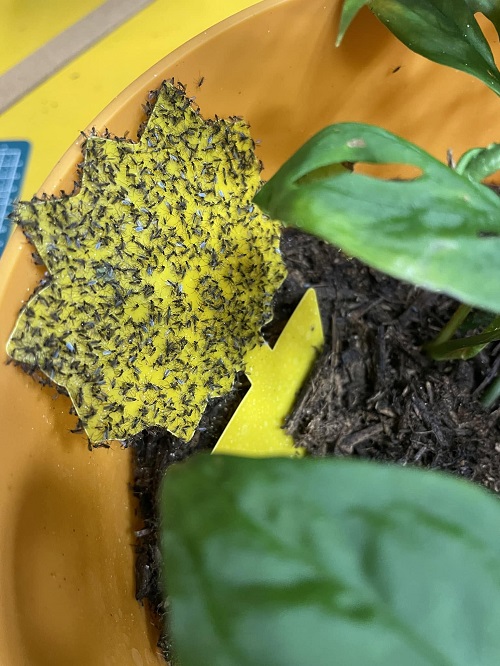
You water your plant but notice a few tiny black flies flying out of the soil, and the first thing that comes to your mind is that your plant is dead. Well, no. Those tiny black flies are pests called fungus gnats, which are very commonly found in indoor plants. And they’re annoying, persistent, and often a sign that your soil is staying wetter than usual. Let us break it down.
Ready to get your houseplants back to a healthier routine? Explore our Amazon Gardening Storefront for soil moisture meters, yellow sticky traps, well-draining pots, gardening tools, soil accessories, and other houseplant-care essentials.
Fungus Gnats and Our Potted Plants
Need your plant-care supplies quickly? If you shop on Amazon regularly, try Prime for convenient delivery on eligible gardening tools, moisture meters, plant pots, and other houseplant essentials.
Where Do They Come From?
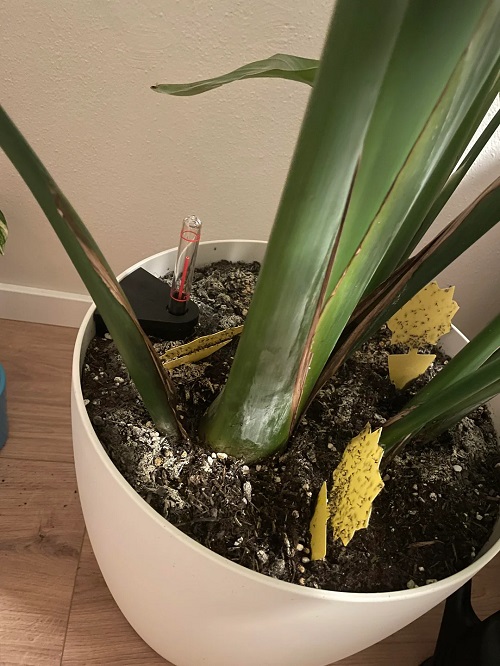
Fungus gnats love moist potting soil rich in organic matter. When soil remains wet for long periods, fungi and decaying organic material build up; this creates the perfect environment for them to reproduce.
The adult flies you see are actually just the teaser of the problem.
To sum up the cycle, female fungus gnats lay their eggs in moist soil. The eggs hatch into tiny larvae with dark heads, which live beneath the soil surface. These larvae feed on fungi, algae, and decaying organic matter, but when populations become large, they can also feed on delicate plant roots.
So if you keep killing the flying adults but continue watering the plant the same way, you’re only dealing with the symptom, not the source.
So Is There Any Danger?
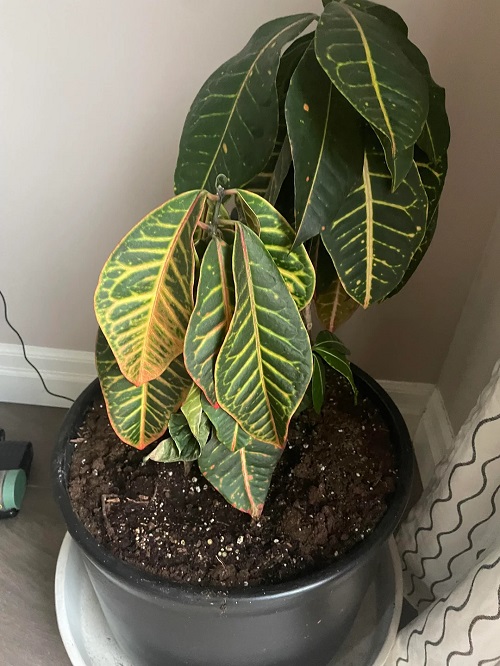
Usually, no.
Because, like we mentioned some of these are merely annoying. Adult gnats don’t bite humans and generally don’t damage plants. The only problem is the large population of larvae, particularly around seedlings or plants with vulnerable roots.
Heavy infestations can contribute to poor growth, wilting, and root damage.
Who To Blame?
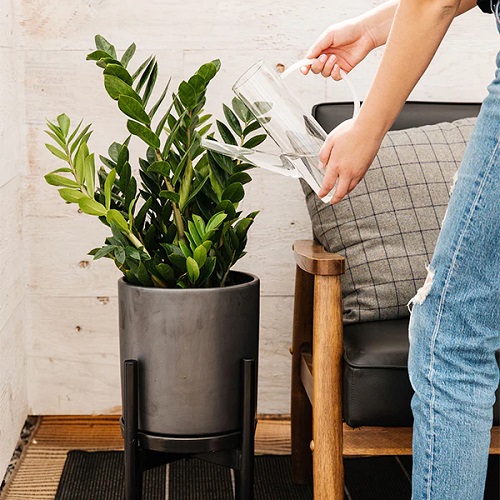
The usual? Yes. Overwatering.
Your concern might make you think that the plants look thirsty and you should water them. But in reality, you shouldn’t. Constantly damp soil doesn’t necessarily mean a healthier plant. And fungus gnats love this mistake being reinforced.
Want to avoid guessing when your plant needs water? A soil moisture meter can help you check moisture levels before watering and reduce the risk of keeping the soil constantly wet.
Instead of watering on a fixed schedule, check the soil first. Allow the top layer of soil to dry between waterings, while still following the moisture needs of that particular plant.
And by all means, do not forget that good drainage is important. If excess water has nowhere to go, your plant’s soil can remain wet for far too long.
Help excess water escape with well-draining plant pots that have proper drainage holes and give your plant’s roots a healthier growing environment.
How To Remove Them?
Don’t keep the surface constantly wet. Give it time to dry between waterings according to your plant’s needs. And make sure your pot has drainage holes and that excess water isn’t sitting underneath it.
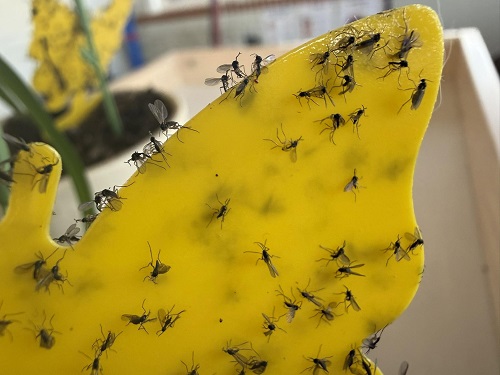
You can also use yellow sticky traps that can catch adult gnats and help you track their count. Remove the decaying organic matter because they feed on it and find shelter in it for larvae.
Catch and monitor adult fungus gnats with yellow sticky traps that make it easier to see whether the population is decreasing over time.
To treat, try biological treatments containing Bacillus thuringiensis subspecies israelensis (Bti) because it can help target fungus gnat larvae in the soil.
Spraying pesticides on adult gnats won’t help, treat the generations growing underneath.
So you see what might happen if your soil is wet for too long. Skip the insecticides and check your watering routine, drainage, and soil moisture first. Let us know how your plants feel after this in the comments below!
Want to get better at spotting and solving common houseplant problems? Explore practical houseplant-care books covering watering, soil, drainage, pests, lighting, repotting, and everyday plant care.