
As an Amazon Associate, we earn a small commission from qualifying purchases — at no extra cost to you.
Struggling with small Swiss cheese leaves? Learn how to train your Monstera to climb for bigger leaves and spread adorably on the walls.
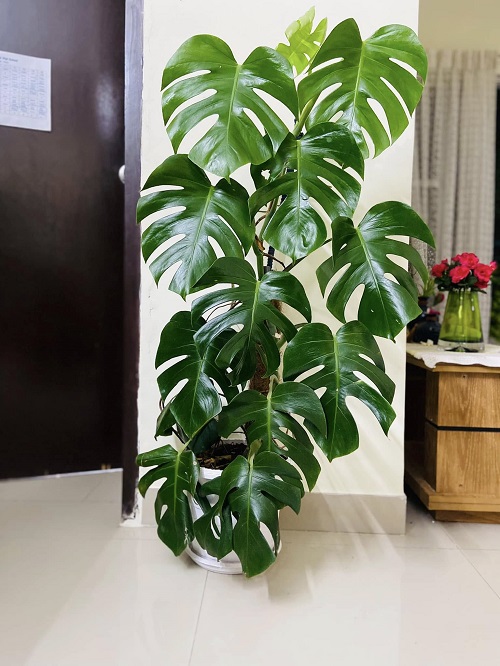
You’ve been watering and rotating your Monstera and still cannot see its iconic giant leaves because they are just small and slightly confused? Here’s the uncomfortable truth: your Monstera isn’t thriving because it’s not living the life it was designed for. But let’s change that?
Browse through the tools and products listed here for making your Monstera climb.
Looking for affordable supplies for your plants? Explore Amazon Haul for budget-friendly plant pots, soil mixes, fertilizers, moisture meters, gardening tools, pest-control supplies, and other plant-care essentials starting at just $2.99.
Why Climbing Means Bigger Leaves
Monstera plants naturally climb. They get light in a more uniform way when they are grown upward, and they also mature quickly with bigger and more deeply divided leaves. If they are kept hanging or without support, they end up wrapping themselves in smaller and simpler leaves.
Also, maturity plays a big role here. Younger Monsteras naturally produce smaller, simpler leaves. Once they start climbing and feel supported, they shift into their mature phase—this is when those big, split leaves start showing up.
Grab a heavy-duty gardening kit, which consists of starter landscaping tools.
Step 1: Choose the Right Support
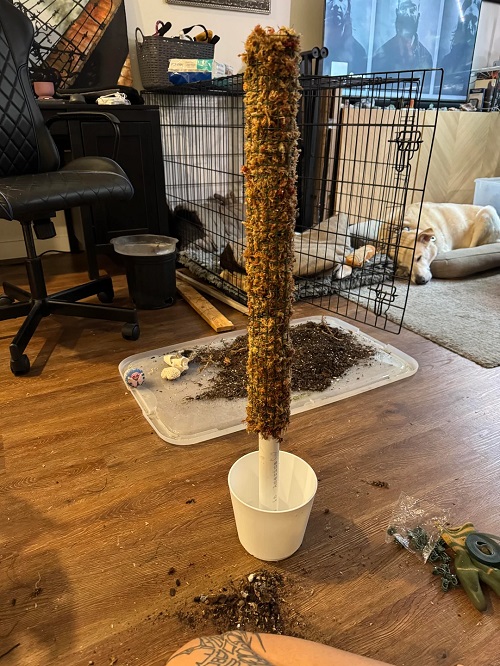
Your Monstera needs something to climb, some support to hold onto. Try a moss pole, it is the most effective and retains moisture, a coco coir pole, or simply a wooden stake. Pick up this 28-inch bendable moss pole for your plant.
Step 2: Insert the Support Properly
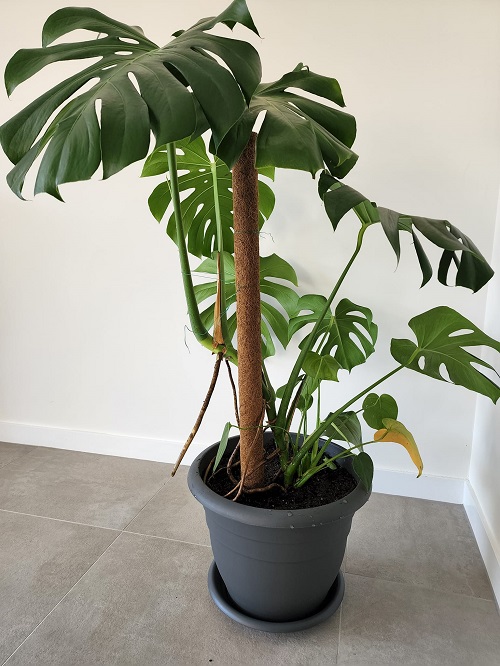
Don’t just stick a pole randomly into the soil. Place it close to the main stem; this is where aerial roots emerge. Push it deep enough to be stable, but be gentle with the roots. Keep your plant in this 12-inch cylindrical pot.
Step 3: Train, Don’t Force
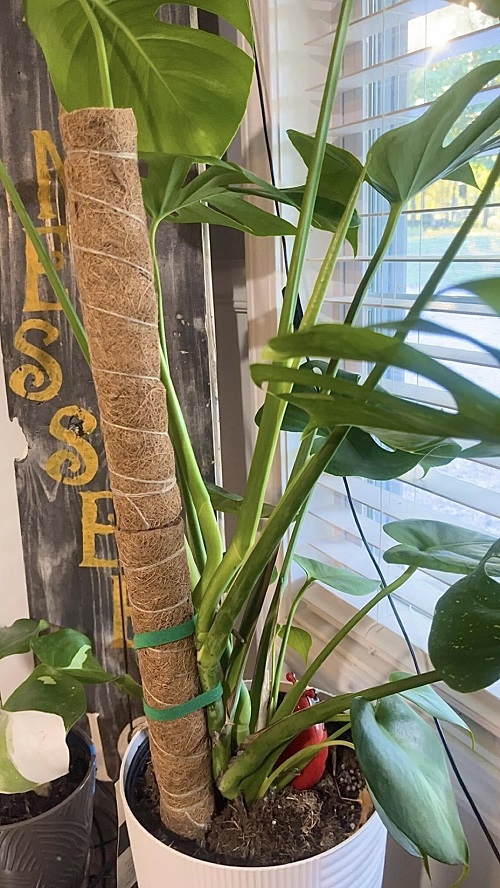
It won’t happen that your Monstera wraps itself without your help overnight. You can use soft plant ties or Velcro strips. Carefully fasten the stem to the pole, and make sure that the ties are not too tight; very tight ties may harm the plant. Grab up the 75 ft or 18 ft Velcro-adjustable ties from here.
Step 4: Encourage Aerial Roots
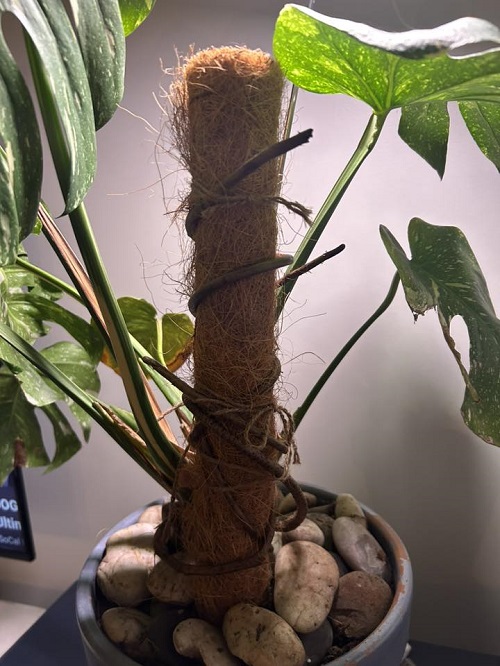
Those brown, string-like things? Don’t cut them off. They are the climbing support for your plant. Pull the aerial roots into the moss pole, and spray the pole with water to keep it damp. This will give an extra push to the roots to grab hold naturally. When they do, your plant becomes sturdier, and its growth speed increases.
You can also gently tuck aerial roots into the soil if they’re long enough—this helps the plant absorb more nutrients and grow faster. Above the topsoil, you can place garden landscaping stones and ace up the indoor decor.
Step 5: Shed some Light
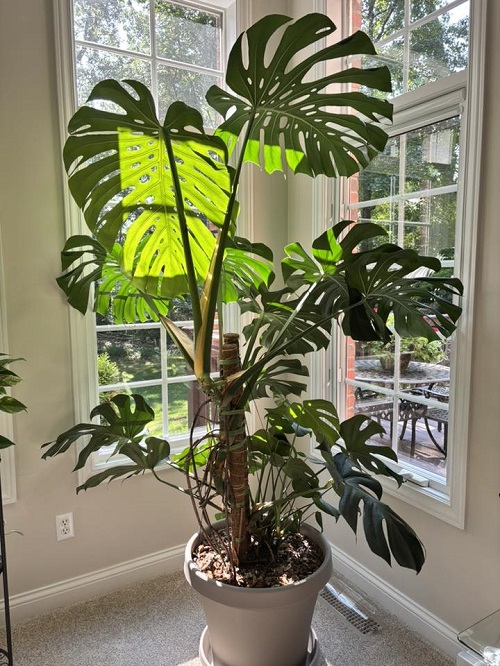
Monsteras need bright, indirect light. If your plant is sitting in a dim corner, it’s not being low-maintenance; it’s being neglected. Place it near a window where it can receive consistent brightness without harsh direct sun. You can even place them under a grow light if there is not an ample quantity of sunlight.
Step 6: Be Patient but Observe
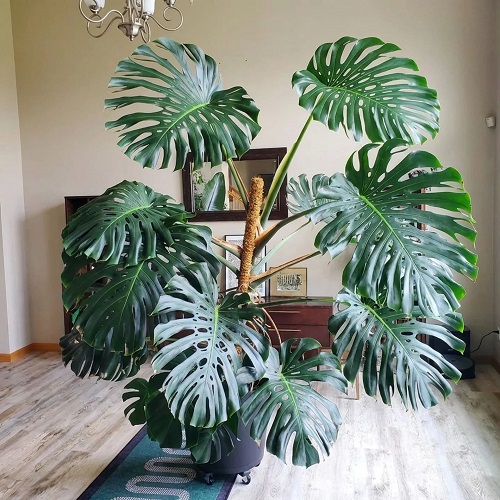
You won’t see massive leaves next week. But within a few new growth cycles, you’ll notice larger leaves, more splits, stronger growth, and upward growth.
New leaves are your best clue—if each new leaf is bigger than the last, you’re on the right track. If not, something still needs adjustment (usually light or support).
Friendly Tip
People assume fertilizer or repotting will fix small leaves. But without vertical support, you’re solving nothing.
That said, feeding during the growing season (spring and summer) can support faster results—but only when the basics like light and support are already right.
Turn the pages of this book, Saving Split-Leaf Beauties, and you will know all about Monstera.
As your Monstera is still exploring ways to reach the walls for its climbing growth, why not lend it a helping hand? Be its pillar of strength today and witness how it flourishes and beautifully spreads like a piece of abstract artwork. Also, if your Monstera is not happy with something, we are just a message away. Please feel free to share it with us through the comment section below!