
As an Amazon Associate, we earn a small commission from qualifying purchases — at no extra cost to you.
Want to level up your indoor jungle with fiery beauties? Discover 8 breathtaking houseplants with red undersides of leaves, plus care tips.
If you believe green is all that plants have to offer, you are in for a surprise! There is something intensely bold about red, and even plants refuse to give it up. Scarlet shades bring a burst of liveliness to any room. Read on to learn why these beauties have a ruby-red underside. Also, discover our 8 favorite houseplants with red undersides of leaves and how to care for them to keep their dual-toned foliage thriving!
Ready to pamper your fiery foliage? Head over to our Amazon Gardening Storefront for all our handpicked plant-parent essentials!
Anthocyanins: Why Some Plants Wear Red Undersides
Plants appear red because of a unique pigment: anthocyanin. Crimson foliage looks bold and offers great aesthetic appeal, but nature rarely does anything just for appeal. These red undersides of leaves are actually two secret weapons for plants. So let’s dig deeper to understand:
Photoprotection: Anthocyanins are plants’ efficient sunscreen pigments. They absorb harsh wavelengths and protect foliage from light stress.
Light Back-scattering: In the tropics, plants growing under a shaded canopy receive only 5-10% of sunlight. So the low-lying clever plants evolved an amazing technique to maximize sunlight use.
A layer of anthocyanin on the underside of leaves reflects passing sunlight to the upper chlorophyll-rich layers, giving them a second chance to trap it!
Want to become a certified plant whisperer while tending to your urban jungle? Plug in and listen to top-rated houseplant care audiobooks on Amazon Audible.
Top 8 Houseplants With Red Undersides Of Leaves
1. Red King Aglaonema
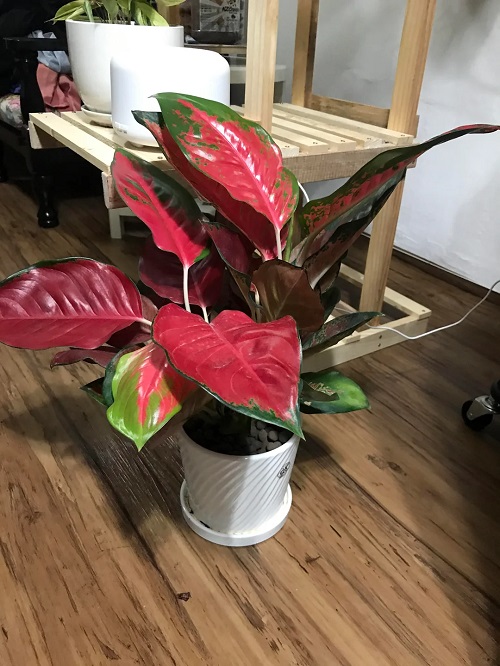
Scientific name: Aglaonema commutatum ‘Red King’
A beginner-friendly plant featuring rosy stems and glossy foliage. Besides, the foliage is mosaic and has a deep-red tinge on the underside of the leaves.
Aglaonemas are tropical foliage plants valued for their colorful leaves and ability to adapt to indoor conditions. Their appearance can vary considerably between cultivars, so check the plant’s exact variety when buying it rather than relying on the common name alone.
Bonus: Aglaonema commutatum acts as an air-purifying plant, so keep your indoor air elegant and pure with this exotic plant.
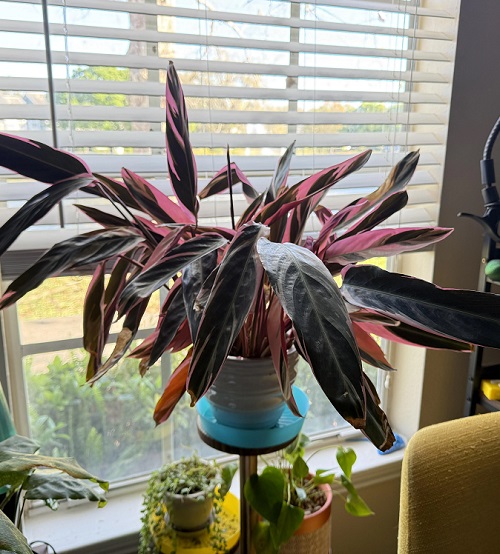
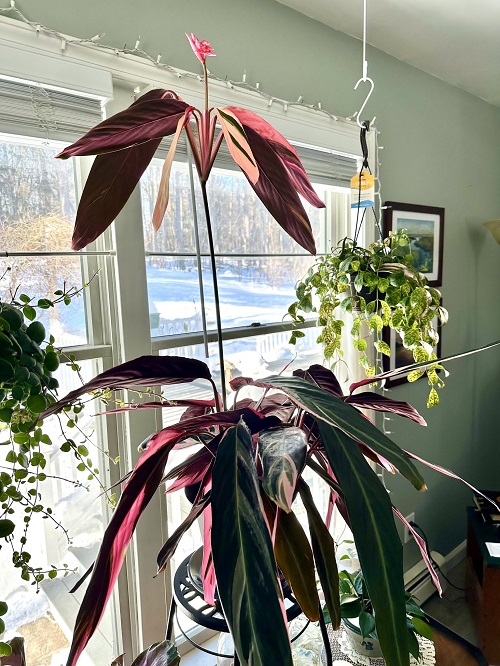
2. Triostar Stromanthe
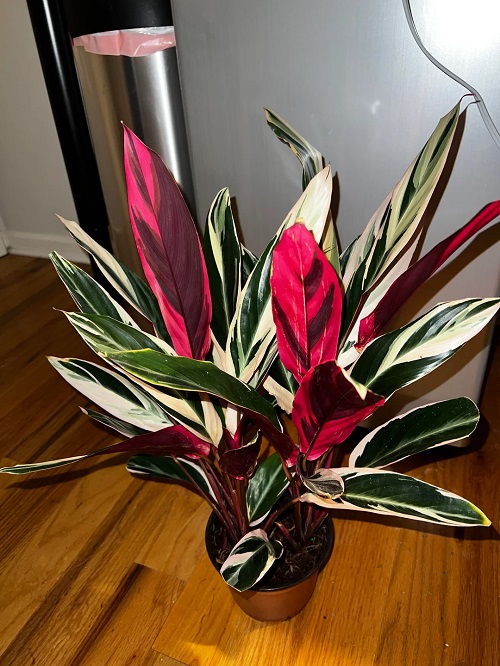
Scientific name: Stromanthe thalia ‘Triostar’
A star of the prayer plant family. It boasts elongated leaves with tricolor variegation of white, pink, and green. Whereas the undersides glow with deep magenta red.
One fascinating feature of Triostar Stromanthe is its leaf movement. Like other members of the prayer-plant family, it can raise and fold its leaves at night and open them again during the day. This natural movement is called nyctinasty.
3. Rose Painted Calathea
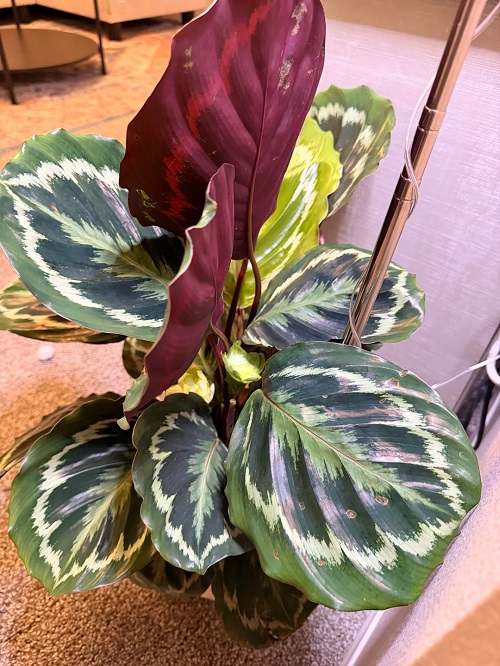
Scientific name: Goeppertia roseopicta
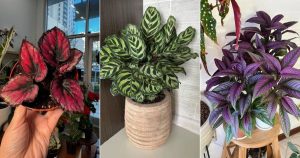
Another member of the prayer plant family, it features stunning large, glossy leaves with dark green tops, contrasting with rose-pink to red midribs and borders. On the flip side, the leaves reveal a deep purple or rich reddish-burgundy underside.
Rose-painted Calathea belongs to a group of tropical foliage plants prized for their intricate leaf patterns. Its decorative markings are part of the leaf itself, not a coating, which is why gentle handling and suitable growing conditions help preserve its appearance.
4. Calathea Zebra Plant
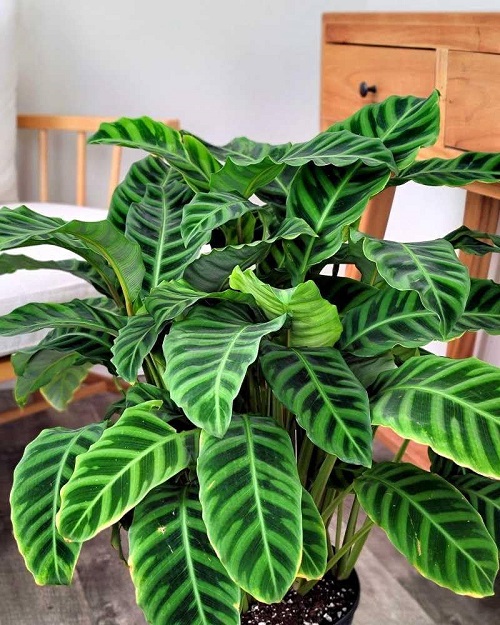
Scientific name: Goeppertia zebrina
Features velvety foliage with striking dark-green and light-green stripes. Additionally, the deep reddish-purple underside hides in the morning glow, revealing itself only at night.
The Zebra Plant gets its name from the bold, zebra-like markings across its leaves. These patterns make it visually different from plants whose main attraction is a solid red or burgundy underside. The contrast between the upper leaf markings and the underside adds another layer of visual interest.
Bonus: All the listed prayer plant family members (Stromanthe & Calatheas) display nyctinastic movement—they fold their leaves as though praying at night. What better way to boast those glorious red undersides than this!
5. Red Twist Peperomia
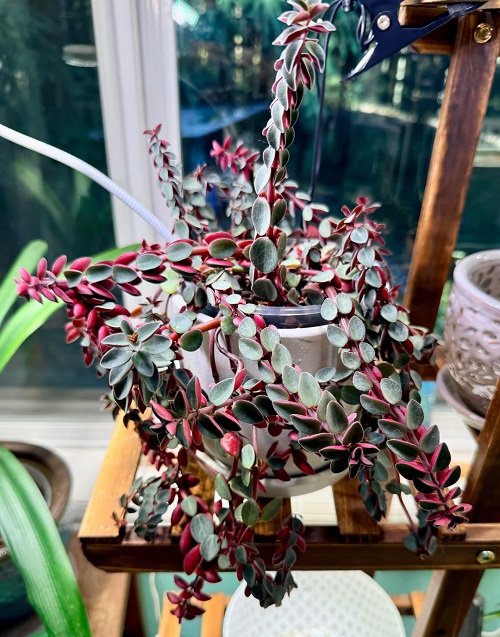
Scientific name: Peperomia verticillata ‘Red Twist’
This compact plant is a perfect choice for desks or tabletops. It grows bushy with upright stems. As it orients towards light, the stem appears twisted and reveals its elegant red hue on the undersides of leaves (earning the name “red twist”).
Peperomias belong to a large genus of plants with a wide range of leaf shapes, textures, and growth habits. Their compact size makes many varieties suitable for small indoor spaces, although the exact growth habit and care requirements depend on the species or cultivar.
Give Your Tabletop Babies a Stylish Home! Discover our favorite tabletop pots that turn any desk, shelf, or windowsill into an absolute masterpiece!
6. Polka Dot Begonia
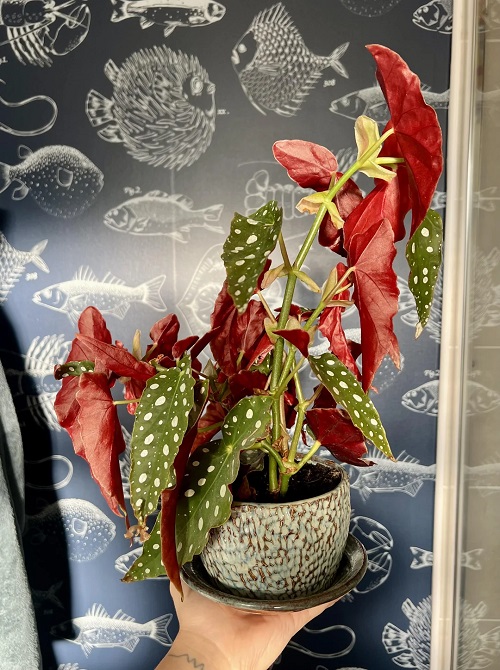
Scientific name: Begonia maculata
A popular houseplant among collectors for its angelic wings. It pairs elegant silvery polka dots on the upper side and a crimson-red undertone on the flip side to add to its beauty.
Polka Dot Begonia is also known as the polka-dot or spotted begonia. It is a cane-type begonia, meaning it develops upright, bamboo-like stems rather than growing as a low rosette. It can also produce clusters of flowers under suitable conditions, giving it interest beyond its spotted foliage.
7. Alocasia Red Secret
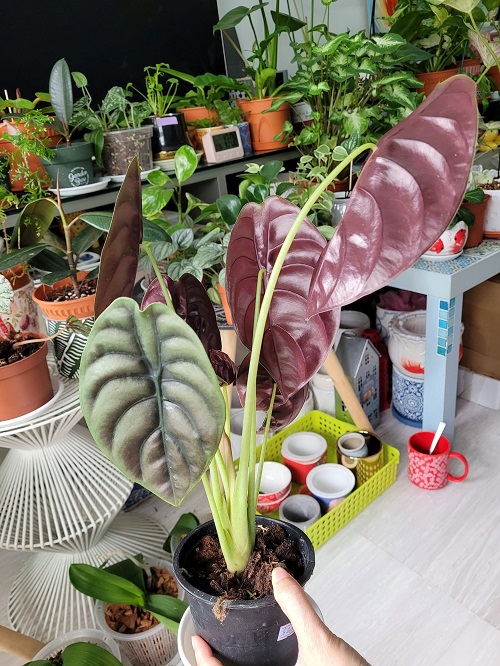
Scientific name: Alocasia cupria ‘Red Secret’
This eye-catching Alocasia showcases a metallic bronze sheen. Its thick-textured leaves display a deep red hue, making it nothing less than a show-stopping artifact to glow up indoors!
Alocasia cuprea ‘Red Secret’ is especially known for its metallic-looking foliage, which can appear coppery, green, or reddish depending on the light and viewing angle. This distinctive surface gives the plant a different look from varieties with flat, matte leaves.
8. Peperomia rosso
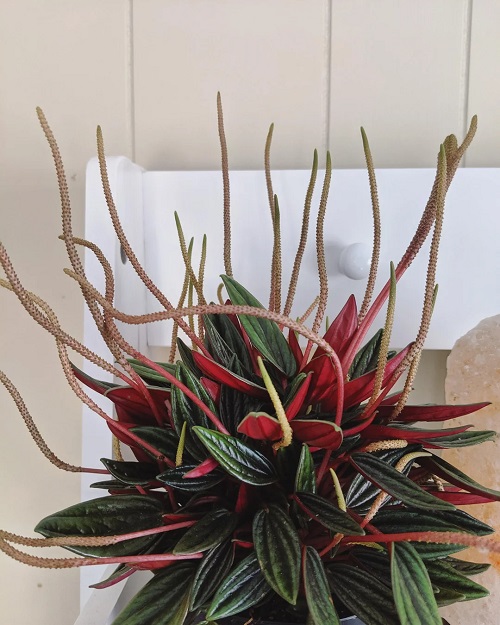
Scientific name: Peperomia caperata ‘Rosso’
An easy-to-grow houseplant prized for its dual foliage. Pointed leaves emerge as a compact rosette featuring glossy green on the top and a red-wine underside.
Care Guide for Houseplants with Red Underside Leaves
Lighting: Bright, indirect light is the ultimate goal when raising dual-foliage plants. While excess light scorches their foliage, too much shade can make them lose their pigmentation. So make sure to put them in optimum light.
Humidity: Being tropical dwellers, these plants love humidity. Maintain humidity levels between 50% and 70%. If you live in dry climate zones, install a compact, reliable humidifier to keep your plants thriving.
Watering: Never overwater your houseplants or leave the soil too soggy. Keep the pots evenly moist. Use potting mix with chunky blends like orchid bark, perlite, or pumice to keep the roots airy.
Who says plant care can’t be chic? Ditch the ugly jugs and upgrade to a stunning decorative watering can that looks just as gorgeous sitting on your shelf as your new ruby-backed beauties do!
Houseplants with red undersides of leaves are not just a vivid color to add to your indoors. They bring liveliness and make a great statement by surviving and turning dim canopy light into something to thrive with an air of elegance. Pick your favorite from our collection, whether the easy-to-grow Aglaonema, dramatic prayer plant, or angel-winged Begonia. Set them in a cozy spot with adequate light, moisture, and love to watch them show off their hidden crimson, fiery foliage.
Want to unlock the secrets to keeping every leaf lush, vibrant, and thriving? Grab our ultimate houseplant care guidebook and level up your plant-parent game from beginner to absolute botanical expert!