
As an Amazon Associate, we earn a small commission from qualifying purchases — at no extra cost to you.
Want broad, tall, and upright snake plant leaves? Try these simple tricks for a fuller, stronger-looking plant.
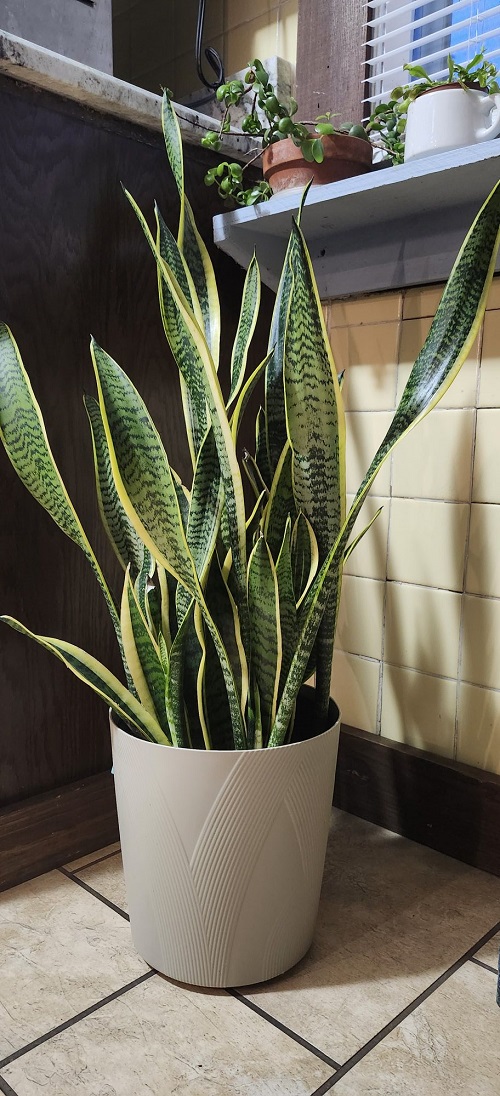
Snake plants (Sansevieria), also known as mother-in-law’s tongue, have gorgeous leaves and are low-maintenance. But if your plant’s leaves are growing thin, floppy, or bending sideways, you’re not alone. While these plants are hardy, they do need their share of care. Read ahead to learn how to grow them broad and upright!
Why Are My Snake Plant Leaves Thin and Floppy?
Thin, floppy, or sideways-growing leaves are usually a sign that something in the plant’s growing conditions needs attention. Poor light is one of the most common causes, but overwatering, weak root systems, an unstable pot, and natural growth habits can also play a role.
Once you identify the reason, it becomes much easier to encourage stronger and more upright growth.
Tricks to Grow your Snake Plants Broad and Upright
1. Increase Bright and Indirect Light
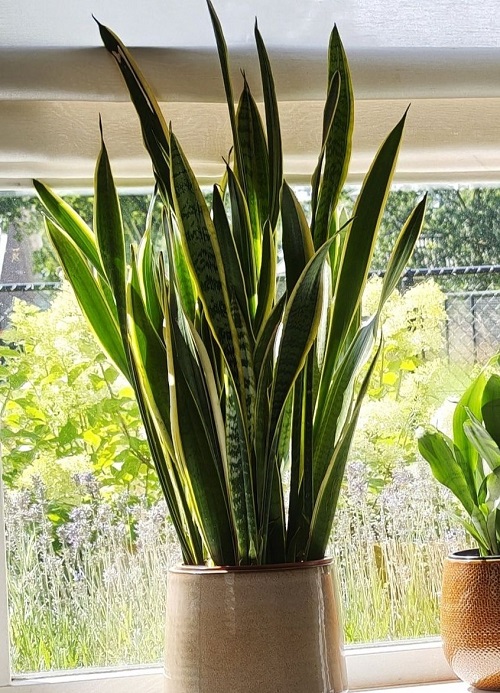
Poor light is the number one reason your snake plant has leaves that grow narrow and floppy. They can tolerate low light, but they thrive in bright, indirect light, which makes the leaves grow thicker and more upright.
Place your plant near an east- or west-facing window or use curtains to soften harsh sunlight. If indoors seem a little dim, then use a full-spectrum grow light for 8–10 hours daily. More light will lead to more photosynthesis and eventually stronger leaf tissues.
2. Use a Heavy and Well-Draining Pot

A lightweight pot allows the plant to go here and there, making leaves lean outward. A heavier pot keeps the roots stable, helping leaves stay upright. Pick terracotta or ceramic pots. Or pots that are only 1–1.5 inches larger than the root ball.
Always use a pot with drainage holes because snake plants hate excessive moisture, and overwatering leads to mushy, collapsing leaves and eventually root rot.
If the leaves are already bending badly, gently gather them together with a soft plant tie while you correct the underlying problem. Don’t tie them too tightly, as this can damage the leaves. Remember that a support can help the plant look upright, but better light and proper watering are what encourage stronger new growth.
3. Repot Wisely
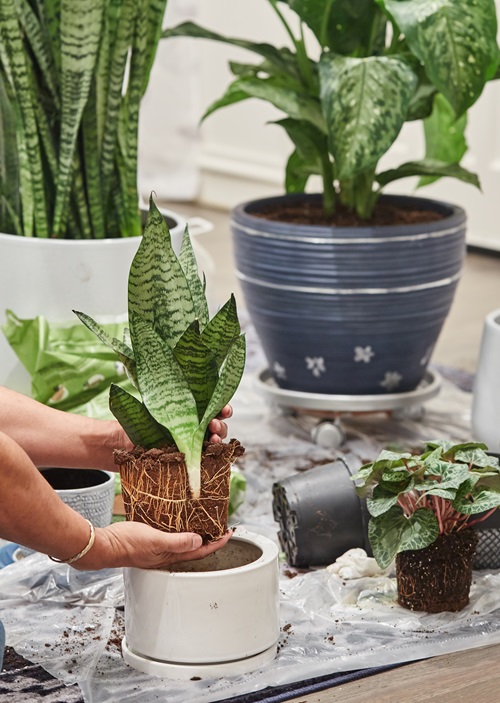
To get broad leaves, choose a soil mix that offers both drainage and nutrients while you repot. Try the recipe of mixing 40% cactus/succulent mix with 30% perlite or pumice and 30% cocopeat or compost. Perlite/pumice prevents root rot, while organic matter boosts leaf thickness and color.
4. Water Deeply but Only When Needed

Overwatering leads to mushy leaves, and underwatering causes thin and wrinkled leaves. The idea is to water deeply but infrequently. Water only when the top 2 inches of soil are totally dry. And in winter, well, skip it and water once every 3–5 weeks.
Try the technique where you pour water until it drains from the bottom, then empty the tray. This promotes strong root growth that supports strong leaves.
Don’t follow a fixed watering schedule blindly. Your plant may need water sooner or later depending on the pot size, soil, temperature, and amount of light it receives. Always check the soil before watering instead of watering simply because a certain number of days has passed.
5. Feed with a Gentle and Balanced Fertilizer
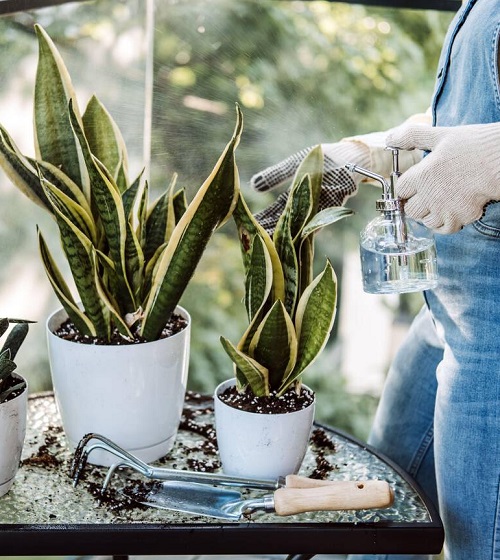
Snake plants don’t need much fertilizer, but the right amount helps leaves grow broader. A balanced and diluted (to half strength) 10-10-10 or 20-20-20 fertilizer, once every 2–3 months during spring and summer, works perfectly fine and avoids root burn. Moderate nitrogen boosts leaf thickness without making the plant leggy.
Keep in mind that fertilizer cannot turn a naturally narrow snake plant variety into a broad-leaved one. If your plant is healthy but naturally has slender leaves, focus on giving it the right light and care rather than trying to force faster growth with extra fertilizer.
6. Rotate Your Plant
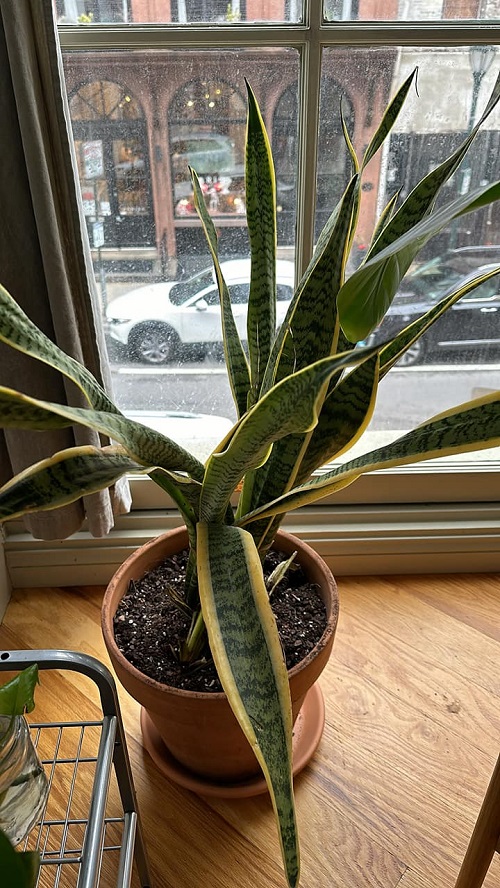
If your snake plant leans toward one side, it’s probably growing toward the light. Rotating it ensures even growth and prevents bending.
While you’re rotating the pot, gently wipe the leaves with a clean, damp cloth. Dust can build up on the broad surfaces of snake plant leaves and block some of the light they need for photosynthesis. It also keeps their beautiful patterns looking much brighter.
7. Prune Damaged Leaves
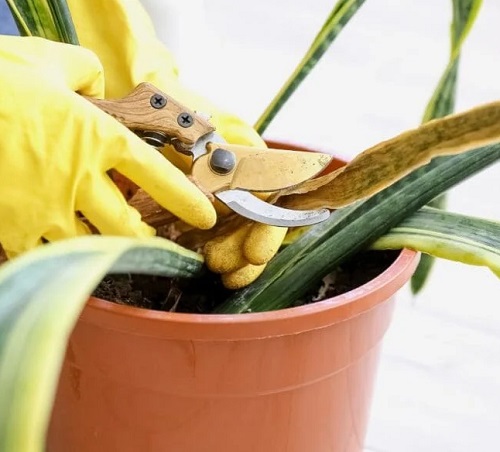
Removing weak and yellow leaves signals the plant to send energy toward new, stronger growth. Cut old leaves at the soil level using clean scissors.
8. Maintain Warm and Stable Temperature
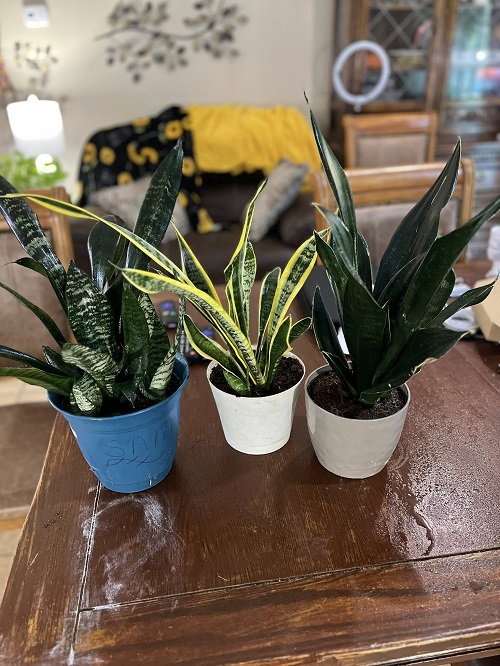
Snake plants grow best between 20°C to 30°C. Sudden drops cause bending and curling. Keep them away from AC vents, heaters, cold drafts, or balcony doors in winter and places where you think there can be a sudden shift in temperature.
As fall and winter arrive, growth naturally slows down. Give your snake plant more time between waterings and avoid pushing it with extra fertilizer during its slower-growth period. The goal is to maintain healthy leaves rather than force new growth when conditions are less favorable.
Snake plants naturally grow tough and solid, but their leaves might be victims of our careless mistakes. Try these tricks while you follow your care routine and let us know how your snake plant finds them in the comments below!