
As an Amazon Associate, we earn a small commission from qualifying purchases — at no extra cost to you.
Stems can be the most striking feature of a plant, but ever wondered what stunning patterned stems would look like? If not, then check these!
Ever wondered what quirky houseplants look like? Their stems have patterns, their leaves have unique textures – stripes, speckles, and twisted shapes and their out-of-this-world canes, trunks, or petioles add bold architectural interest to indoor spaces. If this sounds interesting to you, then we are sure you’ll go crazy for these plants below!
Found a new favorite? Browse our Amazon Gardening Storefront for decorative pots, plant stands, potting mixes, grow lights, and other houseplant essentials to help your collection thrive.
Houseplants with Patterned Stems
Found a few plants you want to add to your collection? Try Prime for free if eligible for convenient delivery of pots, potting supplies, and everyday gardening essentials.
Dragon Tree
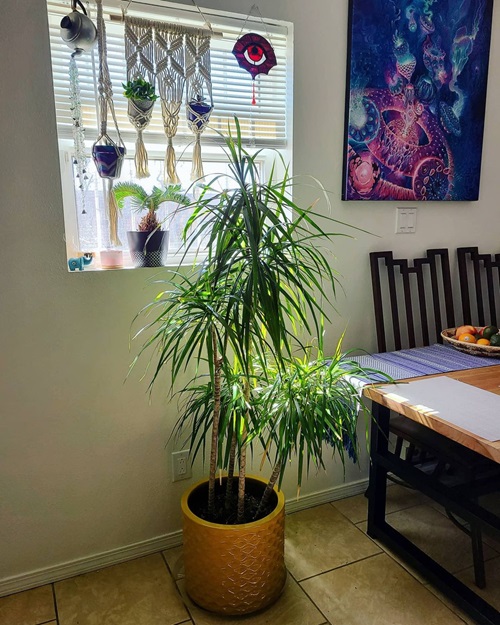
Scientific name: Dracaena marginata
The slender stems with ring-like leaf scars create a striped woody appearance as the plant matures. The narrow and spiky leaves emerge in tufts at the tips, giving it a miniature palm-like silhouette.
Give your Dragon Tree room to stand out with indoor plant stands and decorative pot holders that complement its tall, sculptural shape.
African Milk Tree
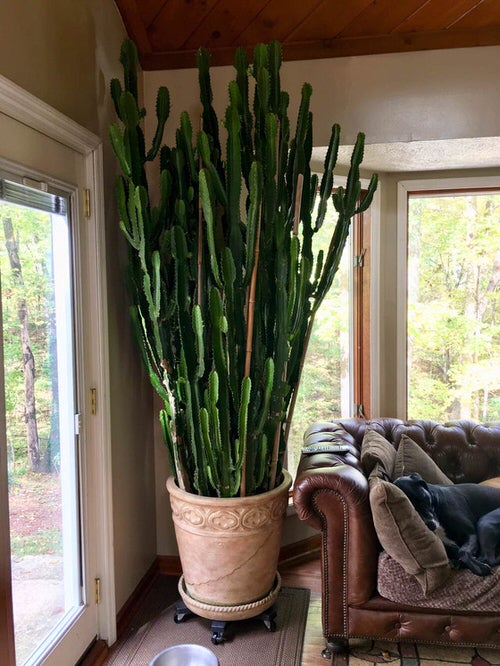
Scientific name: Euphorbia trigona
Its upright, succulent stems have three distinct ridged sides lined with paired spines and tiny leaves. The deep green surface, often streaked with lighter green patterns, gives the plant an architectural, almost sculptural look.
Growing sculptural succulents? Shop well-draining cactus and succulent potting mixes to create a suitable growing environment for your African Milk Tree.
Lucky Bamboo
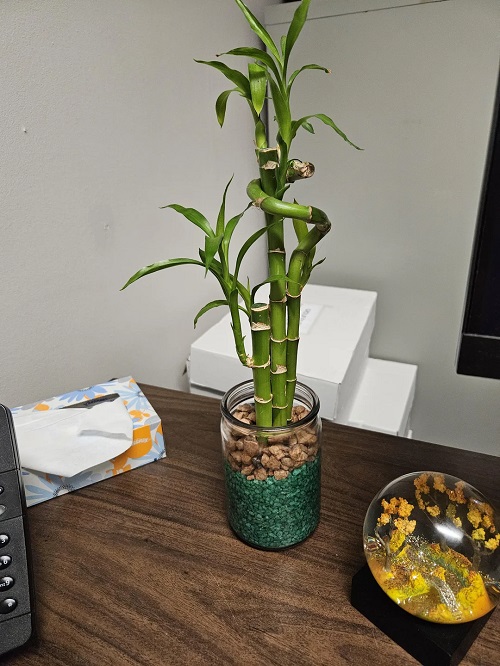
Scientific name: Dracaena sanderiana
Its smooth green stems naturally develop visible joints at regular intervals, resembling bamboo even though it belongs to a different plant group. You can train it into spirals or layered arrangements. Did you know that its segmented stems make it a popular decorative houseplant?
Zebra Plant
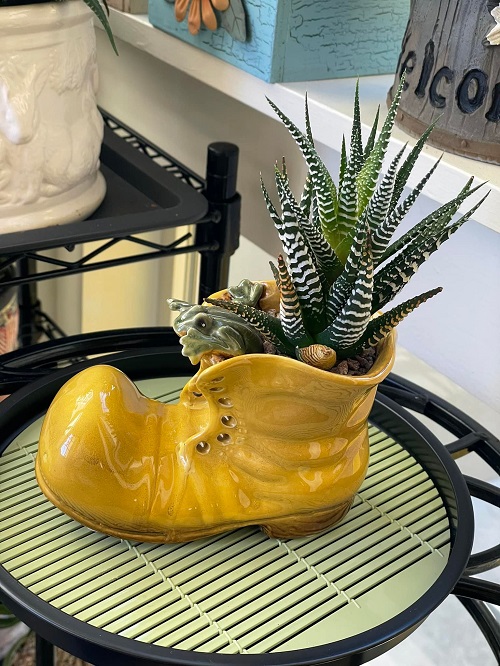
Scientific name: Aphelandra squarrosa
This one is famous for its boldly veined leaves, but its stems also display a subtle green-and-purple color that becomes more noticeable under certain growing conditions. Its upright growth and contrasting foliage make it especially striking in bright indoor spaces.
Polka Dot Begonia
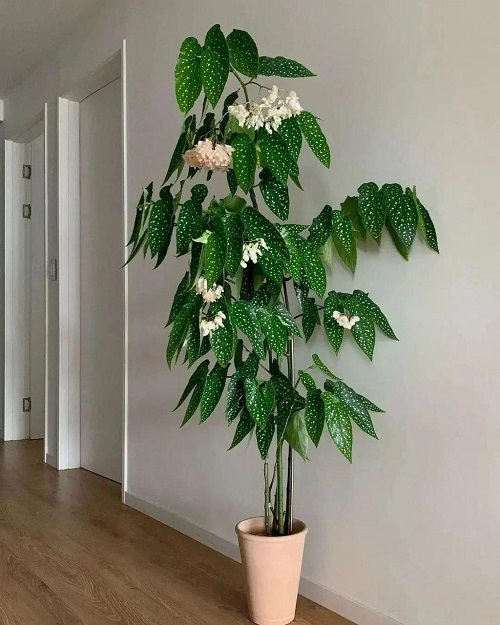
Scientific name: Begonia maculata
Its slender, bamboo-like stems often develop reddish undersides and nodes, contrasting beautifully with its silver-spotted leaves. As the plant grows taller, the alternating leaf attachments create a distinctive, branching pattern along the stems.
Create your own display with transparent vases, glass growing containers, and decorative plant pebbles for a simple tabletop arrangement.
Devil’s Backbone
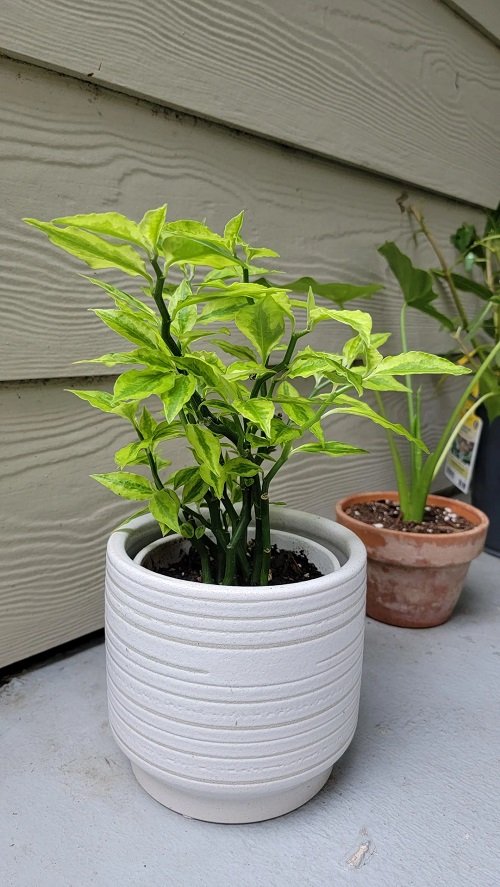
Scientific name: Euphorbia tithymaloides
Its fleshy green stems zigzag at every leaf joint, creating a pattern that looks almost like a series of connected angles. The unusual growth gives the plant its common name and makes it stand out even without flowers.
Keep your plant looking neat with sharp pruning scissors and gardening shears for removing damaged growth when needed. Wear gloves when handling this plant, as its milky sap can irritate skin.
Hindu Rope Plant
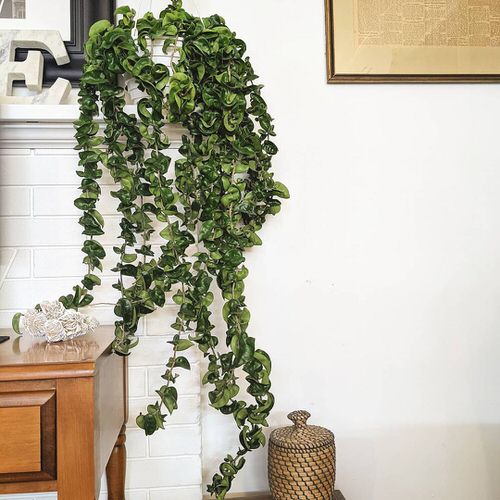
Scientific name: Hoya carnosa ‘Compacta’
Its thick, twisted stems mix through the clusters of tightly curled, waxy leaves, creating a rope-like texture throughout the plant. As a trailing houseplant, its intertwined growth forms intricate patterns that become more dramatic as the vines lengthen.
Madagascar Jewel
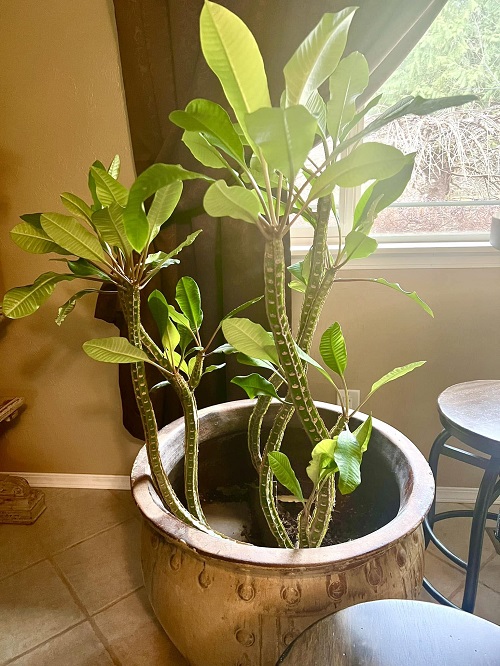
Scientific name: Euphorbia leuconeura
Its upright, fleshy stem features prominent raised ridges and pale, leaf-scar markings that form a distinctive patterned surface. As older leaves fall, their marks remain along the stem, creating a natural striped effect beneath the plant’s broad, glossy leaves.
Want to discover more unusual houseplants? Explore houseplant identification and indoor gardening books to learn about distinctive varieties, growing conditions, and plant-care techniques.
Now that you have a collection of patterned stem houseplants to pick from, which one will be your first pick to add to your collection? Let us know in the comments below!