
As an Amazon Associate, we earn a small commission from qualifying purchases — at no extra cost to you.
Do you have a wishlist for creating an indoor plant cabinet setup? Don’t worry, we have a checklist of what you need and what to do. Read!
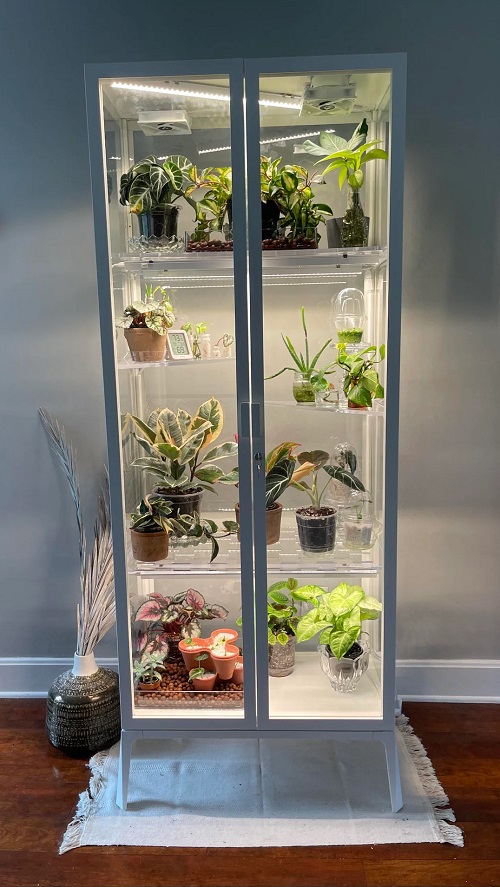
An indoor plant cabinet is a great way to create a controlled growing environment for plants, seedlings, and our infamous humidity-loving babies. With the right cabinet, lighting, airflow, and accessories, you can turn a simple storage unit into a thriving indoor greenhouse. Let us break it down!
Want to make your plant care easier? Browse our Amazon Gardening Storefront for soil, drainage pots, moisture meters, fertilizers, grow lights, plant stands, and everyday plant-care essentials.
Guide to Making an Indoor Plant Cabinet Setup
Materials Needed for an Indoor Plant Cabinet
- Glass-door display cabinet
- Adjustable wire/glass shelves
- Full-spectrum LED grow lights
- USB circulation fan
- Digital hygrometer and thermometer
- Drainage pots
- Plant saucers/waterproof trays
- Coco coir/perlite/orchid bark
- Power strip with surge protection
- Cable clips
- Small humidifier
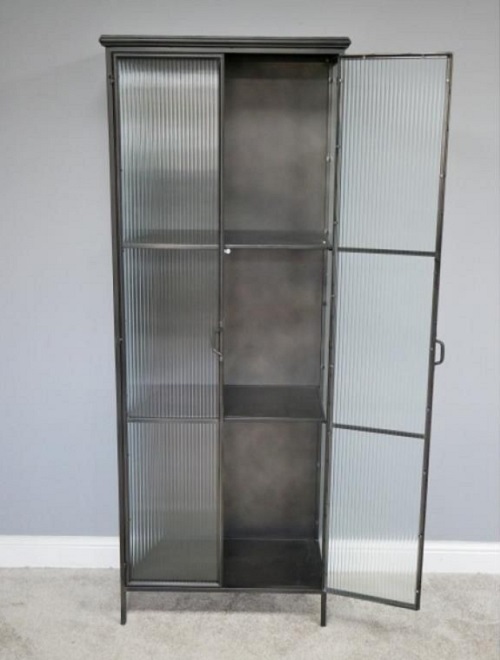
Begin with a glass or metallic cabinet with vertical and horizontal space for your plants. Glass doors are preferred because they enable light to pass through and make it easier so that you can check your own plants. Put in flexible shelves or perhaps plant stands to maximize the vertical space and fit all your own plants. You might as well use plant pots with drainage holes, saucers, or waterproof trays.
Looking for the right cabinet? Choose a glass-door display cabinet with adjustable shelves and enough vertical clearance for your plants, pots, lights, and future growth.
Select a well-draining growing medium. Coco coir, perlite, and either wood or orchid bark are all good choices for tropical plants. You can also pick from a wide range of succulents that will adorn your home in their own sweet ways.
Growing tropicals inside your cabinet? Stock up on chunky aroid potting mix, coco coir, perlite, orchid bark, and pumice to create an airy, fast-draining root environment.
Ensure the cabinet receives adequate natural light; otherwise, add a full-spectrum LED grow light to ensure healthy lighting. A USB circulation fan can help circulate the air and avoid stagnation and excessive moisture. Place a digital hygrometer and thermometer inside the cabinet, depending on whether your growing plants prefer more humidity.
And now for the electrical setup, use a good-quality power strip along with cable clips to keep wires organized and safely away from water. A small humidifier can also be added if your plants need consistently high humidity, but that is completely optional.
Keep the cabinet setup cleaner and easier to manage with a surge-protected power strip, timer or smart plug, adhesive cable clips, and waterproof cable-management accessories.
How to Set Up the Cabinet
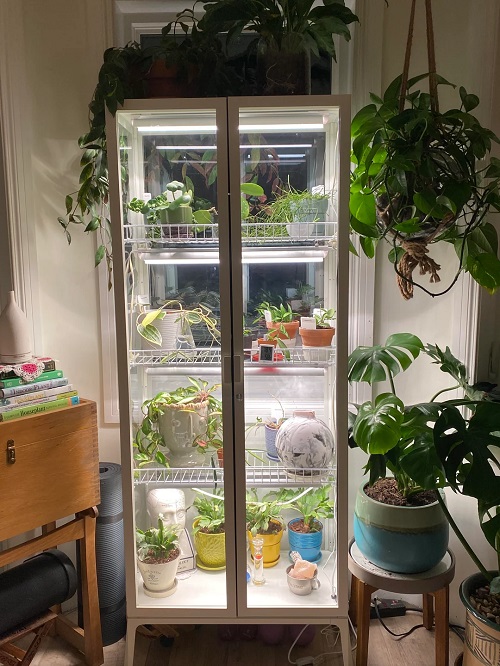
Let us begin by placing the cabinet. Keep it away from harsh, direct sunlight, air conditioners, or areas with frequent temperature fluctuations.
Install the shelves as per your plant sizes, leaving enough space between the plants and the lights. Attach the LED grow lights to the underside of each shelf or position them above the plants.
Remember: Avoid placing lights extremely close, or else the heat might scorch the foliage.
Then install a small circulation fan. It does not have to blow continuously and directly. Steady air movement is sufficient. Good aeration decreases the accumulation of stagnant air, and because of this, it decreases the risk of fungal issues.
Set a hygrometer and thermometer in a visible location. Humidity requirements differ from plant to plant, even if many tropical houseplants generally like moderate to high humidity.
Keeping humidity-loving plants together? A compact USB circulation fan, digital hygrometer, thermometer, and small humidifier can help you monitor the cabinet instead of guessing what your plants need.
Organize your plants based on their light and humidity needs. Store plants with similar light and humidity needs close to each other and don’t overcrowd the cabinet.
Need a few plant-care essentials at once? Try Prime for free, if eligible, and make it easier to order soil, pots, fertilizers, moisture meters, and other supplies without the shopping hassle.
Maintaining Your Plant Cabinet
Because it is the most important part.
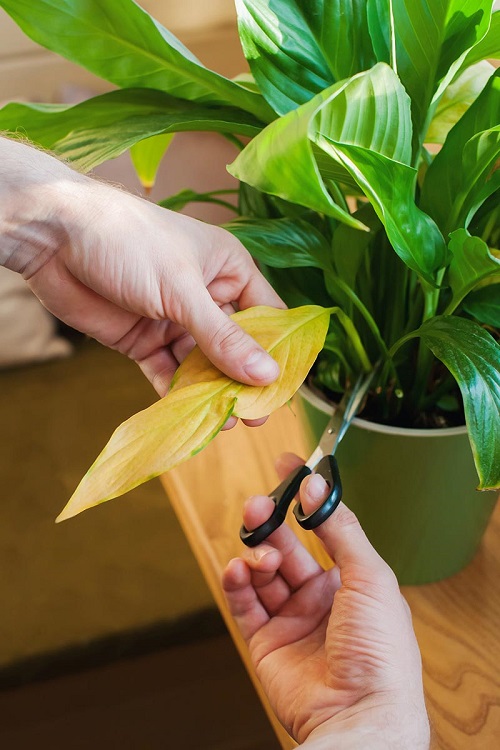
If you notice any pests, discoloured leaves, or mould, then treat it and keep a close check of your plants for problems. Wash glass and shelves regularly. Remove dead leaves and rotate plants to ensure healthy growth.
Spot problems before they spread with yellow sticky traps, a handheld magnifying glass, microfiber cleaning cloths, and plant-safe pest-control supplies for routine cabinet checks.
With the right materials and a little monitoring, an indoor plant cabinet can become a compact, attractive growing space that helps your plants thrive throughout the year. When are you beginning? Let us know in the comments below!
Want to get better at caring for your houseplants? Explore indoor gardening and succulent-care books for practical guidance on watering, soil, light, propagation, and common plant problems.