

As an Amazon Associate, we earn a small commission from qualifying purchases — at no extra cost to you.
Do you ever wonder if your Calathea leaves move at night? It’s a big Yes! Find out what it means and how it reflects your plant’s health.
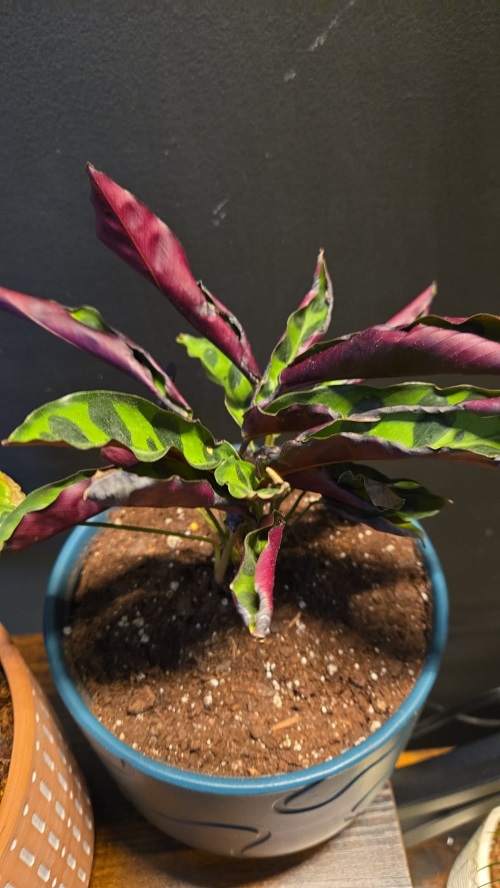
A plant that will surprise you. By day it may look like a normal house plant, but by night it is a living, moving plant. The leaves rise and change position. And this nightly ritual isn’t just for show, it’s something baked in for survival. Keeping an eye on these movements can help you better understand your plant’s needs.
Why Calathea Leaves Move At Night
Calatheas are also famous as Prayer Plants. Calathea leaves move at night, a phenomenon called nyctinasty, folding upwards like praying hands. They are noted for their very varied, colorful, beautifully patterned foliage.
This movement happens because of tiny changes in water pressure inside the leaf joints (called pulvinus), which act like natural hinges for the plant.
What Does It Mean For Your Plant?
1. They Are Healthy
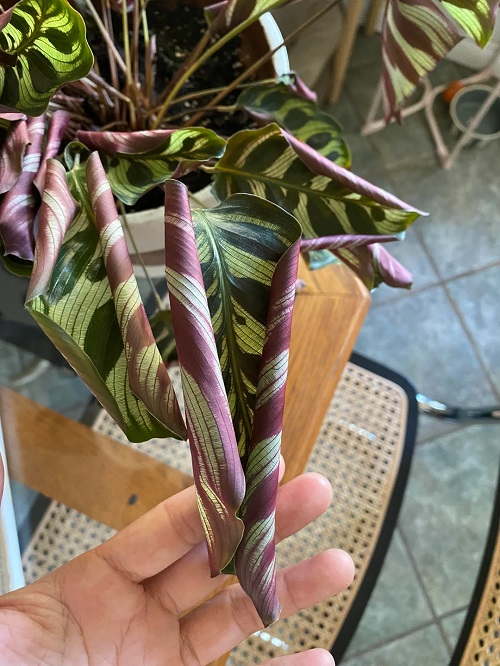
Only a healthy plant that has good growing conditions will move its leaves. The gentle folding and lifting is a natural behavior of the plant, which is controlled by the plant’s internal clock. If your plant is moving regularly, it means its biological rhythms are working properly.
If you suddenly notice the movement has stopped completely, it’s often an early sign that something is off—like low humidity or poor lighting.
Just make sure your lovely Calathea care is always spot on.
2. Photosynthesis At Its Peak
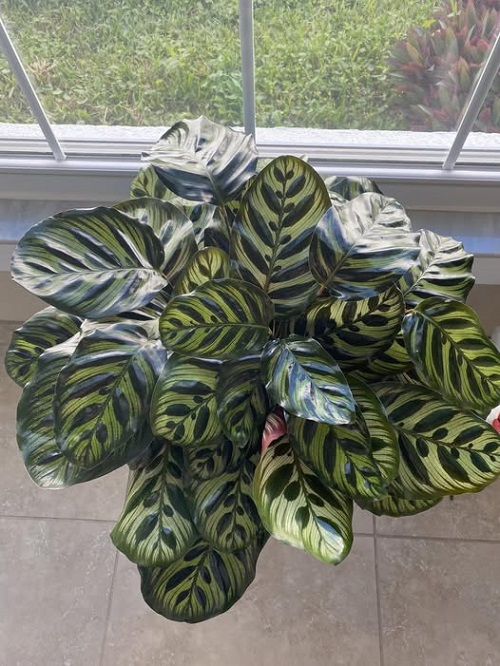
The plant moves to capture light. During the day, Calathea leaves drop and assume a more horizontal position to get more light. When the leaves open wide in daylight, they are positioning themselves to capture as much light as possible. Yes, you read right!
Tip: In summer, a position near a north- or east-facing window is ideal. In winter, when light levels are lower, a south-facing windowsill is better.
3. Protecting Moisture And Energy
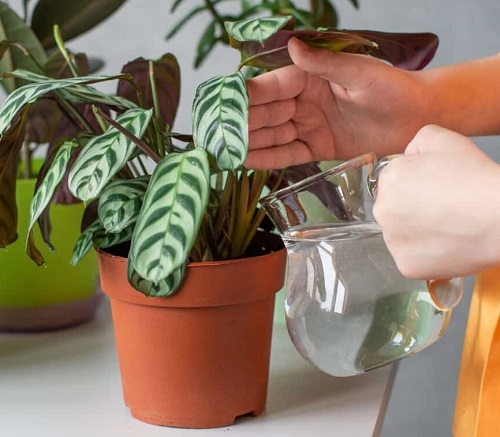
Calatheas have thin, decorative leaves that can lose moisture easily. At night, lifting leaves and folding them upwards helps reduce moisture loss and exposure and prevents unnecessary water loss. So, this movement is a part of how it takes care of itself.
That’s why Calatheas love humidity—dry air can disturb this natural cycle and make the leaves crispy over time.
Caution: Avoid over-watering and tap water for Calatheas.
4. Continuously Adjusting
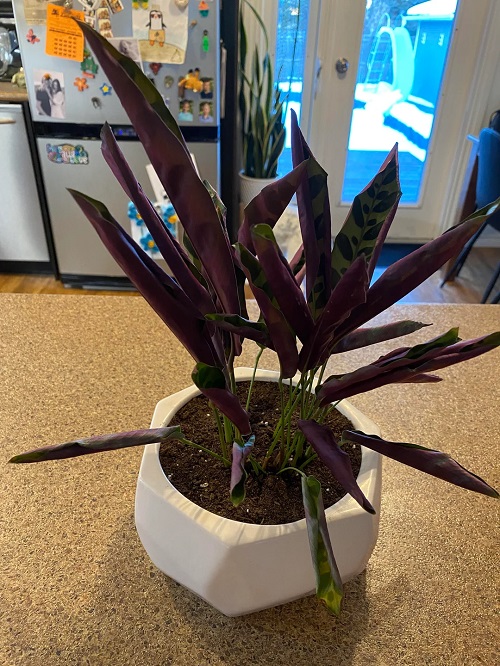
Calatheas’ leaf movement is not passive; it’s the plant constantly fine-tuning its position based on light, humidity, and even air flow. This means your houseplant is actively adapting rather than just surviving.
5. Too Comfortable
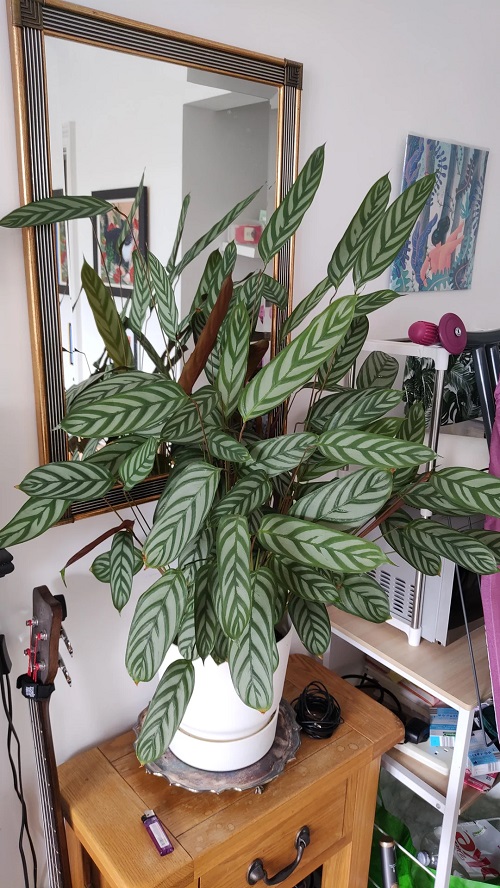
When your plant is consistent with its leaf movement, that means your plant is happy with its surroundings. The temperature required for Calathea is between 61°F and 70°F, and the humidity is between 50% and 70%. Just maintaining this will make your houseplant within a comfortable range.
To maintain the humidity, you can use a humidifier.
6. Stress Signal
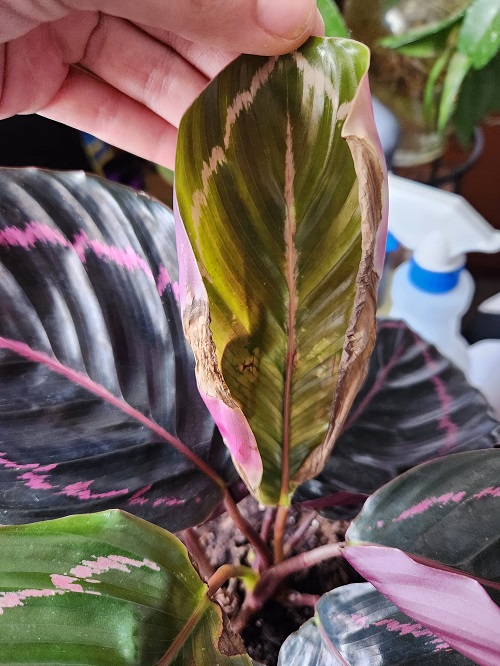
If you observe browning and curling in your plant, then it means it is giving you early signs to take care of your plant. Leaf movement often changes before you can spot browning or curling.
Those daily leaf movements are like a quiet language of the plant for you. A steady, predictable rhythm means your Calathea is balanced and comfortable—while small changes can give you early clues about its needs. If you found this helpful, explore more plant care tips and share your Calathea journey with us.