
As an Amazon Associate, we earn a small commission from qualifying purchases — at no extra cost to you.
Old. Leggy. And not so lively. Is your Pothos the same? Well, we have some revival tips that you’ll love for your buddy to grow healthy again!
There is a particular kind of heartbreak that pothos owners can feel. Once it was lush, but now it just has some long, bare vines with a few leaves hanging sadly at the ends. But it doesn’t mean they are dying. It just needs a reset. A leggy pothos can grow bushy again, but there is something you’ve got to do. Want to know what?
Ready to turn your leggy pothos into a fuller, happier plant? Explore our Amazon Gardening Storefront for pruning tools, propagation supplies, moss poles, grow lights, fertilizers, and other houseplant essentials.
Can You Make an Old Leggy Pothos Bushy Again?
Why Does Pothos Become Leggy?
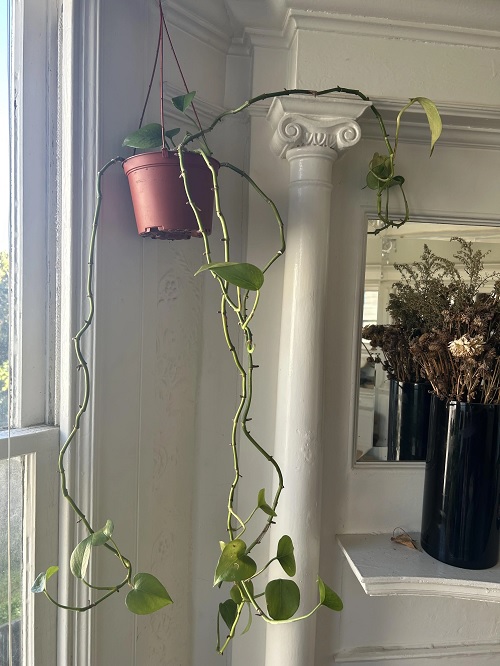
Pothos naturally grows as a climbing or trailing vine. In low light, however, it tends to stretch toward the nearest light source. The spaces between leaves, called internodes, become longer, creating that sparse, stretched-out appearance.
But do you know that their leaves can also become smaller when the plant isn’t getting enough light? This is one reason a plant sitting several feet away from a bright window may look different from the one growing closer to it.
So before you grab your scissors, fix the light.
Place your pothos somewhere with bright and indirect light. Avoid suddenly moving a severely low-light plant into harsh direct afternoon sun, which can scorch its leaves.
Give your leggy pothos the light it needs with a full-spectrum LED grow light that can supplement natural light in darker corners.
Do Not Forget Pruning!
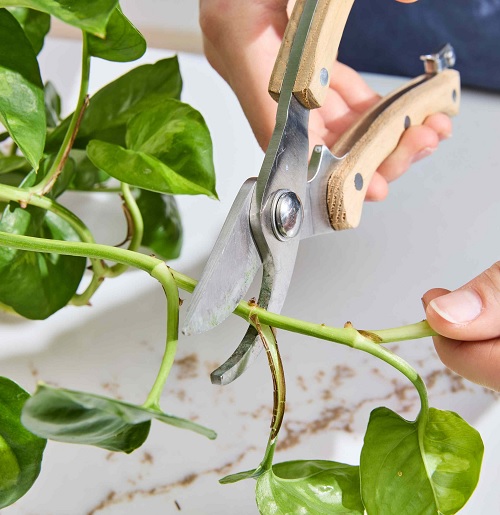
Do not be afraid of cutting a long, bare vine. Using clean, sharp scissors, cut the vine just above a healthy node – the little bump where a leaf and aerial root emerge.
Ready to give those bare vines a fresh start? A pair of sharp, clean pruning shears makes precise cuts around healthy nodes much easier.
That node matters because pothos produces new growth from nodes. Cutting encourages the plant to activate dormant growth points instead of continuing to invest energy into one endlessly extending vine.
Wait: Do not throw away the cuttings. Let us do some DIY.
One Old Vine To Many!
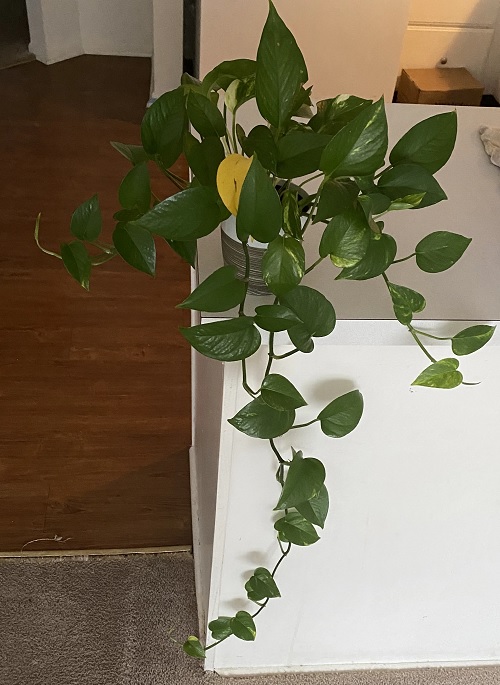
Take your healthy cuttings and make several smaller pieces, ensuring each cutting has at least one node. You can root them in water or directly into a suitable potting mix. Water propagation makes it particularly easy to watch roots develop.
Once the cuttings have developed a decent root system, plant several of them back into the same pot as the mother plant. And that is how you get the bushy appearance.
One long vine gives you another. Ten rooted cuttings planted together give you ten new blooms. Steal deal!
Remember!
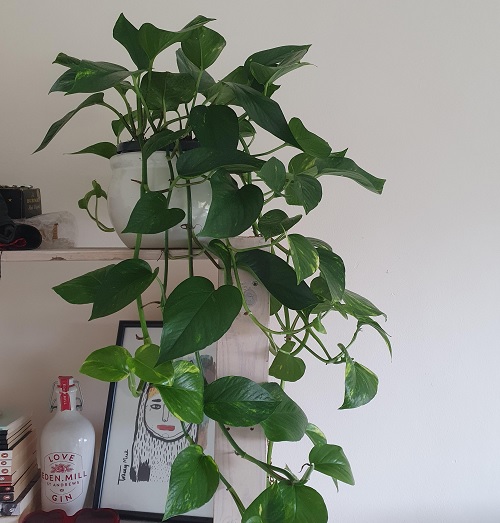
Pothos can produce aerial roots along its vines. In nature, these roots help the plant climb trees and access moisture and nutrients.
You can use this climbing behaviour to your advantage as well. Instead of allowing every vine to trail downward, give some vines a moss pole, trellis, or another support. When pothos climbs, its leaves can become larger, especially when the plant receives sufficient light.
Want bigger leaves and a fuller climbing display? Give your pothos something to grab onto with a moss pole or indoor plant trellis for guided vertical growth.
So you get a win-win situation. Trailing vines for fullness around the pot and climbing vines for larger foliage.
But do not overwater. More leaves do not mean they need more water.
Make watering easier to judge with a plant moisture meter so you can check the soil before giving your pothos another drink.

Allow the upper portion of the potting mix to dry before watering again, and make sure your pot has drainage holes. Constantly wet soil can suffocate roots and cause root rot. And make sure to feed it during the active growth period with a balanced houseplant fertilizer. But it is an aid, not a magic growth button.
Want to understand your pothos beyond just pruning it? Pick up a pothos care book for practical guidance on propagation, pruning, watering, lighting, and long-term care.
The plant that looked too old to grow bushy can bloom into a beauty you can never imagine. Rather than doing everything, do the things that are required, and you’ll see the results yourself! Let us know how your pothos feels now, in the comments below.