
As an Amazon Associate, we earn a small commission from qualifying purchases — at no extra cost to you.
New to Alocasia Silver Dragon Care? Then let’s get the basics of watering, sunlight, and maintenance to help your little plant flourish.
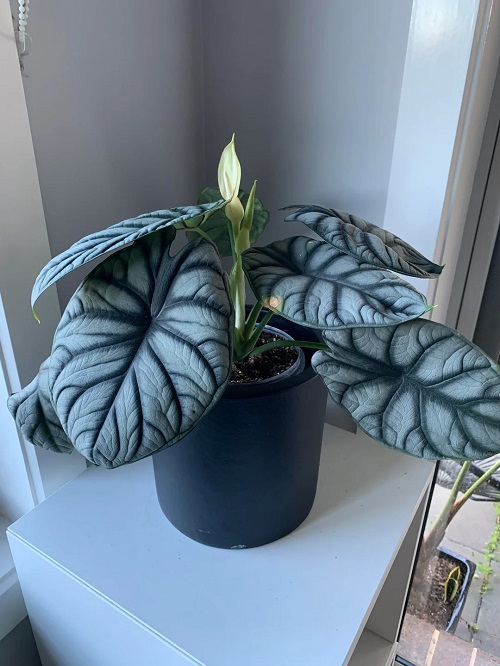
Alocasia Silver Dragon is a compact tropical houseplant loved for its thick, silver-green leaves, dark veins, and dragon-scale texture. But this is a baby that stays relatively small and grows slowly, making it adorable to keep on shelves and on plant cabinets. But it does have some specific conditions, and we’ll keep you updated.
This article lists some products that will help you to become a plant pro, but before that, grab your gardening kit. Subsequently, you can also check our Amazon Gardening Storefront to grab your gardening essentials.
Alocasia Silver Dragon Key Facts
| Feature | Details |
| Common Name | Silver Dragon Alocasia |
| Botanical Name | Alocasia baginda ‘Silver Dragon’ |
| Plant Type | Tropical, Rhizomatous Perennial |
| Mature Size | About 1 to 2 ft Tall and Wide |
| Sun Exposure | Bright and Indirect Light |
| Soil Type | Chunky, Airy, Fast-Draining |
| Soil pH | Slightly Acidic to Near-Neutral (5.5 – 6.5) |
| Bloom Time | Spring – Summer, Rare Indoors |
| Flower Color | Creamy White |
| Hardiness Zone | USDA Zones 9 – 11 |
| Native Area | Borneo, Southeast Asia |
| Toxicity | Toxic if ingested |
Alocasia Silver Dragon Information
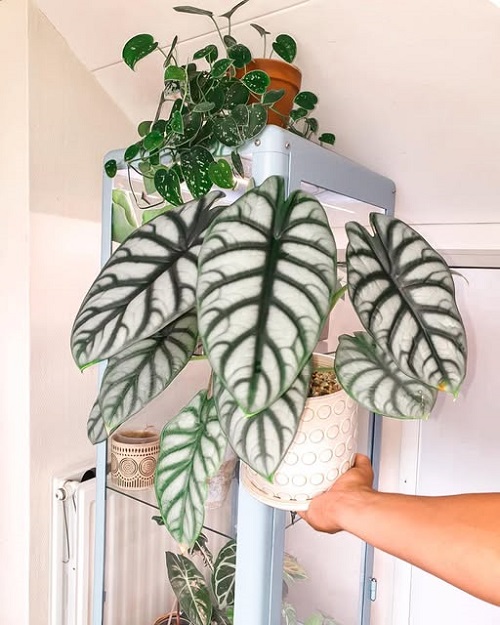
Thick leaves, metallic silver surface, and deep green veins. These features make the Silver Dragon look like a reptile with sharp scales. Did you know that it is a cultivar of Alocasia baginda, a species associated with the limestone forests of Borneo, which makes it a plant that appreciates a root environment that is moisture-retentive and well-aerated?
This little one grows slowly. It produces only a few new leaves in a year, and it tends to put considerable energy into producing thick foliage and maintaining its underground storage structures. It can also temporarily lose leaves during stress or dormancy without necessarily being dead.
Propagation
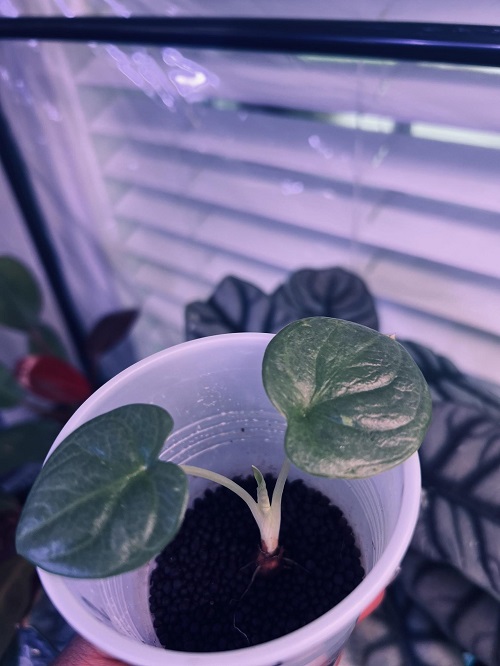
The most promising way to propagate Silver Dragon is through corms and division of offsets rather than leaf cuttings. During repotting, gently remove the plant from its mix and look for small corms or established offsets around the underground rhizome. Healthy corms can be placed in lightly moist sphagnum moss or another airy medium in a warm, humid environment until roots and shoots develop.
Remember: A detached leaf or petiole cannot produce a complete new plant because it lacks the necessary growing point.
Pot Size
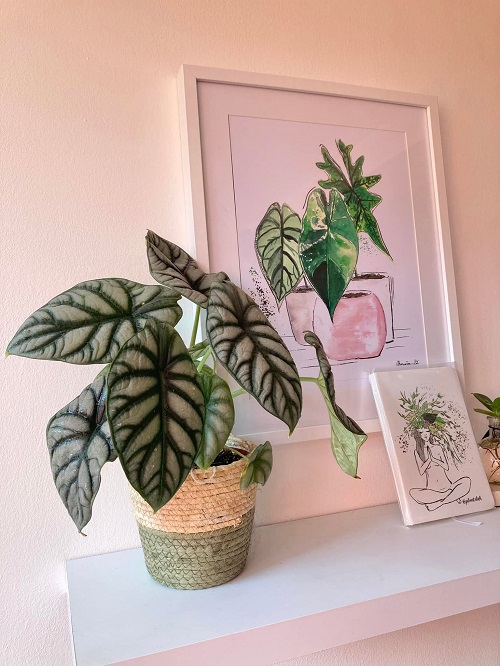
A snug pot rather than an oversized one, always. Choose a container only about 1 to 2 inches wider than the existing root ball and always use drainage holes. A larger pot holds more wet soil around a relatively small root system, increasing the risk of rot. Terracotta can work well because it dries faster, while plastic or glazed pots are useful in dry homes where moisture disappears quickly.
Tip: Repot only when the roots have noticeably outgrown the container rather than simply because the plant has been in the same pot for a year.
Looking for the right home for your Silver Dragon? Shop small pots with drainage holes and matching plant saucers to help manage excess moisture.
Requirements
Light
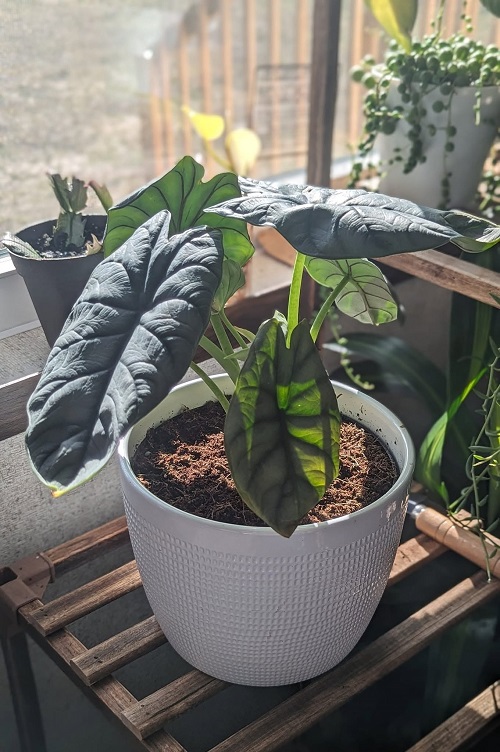
Give bright, filtered, or indirect light for compact growth and strong color. An east-facing window or a bright spot protected from harsh midday sun works well. Too much sunlight can scorch the surface, and insufficient light can slow down growth and leave the potting mix wet for longer because the plant uses less water.
Tip: Rotating the pot once in a while also prevents uneven growth.
Need more consistent bright light indoors? Browse LED grow lights for houseplants to supplement natural light when needed.
Soil
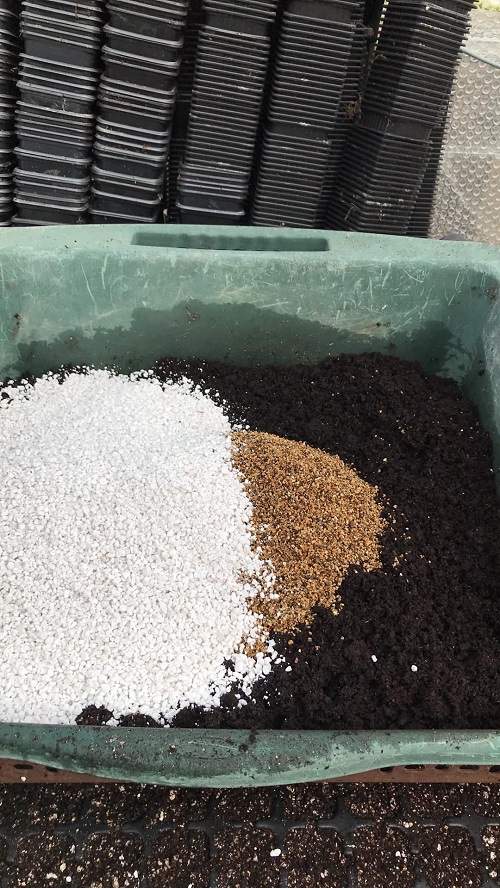
Well-aerated soil is the primary need. Prefer orchid bark, perlite, pumice, or coco coir with a smaller amount of organic potting mix. We need to ensure that the excess water can escape easily while oxygen to the roots is not compromised.
Give those delicate roots the right environment with chunky aroid potting mixes, orchid bark, perlite, and pumice for better drainage and airflow.
Watering
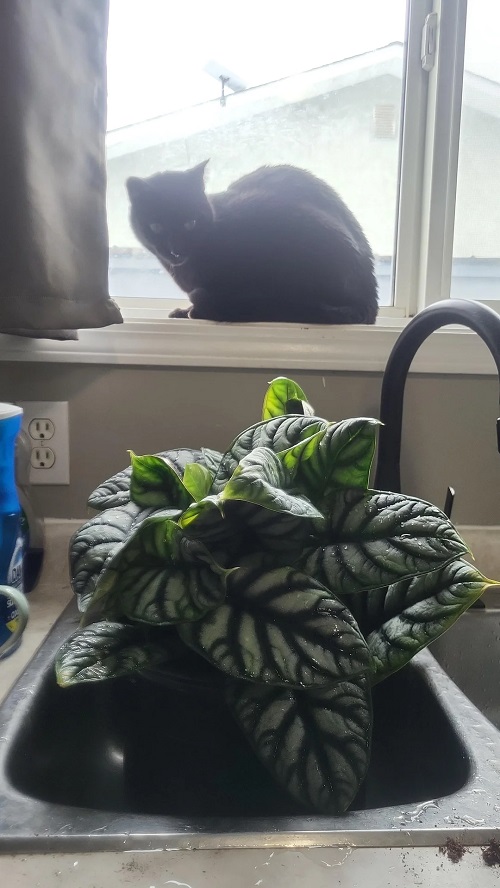
Water when the upper portion of the mix has dried. Then water thoroughly until excess drains from the bottom. Do not stick to weekly schedules because light, temperature, pot size, and season all change how quickly the plant dries. Do not keep any standing water, and ensure that there isn’t too much water that causes rot, and neither too little that causes curling and crispy edges.
Not sure when your Alocasia needs water? A soil moisture meter can help you check the mix before reaching for the watering can.
Temperature
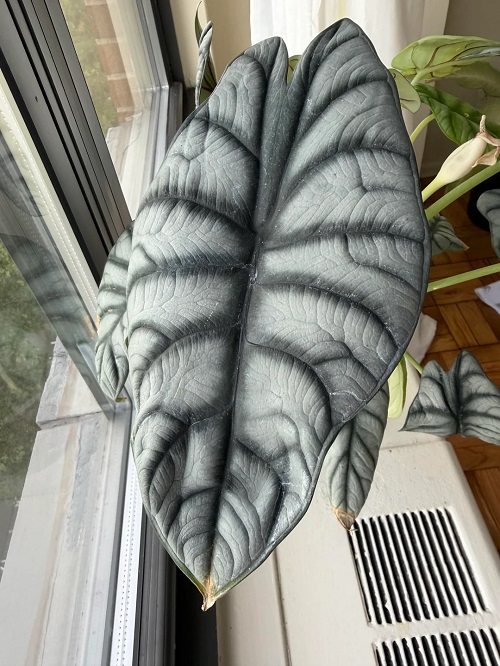
Cold drafts, air conditioners, and sudden temperature changes can cause the growth to slow down or the plant to enter dormancy. Avoid placing it directly beside heaters or AC vents, since rapid temperature fluctuations can cause much more damage than a slight temperature drop.
Need a few plant-care essentials? Try Prime for free, if eligible for convenient delivery while you build your indoor gardening setup.
Humidity
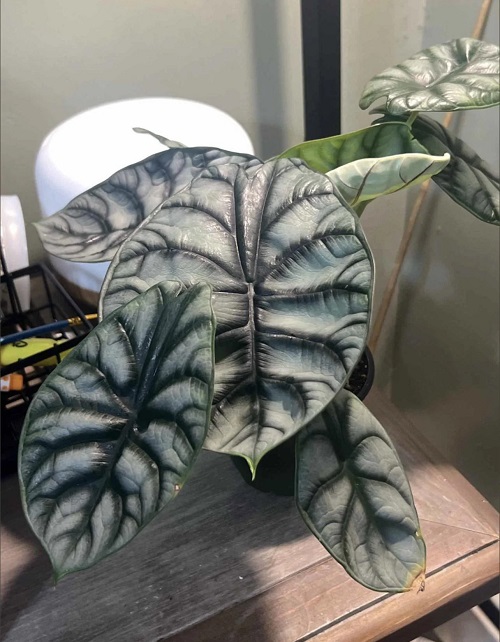
If the humidity is between 60 and 80% then you’ll get to see new leaves unfurling very soon. These babies can survive in lower household humidity, but dry air increases the chances of crispy edges, curled leaves, and spider-mite infestations. A humidifier or naturally humid room is better than repetitive misting, along with good airflow.
If your home air is dry, consider a plant humidifier and digital hygrometer to monitor and maintain a more suitable environment.
Taking Care
Fertilizer
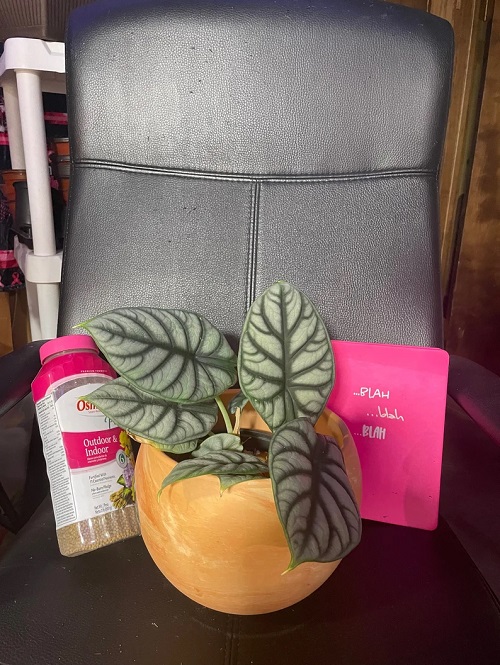
This one does not need heavy feeding because it might as well end up accumulating. Feed during the active growing season with a balanced houseplant fertilizer diluted to about a quarter or half strength every 3–5 weeks. Reduce or stop feeding when growth slows significantly, or the plant enters dormancy.
Support active growth with a balanced liquid houseplant fertilizer that can be diluted for regular feeding.
Pruning
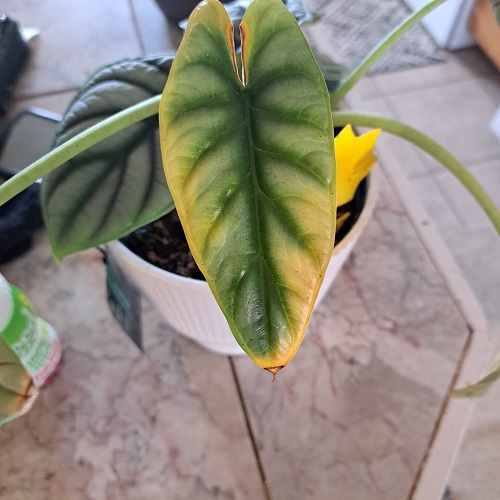
Only needed minimally. Remove the yellow, dead, and damaged leaves by cutting close to the base with clean scissors. Do not remove leaves simply because of small blemishes. Wipe off the dust from the leaves and keep a regular pest check.
Keep your plant-care tools ready with sharp pruning scissors and plant-cleaning supplies for removing damaged leaves and maintaining healthy foliage.
Repotting
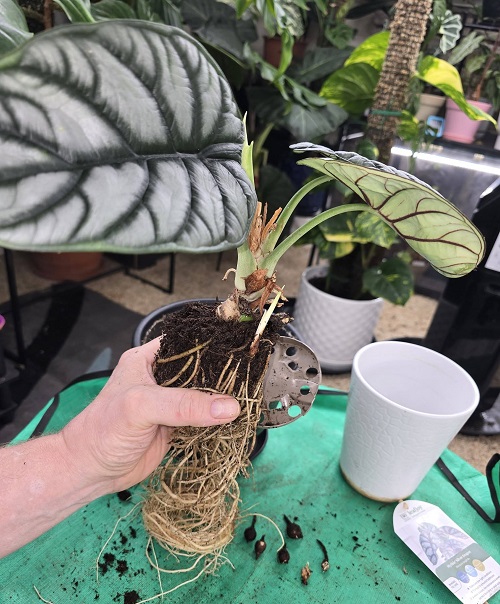
Repot Alocasia in spring or during the active growing period when roots have filled the container, the plant dries unusually quickly, or the mix has broken down and become compacted. Handle the underground rhizome and corms carefully because damage here can be more serious than losing a leaf. Use fresh, airy mix and avoid jumping to a dramatically larger pot.
Common Pests
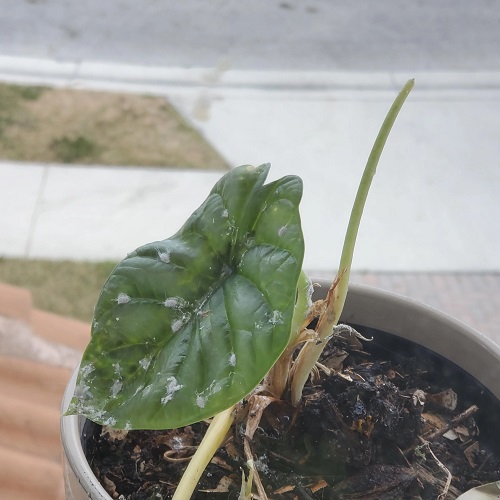
Spider mites and thrips are the pests that you need to look out for. Spider mites may leave fine webbing, stippling, or dull patches on the leaves. Thrips can cause silver scarring and distorted new growth. Mealybugs, scales, and fungus gnats can also occur, so keep a check on the undersides of the leaves.
Spotting pests early makes treatment easier. Shop yellow sticky traps, magnifying glasses, and plant-safe pest-control supplies for regular Alocasia checks.
Be patient and consistent, and see how you are rewarded with bigger and healthier leaves in no time. And if you want to become more confident with Alocasia care, then explore houseplant and aroid-care books for practical guidance on watering, propagation, pests, light, and growing conditions.